This guide is written for engineers and technical teams building connected devices who need clear, field-ready guidance without getting lost in standards documentation.
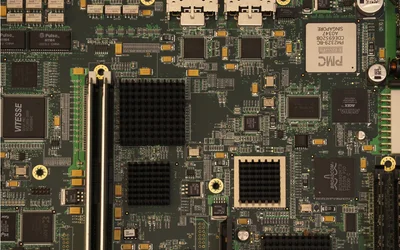
SMT stands for Surface-mount Technology, a method of soldering components directly onto a PCB. This article delves into the concept of SMT and the manufacturing process, as well as the benefits, drawbacks, and related terms.

Printed Circuit Boards (PCB) form the backbone of electronics, while Printed Circuit Board Assemblies (PCBA) complete the circuit with components – this article explores the differences, roles, and implications in hardware design and manufacturing of PCBA vs PCB.
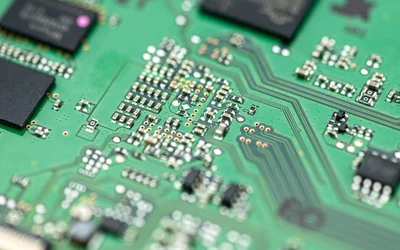
This guide delves into FPGA vs ASIC, providing a decision framework, cost-at-volume analysis, and modern examples to help you pick the right technology for your next project.
An instrumentation amplifier is a precision differential amplifier designed to amplify small voltage differences. This guide explains the three-op-amp architecture, and how to choose between INA128, AD620, LT1167, and a standard difference amplifier for sensor front-ends.
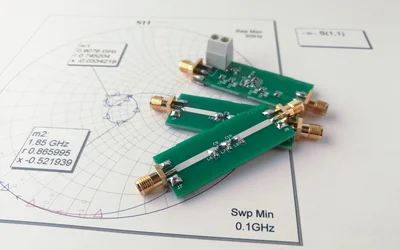
A guide covering the full radio-frequency design workflow, starting from setting specifications and choosing topologies to matching, simulation, layout, and verification, to help antenna engineers.
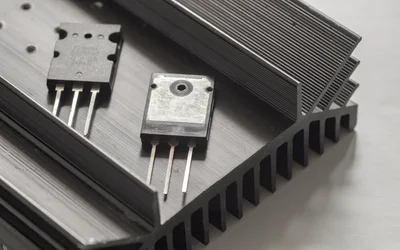
This article presents a detailed technical exploration of SiC MOSFET devices, covering material physics, device structure, switching behavior, and practical design considerations for high-efficiency power electronics systems.
This article is a comprehensive technical guide to relay wiring diagrams, covering 4-pin and 5-pin configurations, working principles, safety practices, standards, and advanced relay applications in modern systems.
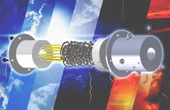
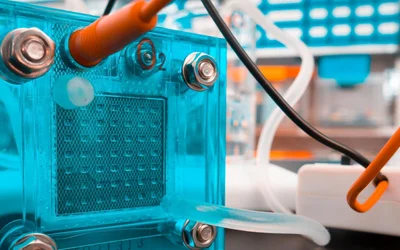
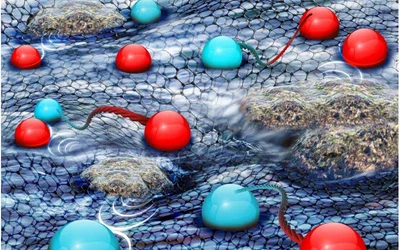
The integrated design achieves accurate micro gas chromatography and can help reduce the cost of monitoring chemical synthesis, natural gas pipelines or at-home air quality.
Hybrid bonding provides the adhesive free, copper to copper interconnects that are driving cutting edge 3D chip stacking. This article explains the theory, process, benefits, challenges, applications, and emerging trends of hybrid bonding for engineers.
SMT stands for Surface-mount Technology, a method of soldering components directly onto a PCB. This article delves into the concept of SMT and the manufacturing process, as well as the benefits, drawbacks, and related terms.
Printed Circuit Boards (PCB) form the backbone of electronics, while Printed Circuit Board Assemblies (PCBA) complete the circuit with components – this article explores the differences, roles, and implications in hardware design and manufacturing of PCBA vs PCB.
This guide delves into FPGA vs ASIC, providing a decision framework, cost-at-volume analysis, and modern examples to help you pick the right technology for your next project.
This article aims to provide a comprehensive comparison between contactors and relays, highlighting their key differences, applications, and factors to consider when choosing the right device for your needs.
In this episode, we talk about why minimization of speakers and energy storage devices is crucial for the next generation of electronics and medical devices.
In order to operate wind turbines more efficiently in the future and also to be able to use them in locations that are less wind-intensive, even larger and at the same time lighter blades are needed.
Understanding your rights and responsibilities is essential to securing your innovation. Further, taking advantage of cloud manufacturing can mitigate substantial risk.
Robot arms could become safer in industrial settings by applying an artificial skin containing proximity heat sensors to detect humans in all directions.
In this episode, we talk about how performance limitations of current microchips are being addressed by utilizing novel materials like graphene and bioinspired designs to address the needs of next generation computing and electronics.
“We are still making not enough use of solar and wind energy,” says Horst Fietje, co-founder of the start-up Voltgoed, which he founded together with Stan Hoppenreijs and Jasper Verhoeve. They are working on a smart box for home heat pumps. This would enable them to make flexible use of green power.
Although the billions of battery-powered wireless IoT sensors connecting tomorrow's world will undoubtedly have an upstream energy impact, research suggests considerable net savings will be realized in the future.
Researchers have developed a new material for an electronic component that can be used in a wider range of applications than its predecessors. Such components will help create electronic circuits that emulate the human brain and that are more efficient at performing machine-learning tasks.
Article #1 Electronics Innovation Series. Enabling continued innovation while dealing with the constraints of supply chain uncertainty is a task for both designers and suppliers.