
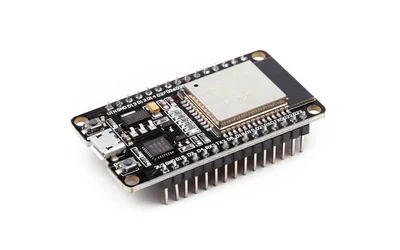
This article explains the ESP32 pinout, including GPIO, ADC, DAC, PWM, UART, SPI, and I2C pins; safe and reserved GPIOs; strapping pins; board differences; power limits; and practical design considerations.
Be the first to know.
Get our microchip weekly email digest.
Tagged with
microchip
ORGANIZATIONS. SHAPING THE INDUSTRY.
Latest Posts
This article explains the ESP8266 pinout, covering GPIO mapping, boot-strapping pins, safe-to-use pins, flash connections, ADC limits, deep-sleep functions, and NodeMCU and D1 mini pin labels.
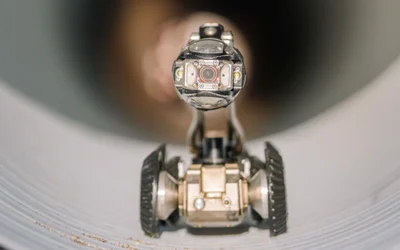
Researchers combined an efficient algorithm with dedicated hardware to rapidly generate 3D maps for navigation using minimal memory and power.

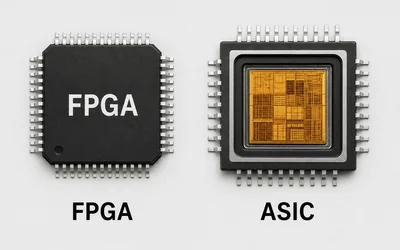
This guide delves into FPGA vs ASIC, providing a decision framework, cost-at-volume analysis, and modern examples to help you pick the right technology for your next project.

By enabling two chips to authenticate each other using a shared fingerprint, this technique can improve privacy and energy efficiency.

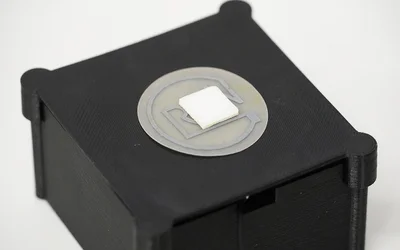
Researchers from EPFL, Empa, and CSEM have developed a sustainable smart sensing tag that can be used to signal when shipments of medicines or food have exceeded a safe threshold temperature. It is the first such tag to be fully compostable.

3 minutes read
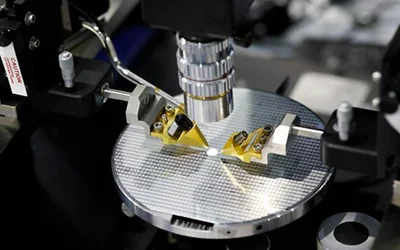
Cornell researchers have built a programmable optical chip that can change the color of light by merging photons, without requiring a new chip for new colors.

3 minutes read

The consumer electronics sector saw delays in smartphone, gaming console and PC production, while industrial and aerospace sectors faced delays in control systems, sensors, and other electronic components that slowed infrastructure and energy projects.

3 minutes read
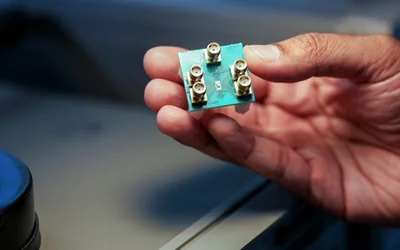
Cornell researchers have developed a low-power microchip they call a "microwave brain," the first processor to compute on both ultrafast data signals and wireless communication signals by harnessing the physics of microwaves.
3 minutes read

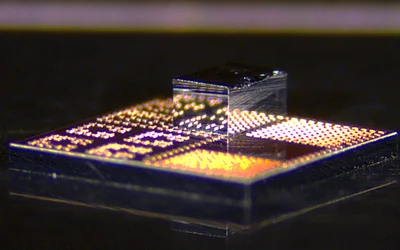
The low-cost, scalable technology can seamlessly integrate high-speed gallium nitride transistors onto a standard silicon chip.
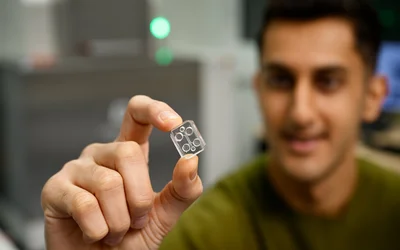
During his PhD research, biomedical engineer Mohammad Jouybar explored how to build specific organ-on-a-chip or even cancer-on-a-chip devices.

6 minutes read
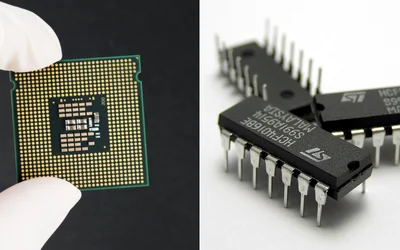
This article explains, how is a microprocessor different from an integrated circuit, exploring their key differences, architectures, technological advancements, and potential applications.
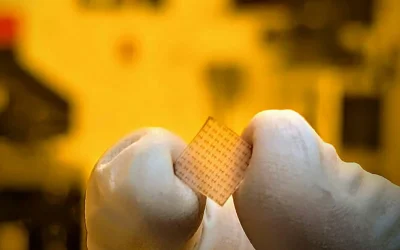
Researchers at Stanford Engineering have developed an ultrathin material that conducts electricity better than copper and could enable more energy-efficient nanoelectronics.

4 minutes read
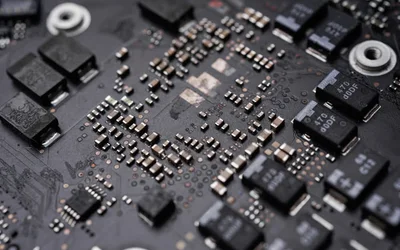
A Deep Dive into Types, Packages, Sizes, Applications in Modern Electronics, and the innovations in SMD technology that have revolutionized PCB design
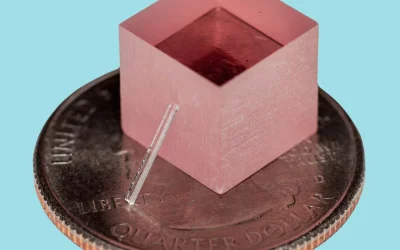
In a single leap from tabletop to the microscale, engineers at Stanford have produced the world’s first practical titanium-sapphire laser on a chip, democratizing a once-exclusive technology.
4 minutes read