Featured
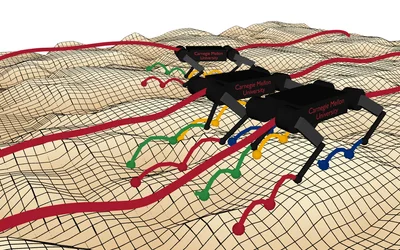
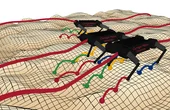
Aaron Johnson’s Robomechanics Lab has developed an open-source software that enables more agile movement in legged robots.
Aaron Johnson’s Robomechanics Lab has developed an open-source software that enables more agile movement in legged robots.
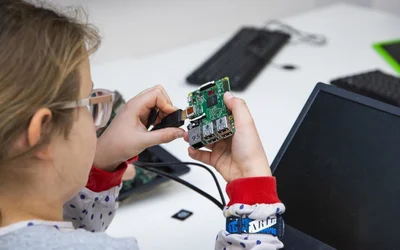
The most successful computer ever to come out of the UK celebrates its tenth anniversary this year.
What’s the difference between deep space and the deep sea? For a robot, the answer is: not much. Both environments are harsh and demanding, and, more importantly, both are far removed from the machine’s operator.
This comprehensive article dives deep into the world of robotics, exploring the history, types, engineering components, applications, and future trends of robots, offering readers an in-depth understanding of how these remarkable machines work and shape our lives.
16 minutes read.
21 minutes read.
16 minutes read.
23 minutes read.
19 minutes read.
27 minutes read.



University
At the Harvard John A. Paulson School of Engineering and Applied Sciences (...
42 Posts

Robotics & Automation
READY Robotics is a robotics software company that vastly simplifies robot ...
24 Posts

Automation Machinery Manufacturing
We are a company in flying robotics, specializing in Non-destructive inspec...
23 Posts
Everyone, guess how fast is it?
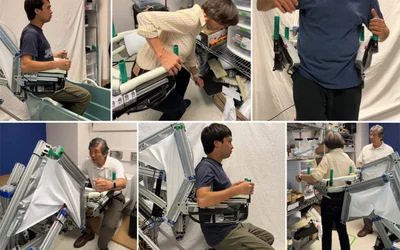
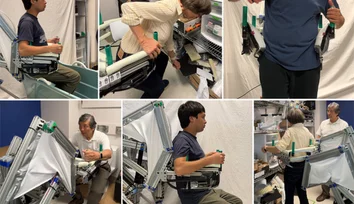
The new design could assist the elderly as they age in place at home.
The hospitality industry can leverage the gender characteristics of service robots to influence customers' decisions, according to new research from a team in the Penn State School of Hospitality Management.
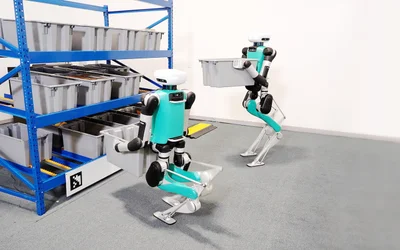
Service robots have evolved from simple automated machines to intelligent adaptive systems that can navigate unpredictable environments and interact with humans.
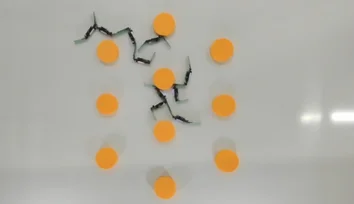
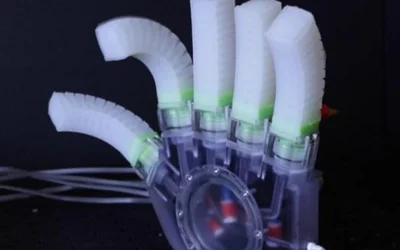
Engineers at Princeton and North Carolina State University have combined ancient paper folding and modern materials science to create a soft robot that bends and twists through mazes with ease.
A research team from ETH Zurich and the University of Zurich (UZH) has developed a novel approach to treating spinal cord injuries: controllable microrobots deliver stem cells directly to the site of an injury, where they promote nerve cell regeneration.
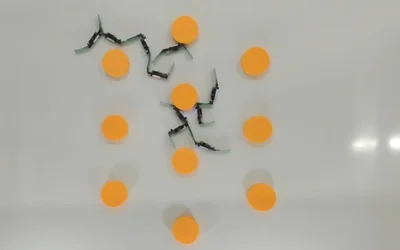
Cornell engineers have developed a robotic collective that behaves less like a machine and more like a material that flows, reshapes and adapts to its environment without centralized control.
From hospital wards to crop fields, from microscopic swarms to biohybrid machines powered by fungi, robotics research at Cornell spans an astonishing range of scale, application and ambition.
Aaron Johnson’s Robomechanics Lab has developed an open-source software that enables more agile movement in legged robots.

3 minutes read
The most successful computer ever to come out of the UK celebrates its tenth anniversary this year.
What’s the difference between deep space and the deep sea? For a robot, the answer is: not much. Both environments are harsh and demanding, and, more importantly, both are far removed from the machine’s operator.

4 minutes read
Technology leveraging SLAM and Computer Vision accelerates the warehousing towards Industry 4.0.
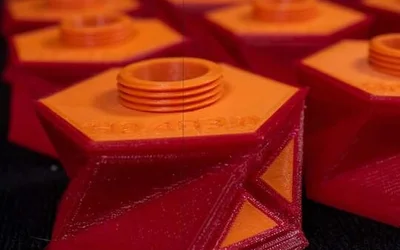
Inflatable actuators use origami principles to deform in intricate ways

3 minutes read
Robotic picking of cylindrical parts enabled through precise and reliable robot navigation with Photoneo 3D vision and robotic intelligence software Bin Picking Studio.

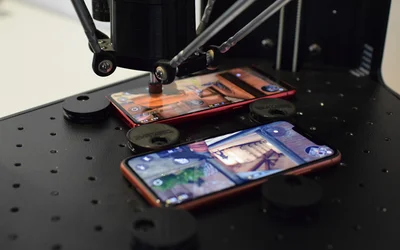
Measured in milliseconds, the response time to a tap on a smartphone’s screen might not be a “show stopping” issue, but a delay between an action and its reaction in the mobile gaming industry can make an important difference.

3 minutes read
This video shows how the ML-trained MEMS-IMU performs in the INS mechanization compared to the same MEMS IMU but without using the ML
The heart of the new soft robot is a 'hysteretic valve', as the researchers call their invention in a publication in the journal Matter.
Article #8 of Improving Lives with Digital Healthcare Series: Advancements in electronics have transformed the healthcare sector. The focus is on improving the experiences of users by utilizing cutting-edge technologies like advanced drug delivery systems, wearables, surgical robots, and more.
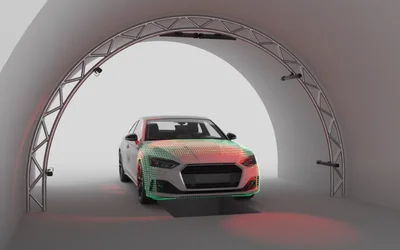
Parallel Structured Light is the only technology that enables you to create colorful & high-quality 3D point clouds of large objects in motion. This opens up countless new applications. This virtual case study looks at the advanced inspection of large objects.
4 minutes read
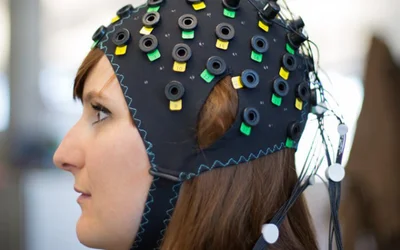
Article #4 of Improving Lives with Digital Healthcare Series: Transferring information directly between the human brain and a computer can unlock the possibilities of using machines as extended parts of the human body.
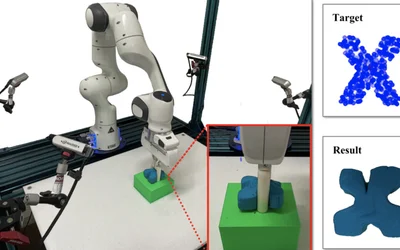
The inner child in many of us feels an overwhelming sense of joy when stumbling across a pile of the fluorescent, rubbery mixture of water, salt, and flour that put goo on the map: play dough. (Even if this happens rarely in adulthood.)
Article #3 of Improving Lives with Digital Healthcare Series: Using real-time sensing, new energy sources, and multifunctional connectors, it's possible to carry out cardiovascular operations with reduced risks and faster recovery time.
Article #2 of Improving Lives with Digital Healthcare Series: Improved healthcare robots facilitate minimally invasive surgical procedures with features like visualization, precision movement, and tactile feedback. Having a good connectivity infrastructure supporting the devices ensures reliability