Featured
Article #2 Electronics Innovation Series. A sustainable electronics future must be driven by manufacturers and supported by suppliers.
Article #2 Electronics Innovation Series. A sustainable electronics future must be driven by manufacturers and supported by suppliers.
PCB Trace Width Calculator
Glossary of Semiconductors Terms
Article #2 Electronics Innovation Series. A sustainable electronics future must be driven by manufacturers and supported by suppliers.
Article #2 of the Enabling IoT Series. CO2 sensors are among the most integral elements of such IoT applications.
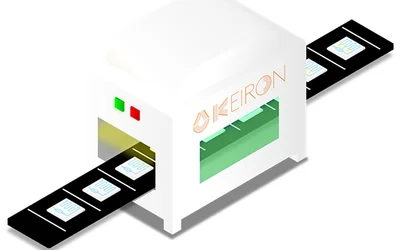
A young team with a new technology are currently creating a revolution in the world of printed electronics. In their modern, brand-new lab at the High Tech Plaza, they will be developing a device that can deposit any material on any substrate at a very rapid pace.
Semiconductors are the building blocks of modern electronics, powering everything from smartphones to satellites. This in-depth guide provides a comprehensive understanding of semiconductors' engineering principles and applications, delving into their fundamental concepts, materials, devices, manufacturing processes, and their impact on today's technology landscape.
18 minutes read.
20 minutes read.
26 minutes read.
17 minutes read.
21 minutes read.
29 minutes read.

Semiconductors
Nordic Semiconductor is a fabless semiconductor company specializing in wireless technology that powers the IoT.
181 Posts
Exploring the shift to additive digital printing in modern electronics fabrication.
This article explains the ESP8266 pinout, covering GPIO mapping, boot-strapping pins, safe-to-use pins, flash connections, ADC limits, deep-sleep functions, and NodeMCU and D1 mini pin labels.
Learn how a Hall Effect Current Sensor works, including principles, topologies, specifications, comparisons and engineering applications.
A guide covering the full radio-frequency design workflow, starting from setting specifications and choosing topologies to matching, simulation, layout, and verification, to help antenna engineers.
Controlled impedance is the control of PCB trace impedance within specified tolerances. This article covers microstrip and stripline designs, IPC-2141A formulas, stackup selection, impedance tolerances, routing practices, and TDR testing for signal integrity.
Exploring the shift to additive digital printing in modern electronics fabrication.
A PCB design can be electrically correct, pass every design rule check and perform exactly as expected on an engineer's screen - and still cause significant problems when it reaches manufacturing.
A semiconductor is a material whose electrical conductivity falls between that of a conductor and an insulator and can be controlled by temperature, light, and impurities. This article covers semiconductor materials, doping, diodes, transistors, and integrated circuits.
Article #2 Electronics Innovation Series. A sustainable electronics future must be driven by manufacturers and supported by suppliers.
Article #2 of the Enabling IoT Series. CO2 sensors are among the most integral elements of such IoT applications.
A young team with a new technology are currently creating a revolution in the world of printed electronics. In their modern, brand-new lab at the High Tech Plaza, they will be developing a device that can deposit any material on any substrate at a very rapid pace.

6 minutes read
Mitigating electronics manufacturing delays starts with understanding where manufacturing processes can go wrong. We’ve highlighted the four key reasons here, giving you a starting point if you struggle with on-time deliveries.

5 minutes read
Design for Manufacturing (DFM) builds upon five tenets that should apply to the decision chain starting from project initiation. This critical step within the manufacturing development cycle merges design requirements with production methods to create the best end results.
4 minutes read
Researchers at Texas A&M University and ExxonMobil are developing a method to reprocess petroleum coke — a byproduct of refining crude oil — into a sustainable, high-value alternative.
The power of cloud manufacturing enables hardware startups to be competitive with larger rivals.
Technology described as the ‘future of wireless sound’ allows engineers to enhance the sound quality and power consumption of wireless audio products

4 minutes read
SMT stands for Surface-mount Technology, a method of soldering components directly onto a PCB. This article delves into the concept of SMT and the manufacturing process, as well as the benefits, drawbacks, and related terms.
In this episode, we talk about why minimization of speakers and energy storage devices is crucial for the next generation of electronics and medical devices.

Understanding your rights and responsibilities is essential to securing your innovation. Further, taking advantage of cloud manufacturing can mitigate substantial risk.
Embedded vision systems come with a host of benefits for both users and AI systems operations.
OEMs can focus on innovation and stay competitive by leveraging cloud manufacturing services.
Article #1 Electronics Innovation Series. Enabling continued innovation while dealing with the constraints of supply chain uncertainty is a task for both designers and suppliers.
Researchers have developed a new material for an electronic component that can be used in a wider range of applications than its predecessors. Such components will help create electronic circuits that emulate the human brain and that are more efficient at performing machine-learning tasks.

3 minutes read