Featured
Discovery could pave the way to high speed, low-energy quantum computing.
Discovery could pave the way to high speed, low-energy quantum computing.
PCB Trace Width Calculator
Glossary of Semiconductors Terms
Discovery could pave the way to high speed, low-energy quantum computing.
Article #3 of the IoT Foundation Series. Smart ML enables scenes for new seamless ways of interacting with smart home devices.
Article #1 of our Industrial IoT Revolution Series: As the power requirements and operating frequencies of electronic components rise, new interconnecting technologies are required to cater to the ever-growing demand.
Semiconductors are the building blocks of modern electronics, powering everything from smartphones to satellites. This in-depth guide provides a comprehensive understanding of semiconductors' engineering principles and applications, delving into their fundamental concepts, materials, devices, manufacturing processes, and their impact on today's technology landscape.
18 minutes read.
20 minutes read.
26 minutes read.
17 minutes read.
21 minutes read.
29 minutes read.
Semiconductors
Nordic Semiconductor is a fabless semiconductor company specializing in wireless technology that powers the IoT.
181 Posts
Exploring the shift to additive digital printing in modern electronics fabrication.
This article explains the ESP8266 pinout, covering GPIO mapping, boot-strapping pins, safe-to-use pins, flash connections, ADC limits, deep-sleep functions, and NodeMCU and D1 mini pin labels.
Learn how a Hall Effect Current Sensor works, including principles, topologies, specifications, comparisons and engineering applications.
A guide covering the full radio-frequency design workflow, starting from setting specifications and choosing topologies to matching, simulation, layout, and verification, to help antenna engineers.
Controlled impedance is the control of PCB trace impedance within specified tolerances. This article covers microstrip and stripline designs, IPC-2141A formulas, stackup selection, impedance tolerances, routing practices, and TDR testing for signal integrity.
Exploring the shift to additive digital printing in modern electronics fabrication.
A PCB design can be electrically correct, pass every design rule check and perform exactly as expected on an engineer's screen - and still cause significant problems when it reaches manufacturing.
A semiconductor is a material whose electrical conductivity falls between that of a conductor and an insulator and can be controlled by temperature, light, and impurities. This article covers semiconductor materials, doping, diodes, transistors, and integrated circuits.
Discovery could pave the way to high speed, low-energy quantum computing.

4 minutes read
Article #3 of the IoT Foundation Series. Smart ML enables scenes for new seamless ways of interacting with smart home devices.
Article #1 of our Industrial IoT Revolution Series: As the power requirements and operating frequencies of electronic components rise, new interconnecting technologies are required to cater to the ever-growing demand.
Voice interface demands application-specific chips that can understand language.
Article #2 of the IoT Foundation Series. Smart homes are created by well-matched devices and communication protocols.
Engineers at EPFL have developed a method for reading several qubits – the smallest unit of quantum data – at the same time. Their method paves the way to a new generation of even more powerful quantum computers.

2 minutes read
Article #1 of the IoT Foundation Series. An overview of the key technologies that will enable smarter, more convenient, and sustainable cities.
The semiconductor manufacturing field employs a range of etching techniques to craft intricate patterns and structures on material surfaces, with dry etching and wet etching being primary methods.
According to leading trade publication, Enterprise IoT Insights, more than 80 percent of OEMs in the asset tracking space are releasing products for cellular IoT low power wide area networks (LPWANs). Also, LTE-M trackers have high growth as mobile operators roll out LTE-M networks.

3 minutes read
Despite specific industries experiencing slowdowns caused by the Covid-19 pandemic, projections in the Bluetooth technology market are optimistic through the remainder of 2021 and beyond.
3 minutes read
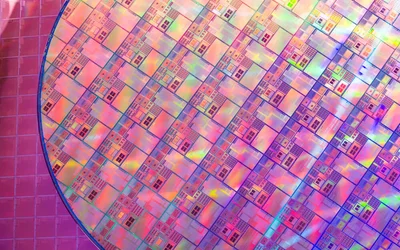
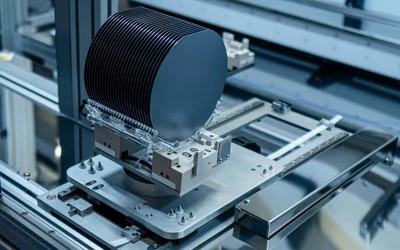
Silicon wafers are thin slices of highly pure crystalline Silicon, used in the production of integrated circuits. This article delves into the fascinating world of silicon wafers, unraveling their production process, unique properties, and the wide range of applications that make them indispensable.
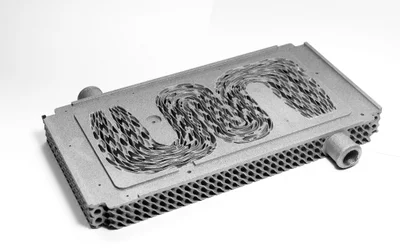
Puntozero redesigned the cold plate of the power electronics of Dynamis PRC’s electric race car for additive manufacturing. The result was a 25% lighter liquid-cooled heat sink and bioinspired flow guides that increased the heat transfer surface area by 300%.

5 minutes read
The article covers the basics of TinyML, a technology that improves the privacy, energy efficiency, affordability and reliability of devices utilising artificial intelligence. Be a part of TinyML for good, an online event and showcase of ideas that aims at exploring the topic in more detail.
Understanding forward bias vs reverse bias configurations in diodes, exploring the theoretical aspects, implementation, applications, and considerations while noting the key differences between forward bias vs reverse bias operating modes in diodes.
A critical flaw in random number generators puts the security of billions of low-cost IoT devices at risk. This means a new approach for generating random numbers is needed, which can be found in extracting entropy from SRAM behaviour.

4 minutes read