Featured
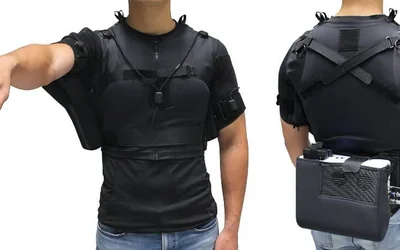
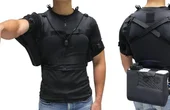
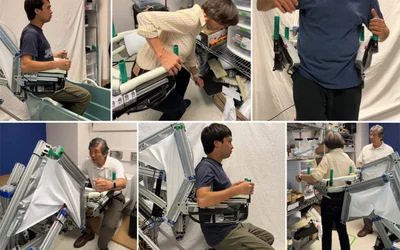
Proof-of-concept device is comfortable, safe, easy to use
Proof-of-concept device is comfortable, safe, easy to use
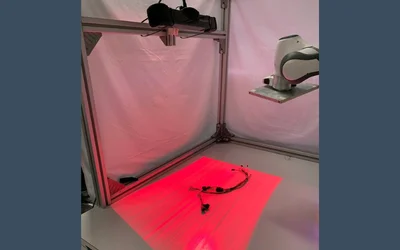
3D scanning and robotic manipulation of very thin objects such as wiring harnesses by the Department of Electrical, Electronic and Information Engineering at the University of Bologna.
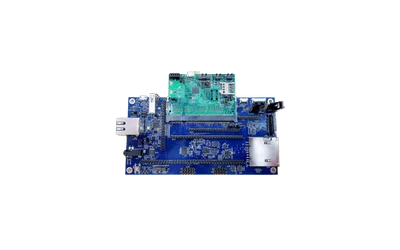
Alif Semiconductor’s™ microcontrollers meet the market need for low-power, AI-enabled embedded solutions with unmatched levels of multi-layered security, and a fully integrated secure element.
This comprehensive article dives deep into the world of robotics, exploring the history, types, engineering components, applications, and future trends of robots, offering readers an in-depth understanding of how these remarkable machines work and shape our lives.
16 minutes read.
21 minutes read.
16 minutes read.
23 minutes read.
19 minutes read.
27 minutes read.


University
At the Harvard John A. Paulson School of Engineering and Applied Sciences (...
42 Posts

Robotics & Automation
READY Robotics is a robotics software company that vastly simplifies robot ...
24 Posts

Automation Machinery Manufacturing
We are a company in flying robotics, specializing in Non-destructive inspec...
23 Posts
Everyone, guess how fast is it?
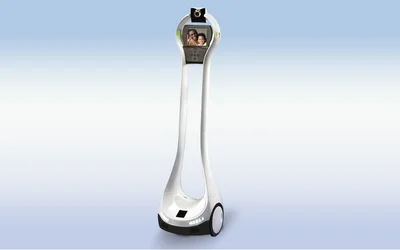
The new design could assist the elderly as they age in place at home.
The hospitality industry can leverage the gender characteristics of service robots to influence customers' decisions, according to new research from a team in the Penn State School of Hospitality Management.
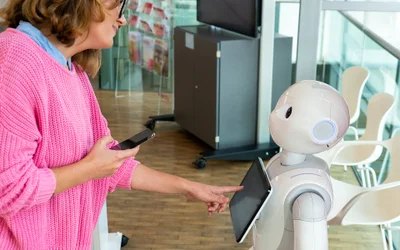
Service robots have evolved from simple automated machines to intelligent adaptive systems that can navigate unpredictable environments and interact with humans.
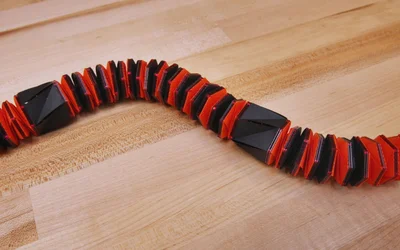
Engineers at Princeton and North Carolina State University have combined ancient paper folding and modern materials science to create a soft robot that bends and twists through mazes with ease.
A research team from ETH Zurich and the University of Zurich (UZH) has developed a novel approach to treating spinal cord injuries: controllable microrobots deliver stem cells directly to the site of an injury, where they promote nerve cell regeneration.
Cornell engineers have developed a robotic collective that behaves less like a machine and more like a material that flows, reshapes and adapts to its environment without centralized control.
From hospital wards to crop fields, from microscopic swarms to biohybrid machines powered by fungi, robotics research at Cornell spans an astonishing range of scale, application and ambition.
Proof-of-concept device is comfortable, safe, easy to use

4 minutes read
3D scanning and robotic manipulation of very thin objects such as wiring harnesses by the Department of Electrical, Electronic and Information Engineering at the University of Bologna.

Alif Semiconductor’s™ microcontrollers meet the market need for low-power, AI-enabled embedded solutions with unmatched levels of multi-layered security, and a fully integrated secure element.
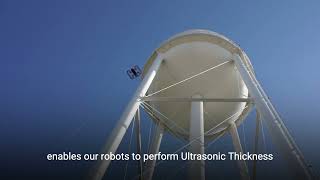
The world's first high-temperature aerial platform for Close and General Visual Inspection performs a job at 65°C on an offshore platform.

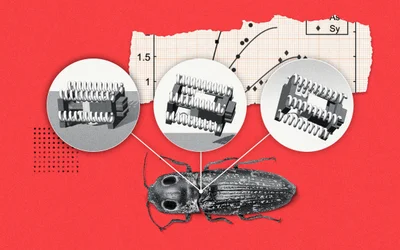
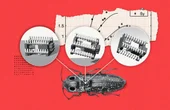
Researchers have made a significant leap forward in developing insect-sized jumping robots capable of performing tasks in the small spaces often found in mechanical, agricultural and search-and-rescue settings.
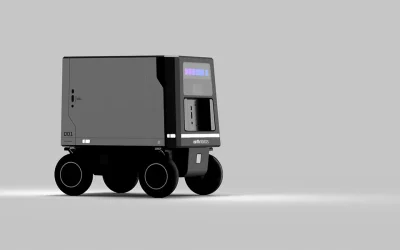
In this episode, we talk about a startup that developed a robot to eliminate the hassle of lost packages in large complexes and address the last meter delivery problem.

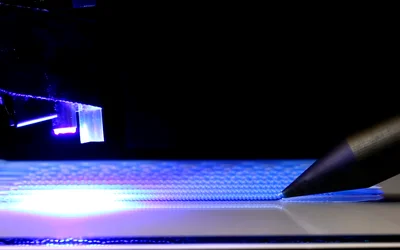
Rotational multimaterial printing of helical filaments for soft robotics and structural composites
3 minutes read
Vecna Technologies, founded by a pair of MIT alumni, has followed a long and winding path to help people in health care settings.
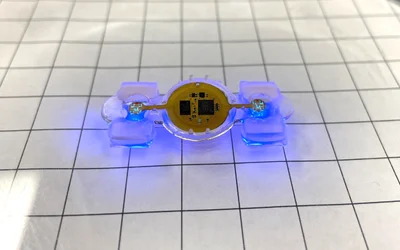
The hybrid “eBiobots” are the first to combine soft materials, living muscle and microelectronics, said researchers at the University of Illinois Urbana-Champaign, Northwestern University and collaborating institutions. They described their centimeter-scale biological machines in the journal Science Robotics.
On January 20, Team POLAR showcases its first vehicle for independent climate research in icy, inhospitable regions such as the North and South Poles.
Intelligent flying robots are making their way into the Non-Destructive Testing industry. These robots are gaining attention in providing the industry with a safer and superior alternative to traditional methods.
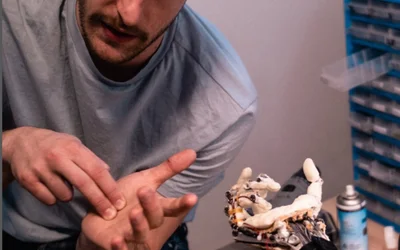
Clone Robotics’ humanoid hand uses hydraulics to mimic complex human hand function.
Sensors are used in robotics to calculate the condition and environment of robots, using functions similar to the human sensory organs. A variety of sensors are required by different robots to navigate their environment while performing tasks. This article covers the types of sensors in robotics.
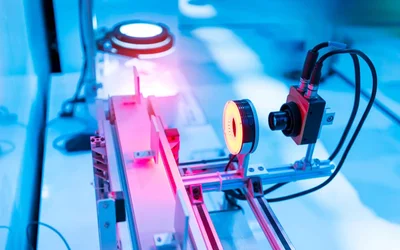
Fast localization and picking of multiple objects with Photoneo's Locator Studio for 3D picking in collision-free environments, PhoXi 3D Scanner, and a universal gripper.
Show the world what you can create with cutting-edge single-board computer hardware.

5 minutes read