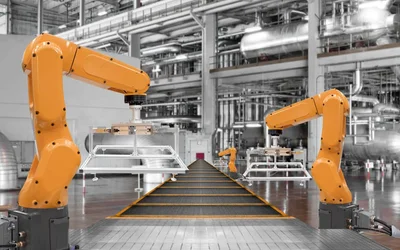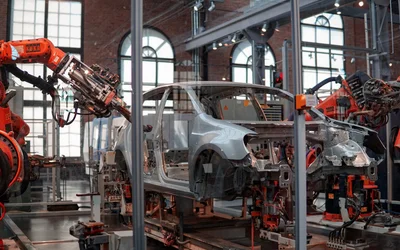
This comprehensive article dives deep into the world of robotics, exploring the history, types, engineering components, applications, and future trends of robots, offering readers an in-depth understanding of how these remarkable machines work and shape our lives.
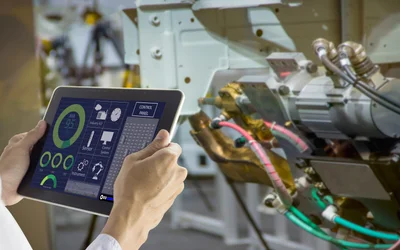
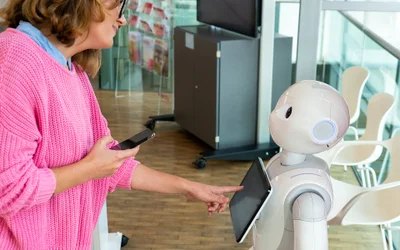
The hospitality industry can leverage the gender characteristics of service robots to influence customers' decisions, according to new research from a team in the Penn State School of Hospitality Management.
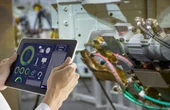
Service robots have evolved from simple automated machines to intelligent adaptive systems that can navigate unpredictable environments and interact with humans.
AI-powered artificial muscles made from pliable materials are reshaping recovery, from stroke rehabilitation to prosthetic design. These machines help people regain motion, strength, and confidence.
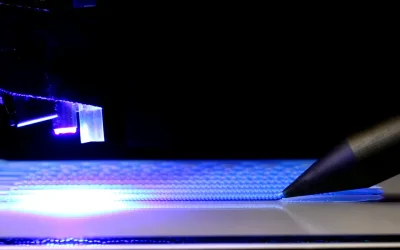
A team of researchers from ITMO University, Tel Aviv University, and University of Aveiro have come up with a new way to improve the mechanical properties of spider webs.
EPFL researchers have developed a customizable soft robotic system that uses compressed air to produce shape changes, vibrations, and other haptic, or tactile, feedback in a variety of configurations.
Choosing Cellular or WiFi Article #1:Cellular and WiFi connectivity have their own distinct benefits for IoT. Learn about the strengths and weaknesses and application examples of each one.
Researchers modeled dynamic facial expressions of pain using a data-driven perception-based psychophysical method with visual-haptic interaction of users.
While the concept of a hugging robot may sound bizarre, the researchers behind the project — now in its third generation — believe that such a device could have a major impact on everything from social telepresence to elder care.
In this episode, we talk about how researchers have created a system for predicting job automation and providing alternatives to current workers along with the impacts of carbon dioxide productivity.
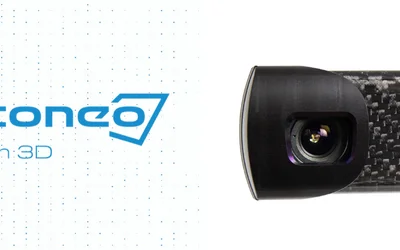
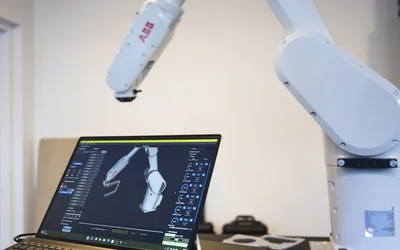
This clever solution for robotic engraving on unknown, curved surfaces uses Photoneo 3D vision to get an accurate point cloud. The 3D data is then used for the creation of an optimal trajectory to navigate the robot with high precision.
The MGV (Mechanical Guidance Vehicle) device is a self-controlling device without a driver. The guidance system of this device is mechanical, without a driver. Rough surfaces, which are one of the limitations of the AGV (Automated Guided Vehicle) device, do not exist for this device.
With growing concern over microplastics from ocean waste, autonomous underwater vehicles — AUVs — have been proposed as a tool for cleaning up our seas, but only if they can pick the plastics out from the fish: Enter these tweaked EfficientDets, boosting accuracy for the task.
One of the main things people are interested in when solving a complex robotic manipulator problem is the DoF and Functions. These two distinct pieces of terminology help to shortcut conversations and make sure everyone is talking on the same page!
Parts presentation isn’t always the easiest automation problem to solve but it can be one of the most important in determining the level of automation you can add to a production line.
Created by the Dynamic Locomotion Group at the Max Planck Institute for Intelligent Systems (MPI-IS), BirdBot serves two purposes: Demonstrating a more efficient bipedal robot design, and furthering our understanding of how birds' legs work.
An ROV camera is any visual imaging system that can be used on underwater ROVs to provide the operator with a perception of the operating environment. The depth rating for an ROV camera usually starts at 300m.
Designed using off-the-shelf parts, a low-cost microcontroller, and a 3D-printed chassis, the HeRo 2.0 robot costs just $18 to build — and is at the heart of an effort to open swarm robotics up to a broader audience.