Featured
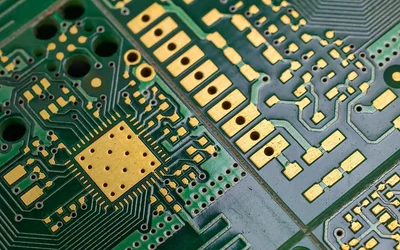
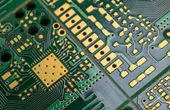
This article delves into the basics of ENIG finish, its application process, advantages and disadvantages, challenges, and comparative analysis with other finishes.
This article delves into the basics of ENIG finish, its application process, advantages and disadvantages, challenges, and comparative analysis with other finishes.
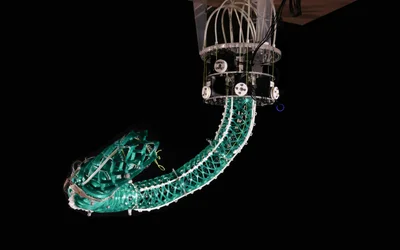
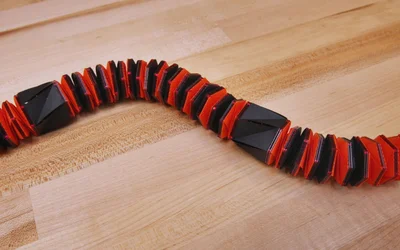
EPFL researchers have designed a bio-inspired robot with a novel trimmed helicoid structure that allows for a wide range of motion and safe interaction with humans.
This comprehensive article dives deep into the world of robotics, exploring the history, types, engineering components, applications, and future trends of robots, offering readers an in-depth understanding of how these remarkable machines work and shape our lives.
16 minutes read.
21 minutes read.
16 minutes read.
23 minutes read.
19 minutes read.
27 minutes read.


University
At the Harvard John A. Paulson School of Engineering and Applied Sciences (...
42 Posts

Robotics & Automation
READY Robotics is a robotics software company that vastly simplifies robot ...
24 Posts

Automation Machinery Manufacturing
We are a company in flying robotics, specializing in Non-destructive inspec...
23 Posts
Everyone, guess how fast is it?
The new design could assist the elderly as they age in place at home.
The hospitality industry can leverage the gender characteristics of service robots to influence customers' decisions, according to new research from a team in the Penn State School of Hospitality Management.
Service robots have evolved from simple automated machines to intelligent adaptive systems that can navigate unpredictable environments and interact with humans.
Engineers at Princeton and North Carolina State University have combined ancient paper folding and modern materials science to create a soft robot that bends and twists through mazes with ease.
A research team from ETH Zurich and the University of Zurich (UZH) has developed a novel approach to treating spinal cord injuries: controllable microrobots deliver stem cells directly to the site of an injury, where they promote nerve cell regeneration.
Cornell engineers have developed a robotic collective that behaves less like a machine and more like a material that flows, reshapes and adapts to its environment without centralized control.
From hospital wards to crop fields, from microscopic swarms to biohybrid machines powered by fungi, robotics research at Cornell spans an astonishing range of scale, application and ambition.
This article delves into the basics of ENIG finish, its application process, advantages and disadvantages, challenges, and comparative analysis with other finishes.
EPFL researchers have designed a bio-inspired robot with a novel trimmed helicoid structure that allows for a wide range of motion and safe interaction with humans.
For Safer Cycling in the Winter

7 minutes read
This article explores Autoblocks, shedding light on its core components, its exceptional value, and its ability to transform the world of robotics and automation.

3 minutes read
Enhancing Efficiency with AGVs and AMR
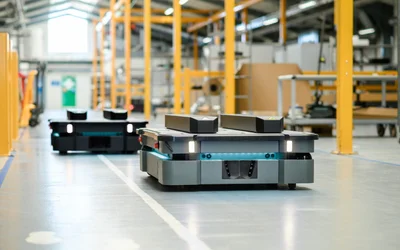
This article offers an in-depth view of AMR robots, their underlying technology, and applications crucial in today's rapidly evolving technological landscape.
Autoblocks and ASG have joined forces, ushering in a new era of efficiency and precision.
2 minutes read
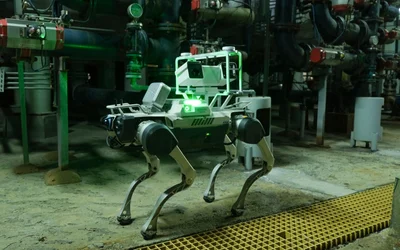
DEEP Robotics, a global pioneer in the development and industrial application of quadrupedal robots, announced the launch of its X30 quadruped robot, a flagship product designed to meet core industry needs in multiple fields, including inspection, emergency rescue, fire detection, and more.

4 minutes read
A comparative analysis of the Raspberry Pi 3B+, the ROCK 3 Model A, and the ROCK 3 Model C.
Training robust AI models can be challenging when using crowdsourced or publicly available datasets. The most useful neural networks are ones that replace expert knowledge to solve real problems. One example would be a visual inspection model for the factory floor.

3 minutes read
Researchers coaxed a family of generative AI models to work together to solve multistep robot manipulation problems.
Humans excel at manual tasks, and ideally, robots should surpass us in these functions. We have the advantage due to our superior dexterity, and we can perform tasks that robots should, in theory, be capable of. As we advance robotics our goal is to effectively transfer our human skills to robots.

6 minutes read
Its impact on Visual SLAM and beyond

4 minutes read
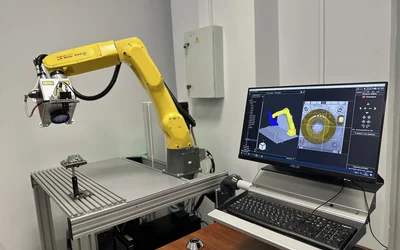
Researchers from ITMO University have created a multipurpose robot complex for laser treatment of medical device surfaces, like those of dental and skull implants. The designed technology can be utilized to imbue metal implants with antibacterial and biocompatible properties, as well as mark medical items. All one needs to do is load a 3D model of an implant into a program, set a processing trajectory, and pick a surface attribute of choice.
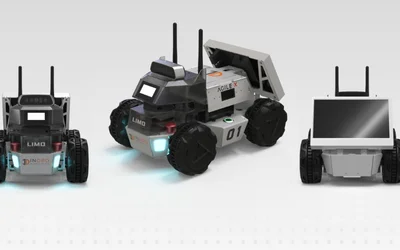
Exploring Cutting-Edge Research with the LIMO Robot
6 minutes read