Featured
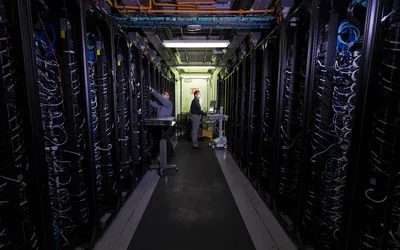
Amid the race to make AI bigger and better, Lincoln Laboratory is developing ways to reduce power, train efficiently, and make energy use transparent.
Amid the race to make AI bigger and better, Lincoln Laboratory is developing ways to reduce power, train efficiently, and make energy use transparent.
Sensors are electronic devices with the function to acquire information from the outside world. There are already a wide variety of sensors that can reproduce the five senses of humans. Image sensors, microphones, accelerometers, and temperature sensors are examples of those.
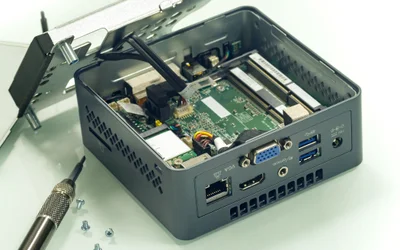
Discover the power of single-board computers for enhanced versatility and performance.
This comprehensive article dives deep into the world of robotics, exploring the history, types, engineering components, applications, and future trends of robots, offering readers an in-depth understanding of how these remarkable machines work and shape our lives.
16 minutes read.
21 minutes read.
16 minutes read.
23 minutes read.
19 minutes read.
27 minutes read.


University
At the Harvard John A. Paulson School of Engineering and Applied Sciences (...
42 Posts

Robotics & Automation
READY Robotics is a robotics software company that vastly simplifies robot ...
24 Posts

Automation Machinery Manufacturing
We are a company in flying robotics, specializing in Non-destructive inspec...
23 Posts
Everyone, guess how fast is it?
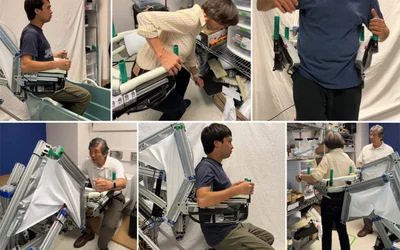
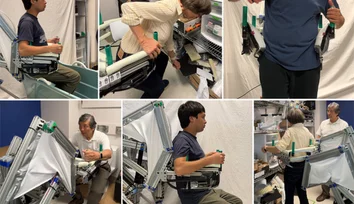
The new design could assist the elderly as they age in place at home.
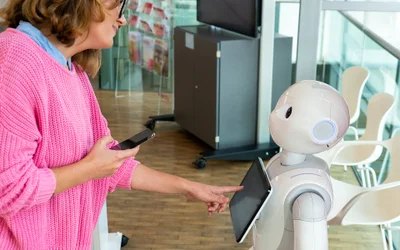
The hospitality industry can leverage the gender characteristics of service robots to influence customers' decisions, according to new research from a team in the Penn State School of Hospitality Management.
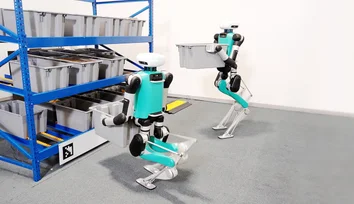
Service robots have evolved from simple automated machines to intelligent adaptive systems that can navigate unpredictable environments and interact with humans.
Engineers at Princeton and North Carolina State University have combined ancient paper folding and modern materials science to create a soft robot that bends and twists through mazes with ease.
A research team from ETH Zurich and the University of Zurich (UZH) has developed a novel approach to treating spinal cord injuries: controllable microrobots deliver stem cells directly to the site of an injury, where they promote nerve cell regeneration.
Cornell engineers have developed a robotic collective that behaves less like a machine and more like a material that flows, reshapes and adapts to its environment without centralized control.
From hospital wards to crop fields, from microscopic swarms to biohybrid machines powered by fungi, robotics research at Cornell spans an astonishing range of scale, application and ambition.
Amid the race to make AI bigger and better, Lincoln Laboratory is developing ways to reduce power, train efficiently, and make energy use transparent.
Sensors are electronic devices with the function to acquire information from the outside world. There are already a wide variety of sensors that can reproduce the five senses of humans. Image sensors, microphones, accelerometers, and temperature sensors are examples of those.

6 minutes read
Discover the power of single-board computers for enhanced versatility and performance.
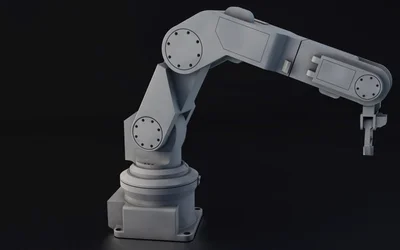
Ever wondered how robotic arms achieve precise movement in manufacturing, healthcare, or logistics? It’s all about smart design — from sturdy components and kinematics to advanced control systems. Discover how these elements work together to deliver accuracy, flexibility, and real-world efficiency.
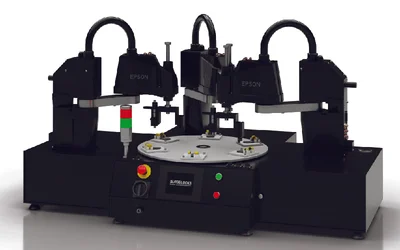
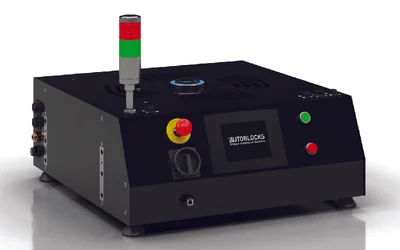
In the ever-evolving landscape of manufacturing and automation, efficiency and precision are paramount. Autoblocks™ understands this fundamental need and has introduced the groundbreaking Turn Block™ indexing table, a game-changer in the world of industrial automation.

2 minutes read
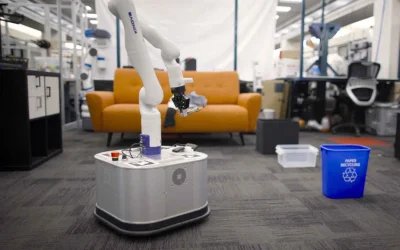
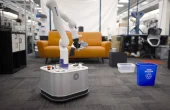
The one-armed “TidyBot” needs only a few starter examples to figure out how you like your stuff put away.

4 minutes read
Revolutionizing Agriculture with AI-powered Robotic platform Solutions for Industrial Greenhouses
Watch How Flying Robots Like SKYRON Are Redefining Safety Checks at Sea

Gesture recognition, leveraging the advanced capabilities of embedded devices and streamlined through specialized platforms is creating new means of human-machine interactions, paving the way for more intuitive and user-friendly device interfaces.
A platform-agnostic module that can bolt on to pretty much any means of locomotion

5 minutes read
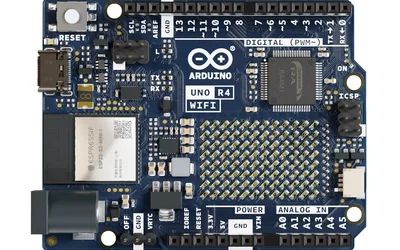
The new Arduino UNO R4 Wi-Fi board provides built-in Wi-Fi and Bluetooth communication as well as a 12×8 LED matrix display to give makers, hobbyists, and engineers an extremely versatile prototyping tool.
An examination of troubleshooting techniques for single board computer issues.
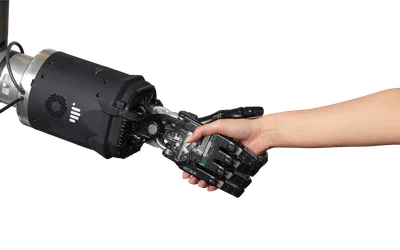
In this third part of the series, we will take a deeper look at the development of the Shadow Hand and Glove, the technology behind the glove, and the potential impact of this system on the field of robotics.
Welcome to the new world of Automation - Building Blocks for Fast and Affordable Automation!
The integration of AI, IoT, and robotics allows robots to access and exchange data with other devices, enabling them to make informed decisions.