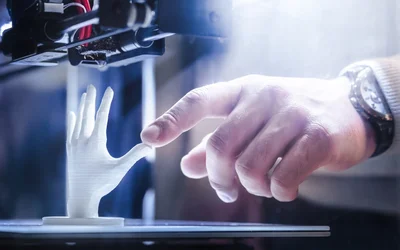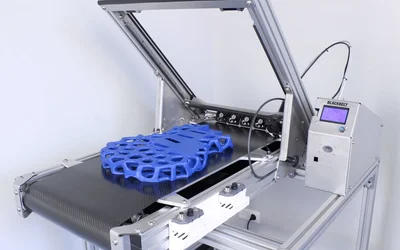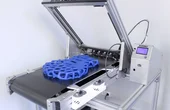

What is 3D printing? This article goes over the basics of 3D printing, otherwise known as additive manufacturing, covering its engineering principles and applications.
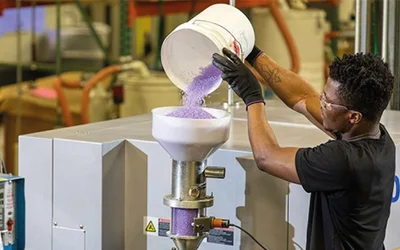
What is 3D printer filament made of? This guide examines polymers, additives, and composites, offering practical tips for digital design and hardware engineers.
Learn everything you need about the full adder circuit. From binary addition theory to low-power hardware implementations and modern ASIC/FPGA design flows, this technical article equips digital design engineers, hardware engineers with practical insights and current research trends.
Explore how a transistor works from first principles through practical circuit design. This in depth guide explains BJT and FET operation, switching and amplification modes, design calculations, modern market trends, and FAQs, ideal for digital design engineers, hardware engineers, and students.
Advanced 3D scanning delivers comprehensive, high-accuracy inspection for massive grinding roller shells. It replaces manual measurement with fast, traceable digital analysis, enabling smarter maintenance and reduced operational costs.
Designed for "energy neutral operation" of resource-constrained wearable devices, tinyMAN learns how to eke out the power available from an energy harvesting system to maximize utility without ever needing a manual charge.
Digital transformations can have significant upside for the businesses that undertake them: improved efficiency, increased output, reduced costs, and more stable operations to name a few.
3D printers might seem like a magic box that can do anything, but the truth is that they’re a tool just like any other. To get the most out of them, you need to know how to use them properly. Today we’ll talk about 5 ways that you can get more out of a 3D printer for classroom use.
FDM 3D printers are reliable and cost-effective, but the appearance of layer lines can ruin a good print. Fortunately, it is possible to smooth PLA parts using a variety of methods.
Wet 3D printer filament can lead to ruined prints. Fortunately, proper storage and drying techniques can help prevent and solve the problem. Here’s what to know.
Designed as a necklace-style wearable in a 3D-printed case, SpeeChin is capable of recognizing 54 English and 44 Chinese voice commands — even if the wearer never says anything out loud.
This video will look deeper into CNC automation, but perhaps not in the way you think. We will aim to give you insights on how automation can help prove your design and optimise your part and process for cost effective, quick CNC production.
Article #1 of Connectivity and Sensing in Harsh Environments Series: Electrical components that enable the transfer of control and power are improving to fulfill the requirements of cutting-edge industrial applications.
Designed around a novel DNA aptamer, this flexible sensor array can pick up your cortisol — and therefore stress — levels by sampling your sweat, and transmit readings to a nearby smartphone or other device for long-term tracking.
Typical industries that use 3D printing are automotive and medical, but you probably don't expect to hear fashion and jewellery. However, these industries are increasingly turning to 3D printing due to its ability to produce fine details, iterate designs quickly and display quality finishes.
3D printer slicing software Cura lets users choose from a range of infill patterns. But what are the differences between patterns like Grid, Cubic, and Zig-zag, and how do you choose between them?