What Is a VFD (Variable Frequency Drive)? Complete Engineering Guide to VFD Drives (2026)
This guide explains what is a VFD, further detailing how it works, compares types and vendors, provides application and selection advice, surveys 2026 trends, and responds to common questions.

Last updated on 26 May, 2026. 16 minutes read
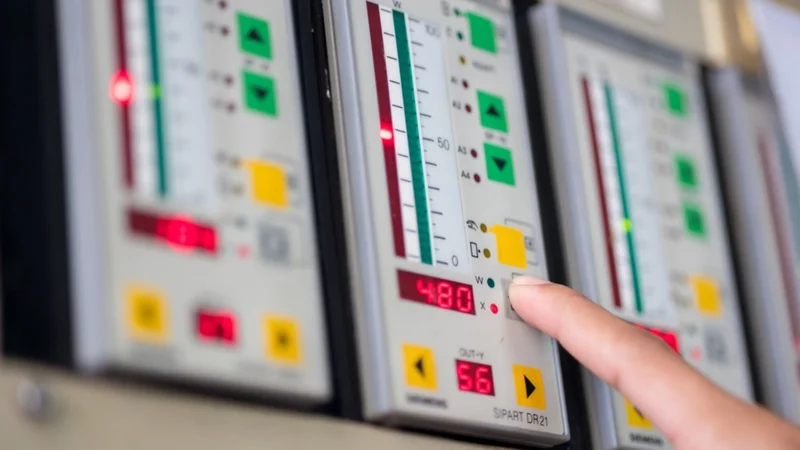
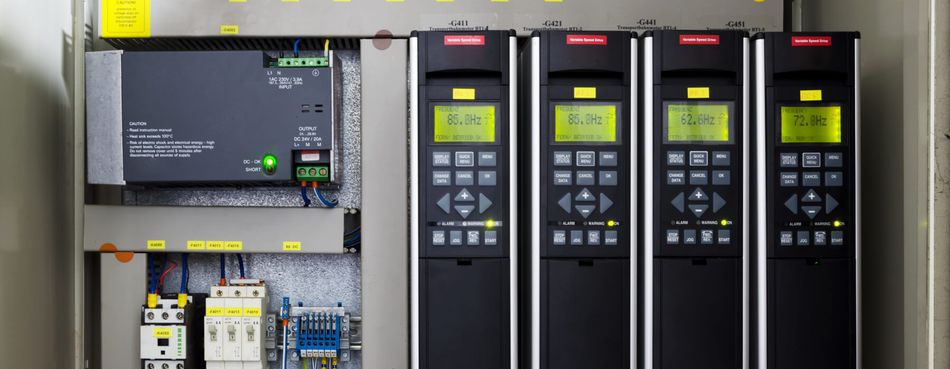
Variable Speed Drive Controller used in Factories
Key Takeaways
Definition and Purpose – Variable Frequency Drive (VFD) is a type of motor controller that rectifies AC power into DC and then inverts it back to adjustable-frequency AC to control the speed of alternating current motors. The synonyms include Variable Speed Drive (VSD) and Adjustable Speed Drive (ASD).
How VFDs Work – The typical VFD consists of a rectifier, DC bus (capacitors and inductors), and an inverter. Pulse-Width Modulation (PWM) switches insulated gate bipolar transistors (IGBTs) or wide-bandgap devices to produce a variable frequency sine wave for the motor. The control strategies include scalar (V/f) control and vector or Field-Oriented Control (FOC).
Types of VFD Drives – Voltage Source Inverter (VSI) drives dominate the market; Current Source Inverter (CSI) drives serve large motors; matrix converters provide compact, regenerative AC–AC conversion; and regenerative VFDs employ active front-ends for energy return and low harmonics.
Energy Savings – VFDs reduce energy usage in pumps and fans by exploiting affinity laws: power is proportional to the cube of speed, so slowing a centrifugal pump by 20 percent can cut power by almost half. VFDs can reduce energy consumption by 40–80 percent and extend equipment life.
Industries and Applications – VFD drives are used in HVAC fans, blowers, pumps, compressors, conveyors, elevators, machine tools, and traction. Their ability to adjust motor speed improves process control and reduces mechanical stress.
2026 Trends – The adoption of Silicon-Carbide (SiC) and Gallium Nitride (GaN) devices delivers real sine-wave outputs with low total harmonic distortion. Integrated functional safety (Safe Torque Off, Safe Stop), AI-enabled predictive maintenance, and cloud-connected VFDs are reshaping motor control.
Introduction: What Is a VFD?
VFDs are now essential across industrial automation, HVAC, pumping, and process systems. In terms of engineering, what is a VFD? It is a power electronic drive that converts fixed-frequency AC supply into a controlled voltage and frequency output, allowing AC motors to run at the exact speed required by the application. Instead of relying on mechanical throttling, valves, dampers, or direct-on-line starting, a VFD regulates motor speed, torque, acceleration, and braking through precise electronic control.
In the absence of a VFD, a centrifugal pump or fan running at full speed wastes energy when only partial flow is required. By adjusting the frequency, the VFD follows the pump and fan affinity laws: flow is proportional to speed, pressure is proportional to speed squared, and power is proportional to speed cubed. This means reducing speed by 20 percent reduces power consumption by nearly half. Modern VFDs also include vector control for high-torque applications such as conveyors, elevators, and machine tools.
This guide explains what is a VFD, further detailing how it works, compares types and vendors, provides application and selection advice, surveys 2026 trends, and responds to common questions.
How Does a VFD Work?
Understanding how a VFD works requires following the power conversion path from the electrical mains to the motor.
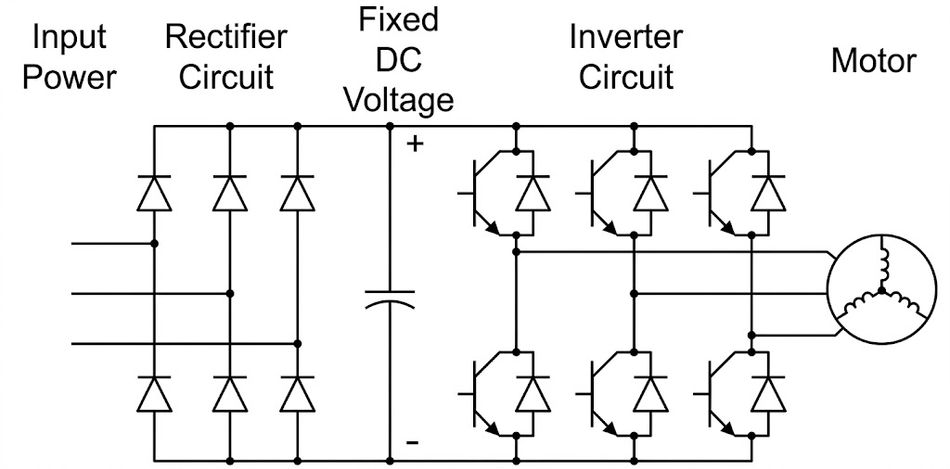
The typical VFD has three main sections:
Rectifier – The incoming three-phase (or single-phase) AC power passes through a bridge of diodes or controlled devices to produce a DC voltage. In standard drives, this bridge uses six or twelve diodes; regenerative or active front-end (AFE) drives replace diodes with IGBTs or SiC MOSFETs that can also feed energy back to the grid. The rectifier introduces current harmonics because it draws current in pulses.
DC Bus (DC Link) – The rectifier output feeds the DC bus, consisting of capacitors and sometimes inductors (chokes). The capacitor bank smooths the DC voltage and stores energy for the inverter. A line reactor or DC choke reduces ripple current and harmonics. In matrix converters, this DC link is absent.
Inverter – The DC bus connects to an inverter stage made of high-power semiconductor switches (IGBTs, SiC MOSFETs, or GaN HEMTs). These switches are modulated with pulse-width modulation (PWM) to synthesize a three-phase sine wave with adjustable frequency and amplitude. By varying the output frequency and voltage, the VFD controls motor speed and torque. Insulated gate bipolar transistors dominate high-power drives, while SiC and GaN devices enable higher switching frequencies, lower losses and near-sinusoidal output currents.
The synchronous speed of an AC motor is given by:
N = 120 × f / p,
where f is frequency in hertz, and p is the number of poles. [1] VFD adjusts frequency to control speed of the motor; a field-oriented control loop measures motor current and speed (often sensorless) and modulates the PWM to maintain torque at low speed. The two major control strategies exist:
Scalar (V/f) Control – Also called V/Hz control, this method maintains a constant voltage-to-frequency ratio. It is simple and suitable for variable-torque loads such as pumps and fans.
Vector or Field-Oriented Control (FOC) – This technique decouples torque and flux components using mathematical transformations to deliver a precise torque response even at zero speed. It is used in high-performance applications such as robotics, elevators, and servo systems. Modern drives automatically select between sensorless FOC, sensor-based FOC, or V/f depending on the motor and load.
The engineer should also distinguish VFDs from soft starters.
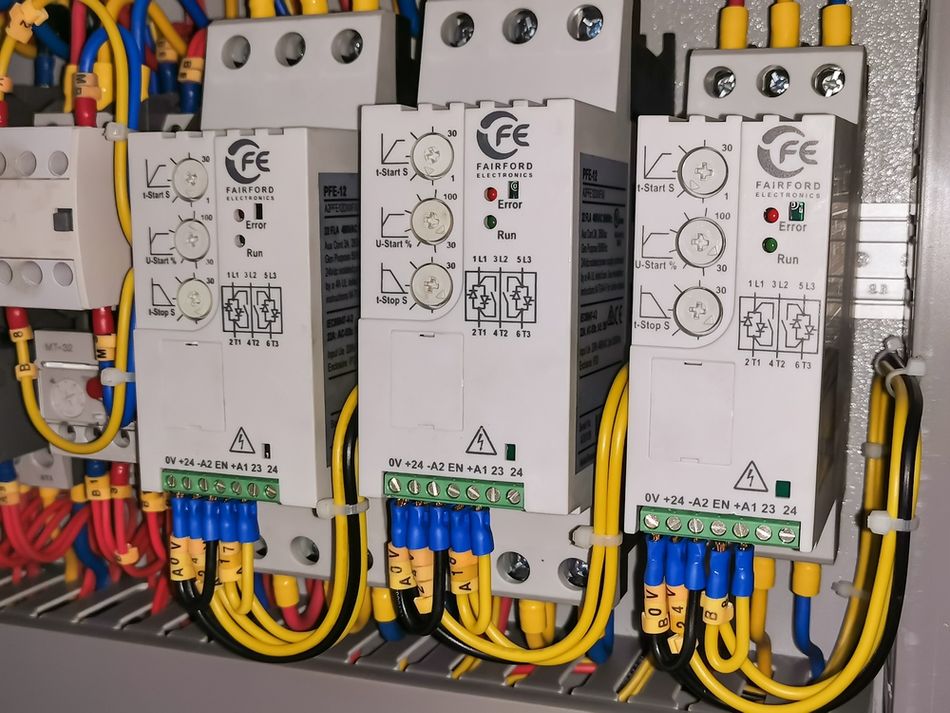
The soft starter uses silicon-controlled rectifiers (SCRs) to gradually increase voltage during startup, reducing inrush current but not controlling speed after startup. VFD, on the other hand, controls frequency and voltage during startup, operation, and stopping, providing continuous speed regulation and regenerative braking. [2]
Recommended Reading: Motor Speed Control: Methods Across Motor Types
Types of VFD Drives
Not all VFDs are alike. The drive topology influences performance, harmonic distortion, regenerative capability and cost.
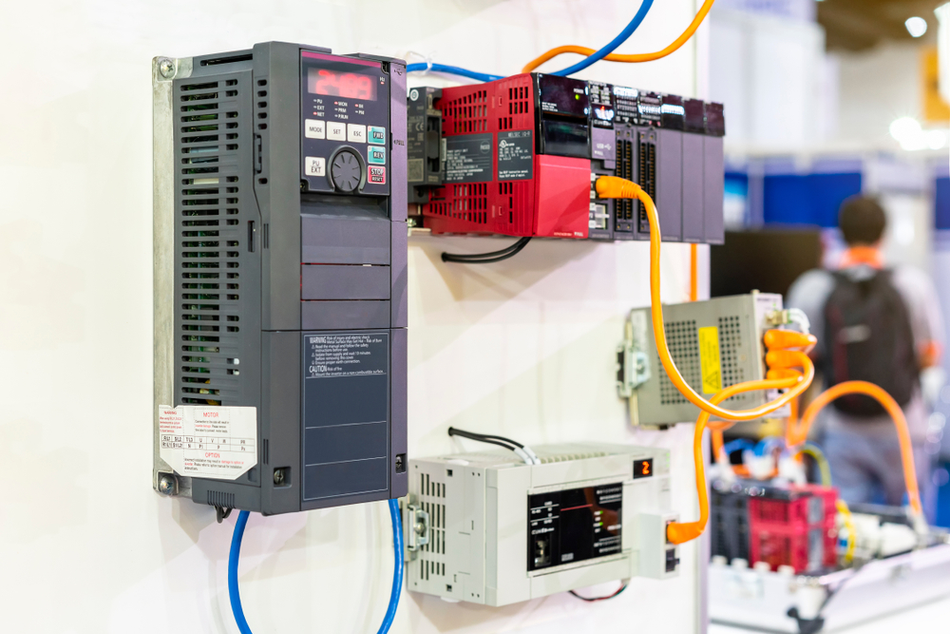
The main categories are described below.
Voltage Source Inverter (VSI)
VSI drives are the most common type. They use a diode bridge or AFE rectifier to create a stiff DC bus and an IGBT- or SiC-based inverter to generate PWM waveforms. The advantages include high dynamic performance, good efficiency, low cost and compatibility with various motor types. VSI drives typically cover power ranges from fractional kilowatts to several megawatts and are available from every major vendor. The drawbacks include current harmonics on the line and motor voltage stress; line reactors, direct current chokes and filters may be required to meet harmonic standards.
Current Source Inverter (CSI)
CSI drives convert the supply into a current-controlled DC link using inductors. The inverter produces a quasi-square-wave current waveform. CSIs are robust and have inherent short-circuit protection. They are used for very large synchronous and induction motors (above 1 MW) in heavy industries such as mining and rolling mills. CSIs demand matched motors and drives require large DC link inductors, and produce higher torque ripple. Their use is declining because high-power VSIs with active front ends offer better performance.
Matrix Converter
Matrix converters perform direct AC-to-AC conversion through a bidirectional switch matrix without an intermediate DC link. They are compact, offer sinusoidal input and output currents with near-unity power factor, and provide four-quadrant operation (regeneration). The Yaskawa U1000 matrix converter drives use this topology; they provide full regeneration, THD below 5 percent, and near-unity power factor. Matrix converters are suitable where space and harmonic performance are critical, such as elevators and low-harmonic marine drives. The absence of a DC link reduces energy storage and ride-through capability during supply dips.
Regenerative VFDs (Active Front End)
Regenerative VFDs replace the diode rectifier with an IGBT-based active front-end. This topology draws nearly sinusoidal current from the grid, reduces THD to below 5 percent, and maintains a high power factor. It also allows energy to flow back to the grid during braking, saving energy in descending conveyors, cranes and test stands. Vendors like ABB (ACS880-AFE), Siemens (S120, S150 with Active Infeed), and Danfoss produce regenerative drives. [3] SiC-based active front ends provide near-pure sine-wave output and eliminate common-mode voltage.
Recommended Reading: SiC MOSFET: Wide-bandgap Power Devices for High-Efficiency Converters
4. VFD Drive Vendor Comparison
The table below compares leading VFD vendors and families. The data is summarised from manufacturer datasheets and product literature.
ABB ACS580 and ACS880 drives are widely used in industrial and infrastructure applications. The ACS580 covers approximately 0.75–500 kW, while the ACS880 industrial drive platform extends to high-power systems up to around 6,000 kW. ABB drives support V/f control, sensorless vector control, and Direct Torque Control, which is useful where fast torque response is required. The safety functions include Safe Torque Off, with optional Safe Stop and safety communication options such as PROFIsafe and CIP Safety. Integrated EMC filters, DC chokes, Modbus RTU, PROFIBUS, PROFINET, EtherNet/IP, and built-in web access make these drives suitable for HVAC, water treatment, material handling, and pulp and paper systems.
Siemens Sinamics G120C is a compact drive family designed for general motion control, pumps, fans, and conveyors. It covers roughly 0.55–132 kW and supports V/f and sensorless vector control. The G120C includes Safe Torque Off and offers communication options such as PROFINET, EtherNet/IP, PROFIBUS, Modbus, and USS. Its compact housing makes it useful in control panels where space is limited, especially in standard automation and machine-building applications.
Siemens Sinamics S210 and S150 serve different performance levels. The S210 is a servo-oriented drive for lower-power applications from about 0.1–7 kW, commonly used in robotics, positioning systems, and machine tools. The S150 is a high-power cabinet drive covering roughly 75–1,200 kW and is designed for process lines and heavy industrial systems. These drives support field-oriented vector control, servo control, active front-end operation, regenerative infeed, and advanced safety functions such as Safe Brake Control, Safe Stop, Safe Limited Speed, and PROFIsafe integration.
Yaskawa GA800 is a flexible industrial AC drive with a power range of about 0.55–450 kW. It supports V/f control, open-loop vector control, closed-loop vector control, and sensorless flux vector control. Safety features include Safe Torque Off up to SIL3/PL e. Integrated DC reactors, optional 12-pulse input configurations, Bluetooth support, 24 V control power, and communication options such as EtherNet/IP, PROFINET, Modbus TCP, and PROFIBUS make it suitable for pumps, fans, compressors, conveyors, and multi-motor systems.
Yaskawa U1000 Matrix Converter is different from conventional VFD drives because it does not use a standard DC bus with electrolytic capacitors. Instead, it converts AC directly to variable-frequency AC using matrix conversion. This design provides near-unity power factor, low input harmonics, regenerative braking, and reduced need for braking resistors or harmonic filters. With a power range of about 2.2–500 kW, it is well suited for elevators, cranes, hoists, marine systems, and test benches where regeneration and power quality are important.
Schneider Altivar Process ATV630 and ATV900 drives are designed for process industries such as water and wastewater, oil and gas, mining, and food and beverage. Their power range extends from about 0.75–2,600 kW. These drives support V/f control, sensorless vector control, sensor-based vector control, and application-specific process control. Features such as dual-port Ethernet, embedded web server, harmonic reduction options, regenerative feedback, built-in analytics, Safe Torque Off, Safe Limited Speed, and energy-saving functions make them useful for digitally connected industrial plants.
Mitsubishi FR-A800 and FR-E700 drives cover both advanced and compact applications. The FR-A800 ranges from about 0.4–1,500 kW, while the FR-E700 covers smaller systems from about 0.1–15 kW. These drives support V/f control, vector control, and advanced real-sensorless control. Features such as auto-tuning, regenerative brake units, PLC functionality, Safe Torque Off, CC-Link, EtherNet/IP, and PROFIBUS support make them suitable for elevators, cranes, conveyors, and machine tools.
Danfoss VLT AutomationDrive FC 300 covers approximately 0.25kW–1.4 MW, depending on the supply voltage. This is available in IP20, IP21, IP55, and IP66 enclosures. It supports V/f, flux vector control, automatic motor adaptation, and energy optimization. Integrated Safe Torque Off, Safe Stop, condition-based monitoring, motion control, back-channel cooling, and communication protocols such as PROFINET, EtherNet/IP, EtherCAT, BACnet, and Modbus make it suitable for HVAC, aquaculture, conveyors, winders, and extruders.
VFD Applications
VFD drives appear in almost every sector of industry.
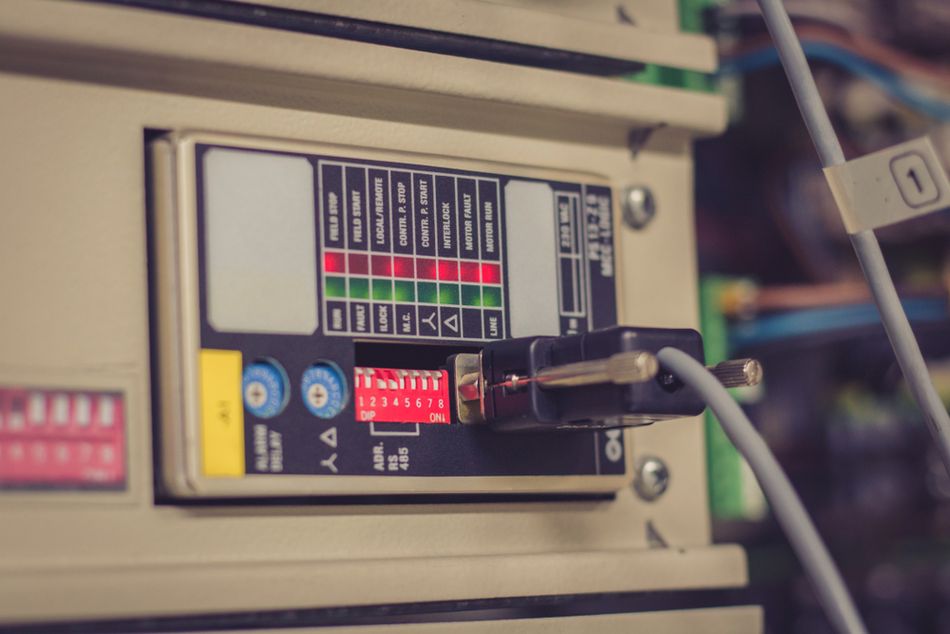
The notable applications include:
HVAC Systems
Heating, ventilation and air-conditioning (HVAC) systems use VFDs on fans and blowers to modulate airflow. Instead of using dampers, the VFD adjusts fan speed to meet building load. In large commercial buildings this can reduce energy consumption by 30–50 percent. Many modern VFDs integrate with building automation systems via BACnet or Modbus. AC motors used for fans are typically induction motors; VFDs allow soft start, reducing belt wear and mechanical stress. For example, the Danfoss VLT AutomationDrive offers specific HVAC functions and IP66 enclosures.
Water and Wastewater Treatment
Pumps for water supply, wastewater, and irrigation benefit greatly from VFDs. Flow through a centrifugal pump scales linearly with speed, and power scales with the cube of speed, so reducing speed provides large energy savings. Many municipalities retrofit pump stations with VFDs to reduce electricity costs and control pressure transients. Vendors like ABB and Schneider emphasise water/wastewater markets for their drives.
Conveyors and Material Handling
The conveyor belts and material handling equipment require precise speed control and high torque. VFDs allow smooth acceleration and deceleration, reducing mechanical shock and product spillage. They can also coordinate multiple motors to control tension. VFDs with field-oriented control and regenerative braking, such as Siemens S120/S150 or Yaskawa GA800, are common in warehouses, mining and airports.
Elevators and Hoists
Elevator drives demand smooth acceleration, deceleration and accurate floor leveling. Regenerative VFDs feed braking energy back to the grid, improving efficiency and reducing heat in braking resistors. Matrix converters like Yaskawa U1000 achieve sinusoidal input currents and full regeneration. Safety functions such as safe torque off, safe brake control and safe limited speed are crucial to meet elevator codes.
Compressors and Refrigeration
Air compressors and refrigeration compressors operate more efficiently when controlled by VFDs. At partial load, the compressor speed can be reduced to match demand, cutting energy use and reducing wear. Drive manufacturers like ABB and Yaskawa offer dedicated compressor control modes and integrated transducers for pressure regulation.
Machine Tools and Spindles
Machine-tool spindles require high-speed operation and rapid acceleration. Servo-class VFDs such as Siemens S210 or Mitsubishi FR-A800 provide field-oriented control and high-resolution encoders for positioning. Integrated motion controllers and communication networks enable coordinated multi-axis control.
Traction and Electric Vehicles
The traction systems for rail, elevators, or battery-electric vehicles use VFDs to drive induction or permanent magnet motors. Regenerative drives return energy during braking. The adoption of SiC and GaN devices delivers lighter and more efficient traction inverters.
Recommended Reading: Why IGBTs Remain Relevant in the Era of SiC and GaN Power Devices?
VFD Selection Criteria
Selecting an appropriate VFD involves more than matching horsepower.
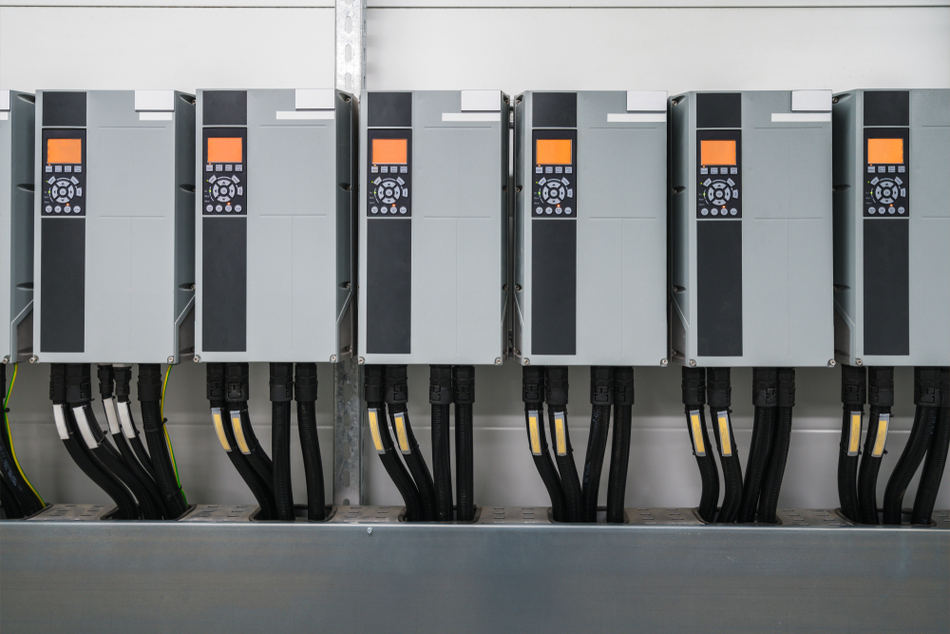
Consider the following factors:
Motor Full-Load Current and Voltage – Size the drive based on the full-load current (FLA) of the motor rather than horsepower. Oversize slightly to accommodate overload requirements. Constant-torque loads (conveyors, positive displacement pumps) require drives with 150–160 percent overload capacity, while variable-torque loads (centrifugal pumps, fans) need 110–120 percent. Match the input voltage of the drive to the supply and output voltage to the motor (for example, 230 V single-phase versus 400/480/690 V three-phase). [4]
Control Performance – Decide whether scalar (V/f) control is sufficient or whether vector/FOC is needed for torque response. The servo applications may require encoder feedback and high-resolution control.
Harmonic Mitigation – Standard six-pulse drives can produce 40 percent total harmonic distortion on the line, causing overheating of transformers and nuisance tripping. Mitigation options include line reactors, DC chokes, 12-pulse rectifiers, active front ends, passive harmonic filters, and active filters. Regenerative and matrix drives often satisfy IEEE 519 limits without external filters.
Enclosure and Environment – Consider IP rating (IP20, IP55, IP66), ambient temperature, and altitude. Drives may require derating at high ambient temperature or altitude due to reduced air density. The washdown and corrosive environments need coated PCBs and sealed housings.
Safety and Compliance – Modern drives incorporate functional safety such as Safe Torque Off (STO), Safe Stop 1, Safe Limited Speed and integration with safety PLCs. Ensure the drive meets ISO 13849 and IEC 61800-5-2 requirements and the targeted performance level.
Communication and Integration – Choose a drive that supports the desired fieldbus: Modbus RTU, PROFIBUS, PROFINET, EtherCAT, EtherNet/IP, CANopen, or BACnet. Some drives feature built-in web servers and remote diagnostics; this is critical for Industry 4.0 integration. Drives with integrated PLC functionality can reduce system cost.
Application-Specific Features – Many drives offer dedicated software or firmware for pump control (sleep/wake functions, PID regulators), fan control (fire-mode bypass), or conveyor control (tension and synchronization). Determine if such features reduce engineering effort.
Recommended Reading: PID Controller & Loops: A Comprehensive Guide to Understanding and Implementation
VFD Benefits and Energy Savings
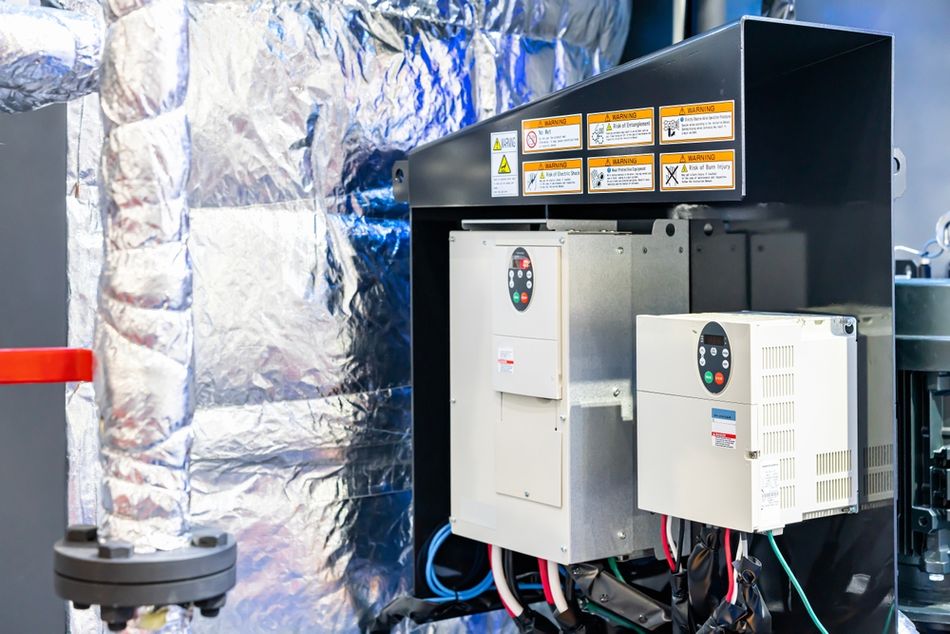
Energy Efficiency
The primary motivation for installing a VFD is energy savings. Most electric motors operate at constant speed even when full output is unnecessary. VFDs enable variable speed operation that matches process demand. VFDs can reduce energy consumption by 40–80 percent depending on the load type. [5] For pumps and fans, the affinity laws show that reducing speed by 20 percent decreases power consumption by nearly half. In manufacturing plants, energy savings of 30–50 percent are common.
Precision Control and Process Optimization
VFDs provide tight control of speed, torque, and acceleration. Vector control offers rapid response and torque limit functions. This improves product quality and reduces rejects in processes such as extrusion, winding, and machining. Drives also include built-in PID controllers to regulate pressure, temperature, or flow, eliminating separate controllers. Integration with programmable logic controllers (PLCs) allows complex sequencing and coordination.
Reduced Mechanical Stress and Soft Start
By ramping up voltage and frequency gradually, a VFD eliminates the high inrush currents that occur in direct-on-line starts. Soft starting reduces electrical stress on the power supply and mechanical stress on couplings, belts, and gears. It extends the life of motors and reduces maintenance. The soft stop and braking functions further protect mechanical systems.
Improved Power Factor and Harmonic Reduction
Active front-end and matrix drives draw nearly sinusoidal current and maintain power factor near unity. Drives with energy optimisation adjust voltage to reduce magnetising current at partial load, improving system power factor. High harmonic distortion can decrease efficiency and damage equipment. Selecting a drive with built-in DC chokes or harmonic filters mitigates this.
Regeneration and Energy Recovery
Regenerative VFDs recover kinetic energy during braking and feed it back to the grid or reuse it elsewhere. This is valuable in cranes, elevators, centrifuges, and test stands. The matrix converters and active front-end drives provide four-quadrant operation and can eliminate external braking resistors.
Disadvantages and Mitigation
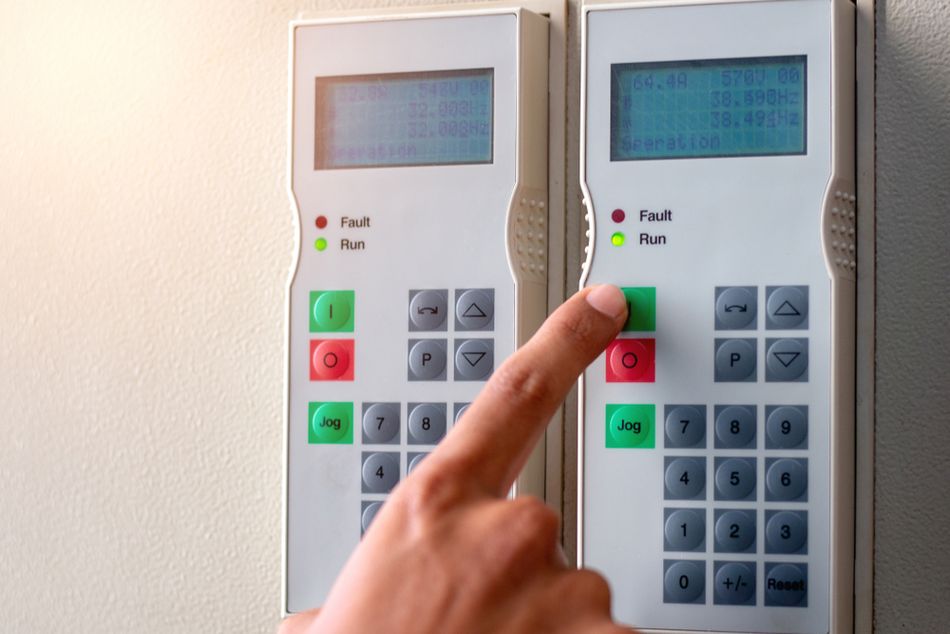
While VFDs offer numerous benefits, engineers must address potential drawbacks:
Harmonic Distortion
Six-pulse diode rectifiers draw current in short pulses, creating harmonic currents that distort the supply waveform. High harmonic distortion can overheat transformers and conductors, cause nuisance tripping of protective devices, and interfere with sensitive electronics. Plant-wide harmonic levels may violate IEEE 519 or IEC 61000-3-6 limits. Mitigation strategies include installing line reactors, DC chokes, multi-pulse transformers, passive harmonic filters (LC networks), or active filters that inject opposing currents. The active front-end drives with SiC devices reduce THD to 3 percent.
Common-Mode Voltage and Bearing Currents
High-speed PWM switching produces common-mode voltages that stress motor insulation and generate shaft currents. These currents can lead to electrical discharge machining (EDM) pitting on bearings and premature failure. Mitigation techniques include using dV/dt filters or sine-wave filters on the inverter output, installing shaft grounding rings or insulated bearings, and selecting SiC or matrix converters that eliminate common-mode voltage.
Electromagnetic Interference (EMI)
Switching transients can radiate EMI and interfere with nearby control systems. Proper shielding, grounded motor cables, and compliance with EMC directives are essential. Drives often include built-in EMC filters.
Heat and Derating
VFDs generate heat; operation at high ambient temperature or altitude requires derating. Wide-bandgap devices like SiC and GaN produce less heat and allow smaller heatsinks. Selecting drives with back-channel cooling or separate cooling ducts helps maintain reliability.
Cost and Complexity
VFDs are more expensive than contactors or soft starters. There is additional complexity in setup and maintenance; however, energy savings and improved control often provide a quick payback. Selecting vendor-supplied software (e.g., DriveWizard, Start-Up Wizard) simplifies configuration. Technicians should be trained on programming and troubleshooting.
Motor Compatibility
Not all motors are suitable for VFD operation. Older induction motors may lack insulation ratings for high dv/dt; they require filters or replacement. Some VFDs support permanent magnet motors and synchronous reluctance motors; confirm compatibility. The better practice is to specify inverter-duty motors with 1600 V isolation and reinforced insulation. For more on motor types, see our guide on brushless vs brushed motors. You may consult the motor manufacturer for any doubts.
2026 Trends in VFD Technology
The advances in semiconductor and control technology are transforming VFDs.
The key trends include:
Wide-Bandgap Semiconductors
Silicon-carbide (SiC) MOSFETs and gallium nitride (GaN) high electron mobility transistors (HEMTs) switch faster, sustain higher voltages and generate less heat than IGBTs. SiC-based VFDs produce nearly sinusoidal output currents with THD below 3 percent and eliminate the need for bulky filters and chokes. They also eliminate common-mode voltage, protecting motor bearings and reducing downtime. GaN devices enable compact, high-frequency drives for robotics, drones and electric vehicles.
Integrated Functional Safety
Functional safety is no longer optional. Drives now include built-in Safe Torque Off (STO), Safe Stop 1 (SS1), Safe Limited Speed (SLS) and other certified functions that meet ISO 13849 and IEC 61800-5-2. [6] ABB, Siemens, Schneider, Mitsubishi and Danfoss provide STO as standard. Optional safety modules support PROFIsafe or CIP Safety communications.
Predictive Maintenance and Condition Monitoring
Integrated sensors and algorithms monitor motor current, temperature, vibration and insulation health. AI-enabled predictive maintenance platforms analyse drive data to forecast bearing or insulation failure, scheduling repairs before a breakdown. Drives like the Danfoss VLT include condition-based monitoring and integrate with cloud services.
Digital Connectivity and IIoT Integration
Modern VFDs act as smart edge devices. Ethernet-based protocols (PROFINET, EtherNet/IP, EtherCAT) and dual-port Ethernet support daisy-chain network topologies. Embedded web servers provide configuration and diagnostics via standard browsers. Cloud connectivity enables remote monitoring, firmware updates and energy reporting. Integration with supervisory control and data acquisition (SCADA) systems and building management systems simplifies commissioning.
Harmonic-Free and Regenerative Drives
Regenerative drives and matrix converters combine low harmonic distortion with energy recovery. Vendors are releasing SiC-based active front-end drives that achieve THD below 3 percent. The U1000 matrix converter and Schneider low-harmonic offers demonstrate that drives can meet IEEE 519 without external filters.
Integration of Power Electronics and Controls
Semiconductor miniaturization allows integration of gate drivers, controller hardware and software into compact modules. Some drives embed PLC functionality and motion controllers, reducing the need for separate controllers. Gate driver design innovations improve noise immunity and switching speed, enabling higher switching frequency and better efficiency. For simpler applications, engineers may instead use an H-bridge motor control circuit, but VFDs offer far more flexibility and efficiency.
Conclusion
Variable frequency drives have evolved from simple speed controllers to intelligent, connected power converters. They answer the question "what is a VFD" by providing precise control over electric motors, yielding substantial energy savings, improved process quality and reduced wear. Modern VFD drives incorporate functional safety, predictive maintenance, and regenerative capability. SiC and GaN devices are redefining efficiency and harmonic performance, enabling applications from industrial pumps to electric vehicles. Engineers selecting a VFD must consider load characteristics, harmonics, communication, safety and environmental factors. As industries strive for energy efficiency and digitisation, VFDs will continue to be a cornerstone of motor control.
Frequently Asked Questions
Q. How does a VFD work?
A. VFD, also called an AC drive, converts fixed AC input into DC, then inverts it back into variable-frequency AC. By changing frequency and voltage, it controls motor RPM, torque, and speed according to application demand.
Q. What is the difference between a VFD and a soft starter?
A. The soft starter only reduces startup current by gradually increasing voltage. On the other hand, a VFD controls voltage and frequency continuously, matching the motor load during startup, operation, and stopping while improving speed regulation, braking, and process control.
Q. Where are VFDs used?
A. VFDs are used in HVAC fans, pumps, conveyors, compressors, elevators, machine tools, wastewater systems, and electric vehicles. They adjust motor speed based on load requirements, improving efficiency, process stability, equipment protection, and operational flexibility.
Q. What are the disadvantages of VFD drives?
A. VFDs can introduce harmonics, electromagnetic interference, bearing currents, and voltage stress on motor windings. They also require correct sizing, grounding, shielding, and commissioning. Filters, line reactors, and inverter-duty motors help reduce these issues.
Q. Do VFDs save energy? By how much?
A. Yes. VFDs provide strong cost savings in variable-torque loads such as pumps and fans. Even small speed reductions can significantly lower power demand, especially where motors previously ran at full speed with throttling devices.
Q. What is the difference between a VFD and a variable speed drive (VSD)?
A. These terms are often used interchangeably. A VFD specifically varies the frequency and voltage supplied to AC motors. A VSD is a broader term encompassing VFDs, DC drives, eddy-current drives and mechanical variable speed devices. In most modern contexts, VSD refers to a VFD.
Q. Do VFDs extend motor life?
A. Yes, when correctly installed. VFDs extend motor lifespan by reducing inrush current, mechanical shock, overheating, and abrupt starts or stops. Proper cable shielding, grounding, filters, and inverter-duty motors protect bearings and insulation from electrical stress.
References
[1] Danfoss. What is a Variable Frequency Drive? [Cited 2026 May 25]; Available at: Link
[2] Eaton. How to Choose between a Soft Starter and a Variable Frequency Drive [Cited 2026 May 25]; Available at: Link
[3] Precision Electric. Siemens VFD Drives: Comprehensive Technical Overview and Comparison [Cited 2026 May 25]; Available at: Link
[4] Fuji Electric. What is the difference between Single-Phase and Three-Phase Drives? [Cited 2026 May 25]; Available at: Link
[5] VFD. Variable Frequency Drives and Energy Savings [Cited 2026 May 25]; Available at: Link
[6] ABB. Functional safety options - Drives [Cited 2026 May 25]; Available at: Link
in this article
1. Key Takeaways2. Introduction: What Is a VFD?3. How Does a VFD Work?4. Types of VFD Drives4. VFD Drive Vendor Comparison6. VFD Applications7. VFD Selection Criteria8. VFD Benefits and Energy Savings9. Disadvantages and Mitigation10. 2026 Trends in VFD Technology11. Conclusion12. Frequently Asked Questions13. References