Bridging Material and Application Development with In-House Filament Production
Advanced polymer developer Avient brings 3devo filament production in house for streamlined material testing and validation.

16 Apr, 2026. 5 minutes read
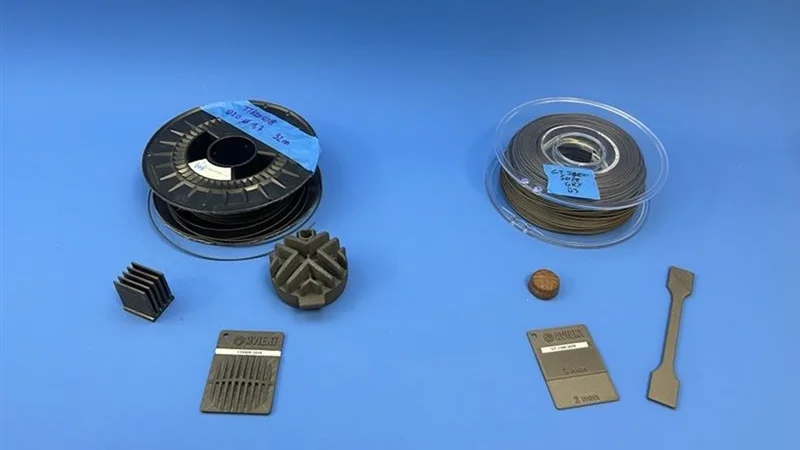
Attaining design and performance goals for new products can often hinge on material choice. Whether the aim is to make a more sustainable part, optimize a component’s strength-to-weight ratio, or bring costs down, material properties dictate how a part is made and how it will behave. For some applications, existing off-the-shelf materials will do just fine; however, for many high-performance applications, materials with tailored property profiles must be made.
Avient, a global materials solutions company, has built a business on this need, specializing in the development of advanced composites and engineered polymer formulations for its clients. The company also understands firsthand the challenges of developing new polymers, including how many cycles of compounding and testing can go into a material before it is ready for validation, the delays associated with multi-party supply chains, and the complexity in bridging material development and application testing.
An improved workflow integrated at Avient has enabled its material development teams to address these issues and accelerate their development processes through early validation and real-world application testing. The solution? In-house filament production.
Bringing Filament Extrusion in-House
Through a structural upgrade—the integration of in-house filament extrusion—Avient is realizing greater independence and agility in its material development workflow. This has enabled it to address common hurdles associated with the development of specialty materials, such as slowdowns related to multiple testing cycles, reliance on external filament suppliers, and a general disconnect between material development and application testing.
Previously, new formulations engineered by material developers like Avient would have to be compounded in-house, after which samples would be ordered from external filament manufacturers. From there, the filament would be sent back to them for prototype 3D printing. With long delivery times and feedback needed from both Avient and its customers, material validation was therefore often plagued by inflexible, slow workflows.
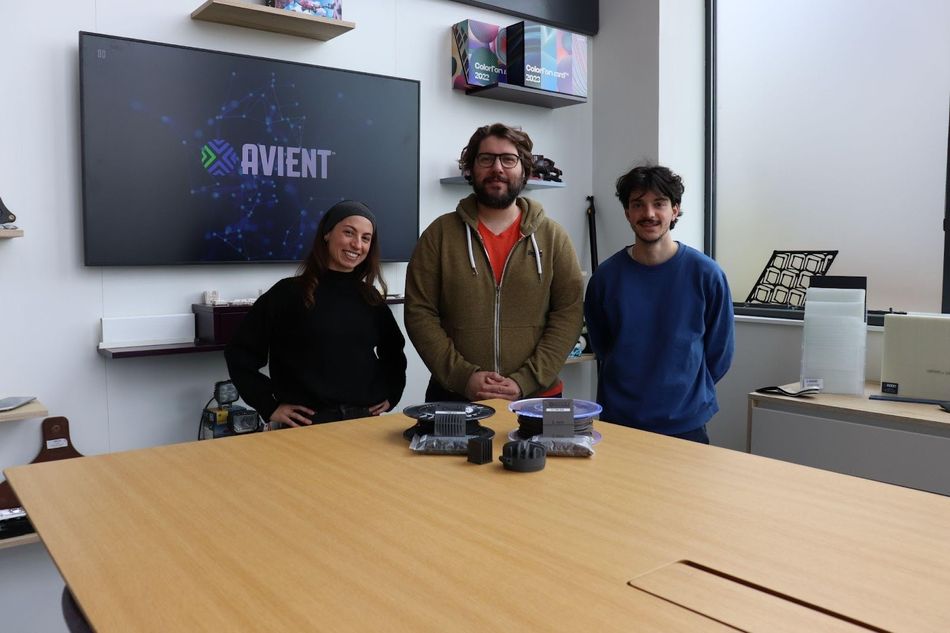
Avient’s new workflow, enabled by filament extrusion technology, is far more agile and offers a continuous feedback loop that links material formulation, processing, and application. In more specific terms, Avient’s development teams make compounds or pellets of tailored thermoplastics, which can then be converted directly into filament. This filament can then be used to 3D print functional prototypes, test parts, or tooling components to evaluate performance and application fit. This not only keeps validation steps in-house (thus minimizing lead times), it also enables Avient to make on-the-fly changes to material formulations based on application requirements and keep its customers in the loop from an early stage.
By integrating filament production, the company has shown that it is possible to (a) create filament test samples without relying solely on external partners and (b) demonstrate real-world applications at an early stage. This has led to faster development and validation and—as we will see in more detail—greater confidence from customers who can see and test prototypes from early on in the material validation cycle.
Tactile Evaluation with Density-Modified Plastics
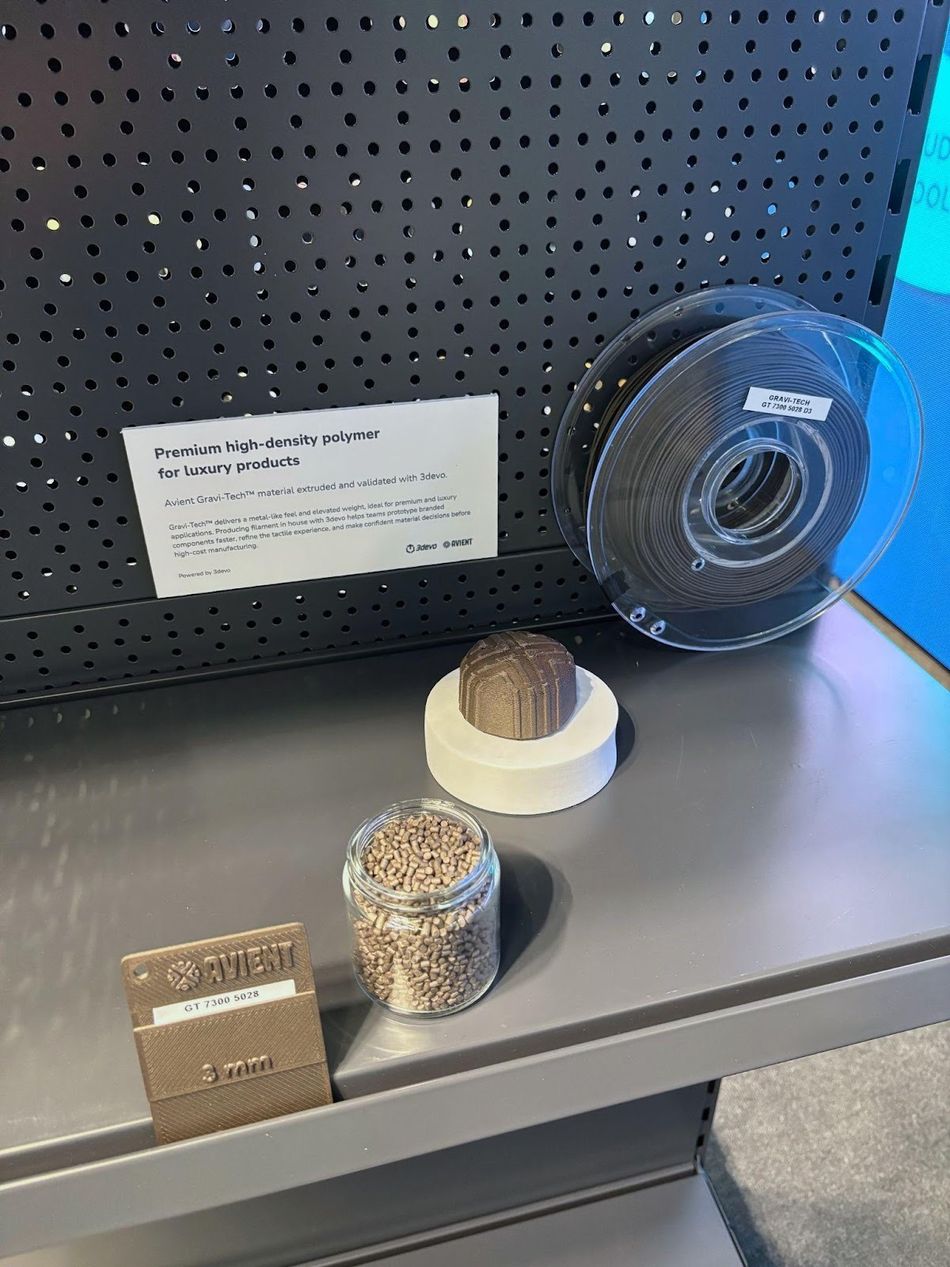
One of Avient’s product lines, Gravi-Tech™ Density-Modified Formulations, is focused on density-modified polymers, which are known for having similar characteristics to metal—in terms of mechanical properties as well as look and feel. High-performance polymers are increasingly being used for metal replacement applications, as they meet desired properties while offering advantages like weight reduction and lower material costs.
In one metal replacement use case, Avient was developing Gravi-Tech™ Density-Modified Formulations for a luxury application. In the development process, the Avient team was able to produce filament and directly 3D print prototypes—in this case, a premium bottle cap—that matched the design of the customer’s product. The 3D printed prototype, which featured custom branding and a unique design, enabled Avient to not only assess the material’s properties but also to show the client how the product would look and feel.
In other words, rather than iterate this prototype further down the material development road, Avient was able to test this real-world application early to understand its perception by end users before committing to downstream manufacturing routes. From the customer’s perspective, they were able to interact with a prototype that had high-fidelity visual, tactile, and functional properties far before production was initiated, giving them confidence in the material validation process.
Real-World Testing of Thermally Conductive Materials
In-house filament production has also been valuable in other cases. In the development of Therma-Tech™ Thermally Conductive Formulations, for example, Avient was able to evaluate both material properties and part design. The part in question was a heat sink that required excellent heat transfer, dissipation, and cooling properties.
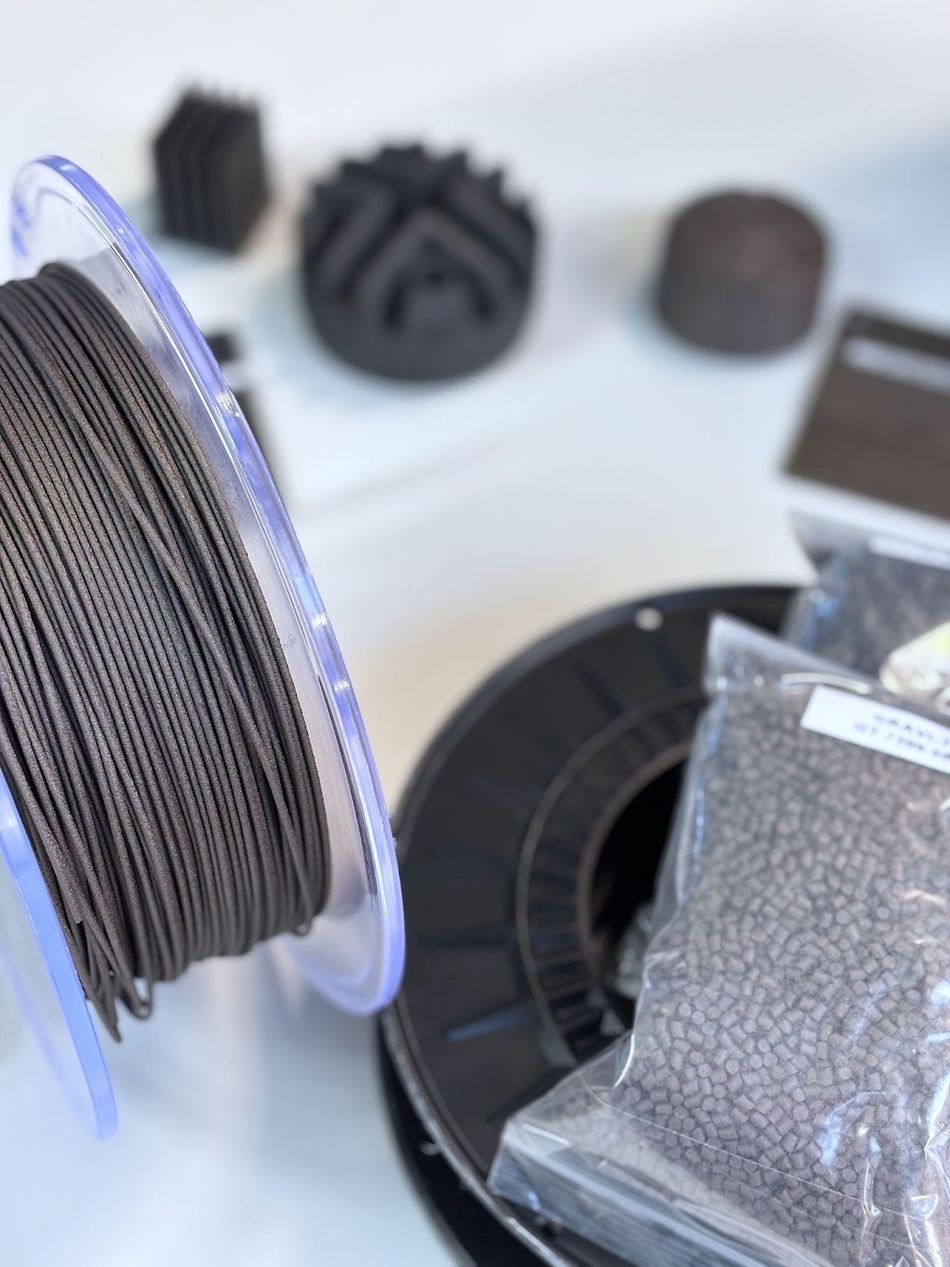
With a material validation workflow that included both filament extrusion and 3D printing, Avient was able to effectively test its material formulations and a range of geometries to find the best combination for form and functional behavior. Being able to test the Therma-Tech™ Thermally Conductive Formulations’ heat-dissipating properties at an application level supported faster and earlier learning, before Avient and its client progressed to tooling and full-scale production.
Put another way, the heat sink use case demonstrates how specialty materials, like thermally conductive polymers, can be validated through real part designs. This combines two previously separate workflows into one, bridging material development and functional performance requirements from an early stage.
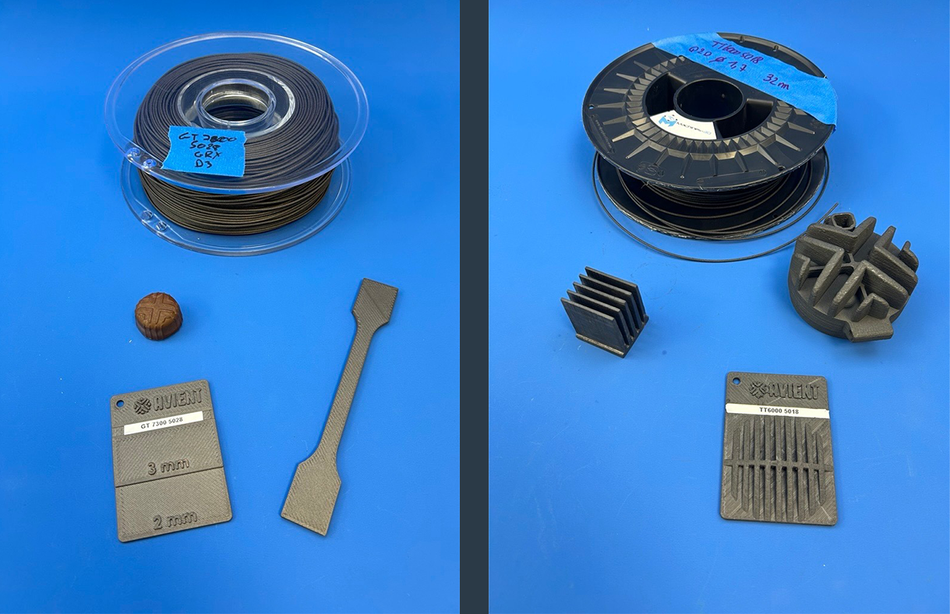
The Gravi-Tech™ Density-Modified Formulations and Therma-Tech™ Thermally Conductive Formulations use cases are just the tip of the iceberg. Avient has leveraged its in-house filament production to enhance the validation of many materials and applications, including automotive lighting parts and various plastic components for metal replacement.
De-Risking Material and Application Validation
By integrating filament extrusion as a step in its validation processes, Avient has experienced a range of benefits. For one, the ability to turn material compounds into 3D printable filament in-house has reduced the company’s reliance on external filament suppliers, particularly during early validation. This capability has also made it possible to prototype parts from new material formulations, effectively enabling application fit and form testing earlier in the development cycle. Not only a boon for making validation processes more efficient, this also supports internal and custom-facing discussions, creating a continuous feedback loop.
Crucially, all this can be done before any investment in tooling is required, allowing both material formulations and product designs to be optimized and finalized before committing to full-scale production. This can be particularly valuable in metal replacement applications, where an early understanding of how material properties and part design converge can actually de-risk material substitution.
The impacts are not only being felt by Avient: other material developers can and are reaping these same benefits by harnessing in-house filament production and 3D printing prototypes for application-led validation.
Conclusion
Filament extrusion systems, such as those developed by Dutch company 3devo, are giving material developers greater independence and control over their validation processes. As Avient demonstrates, filament extrusion facilitates early validation and application-driven testing in the development of special material formulations.
This not only offers internal benefits, in terms of reducing reliance on external filament suppliers and accelerating material testing, it also changes the dynamic between material developers and their customers. As Avient has found, the ability to produce filament and rapidly iterate 3D printed prototypes has led to better communication and transparency with its clients, who can better assess application performance, weight reduction, and manufacturability before heading into full-scale production.
To explore the full case study and see how this approach can apply to your workflow, visit: https://www.3devo.com/case-studies/avient