Featuredcase study

Article #3 of Connectivity and Sensing in Harsh Environments Series: Rugged switchgear connectors and terminations enable the handling of electrical energy safely and efficiently in the harsh environments of marine applications.

This guide is written for engineers and technical teams building connected devices who need clear, field-ready guidance without getting lost in standards documentation.
PCB Trace Width Calculator
Article #3 of Connectivity and Sensing in Harsh Environments Series: Rugged switchgear connectors and terminations enable the handling of electrical energy safely and efficiently in the harsh environments of marine applications.
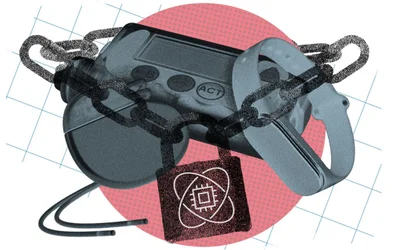
Wireless technology has transformed the lives of hundreds of thousands of Type 1 diabetics. And the developments keep coming.
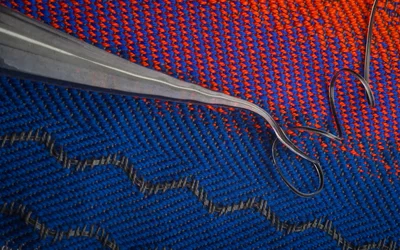
Inspired by the human ear, a new acoustic fabric converts audible sounds into electrical signals.
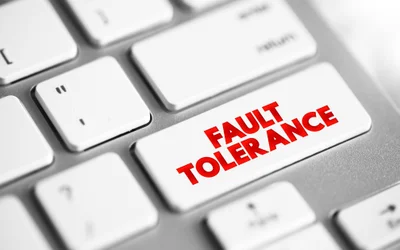
Fault tolerance is the engineering discipline of keeping a system delivering service while some of its parts are broken.
17 minutes read.
14 minutes read.
15 minutes read.
17 minutes read.
26 minutes read.

Electronics
Mouser Electronics is a worldwide leading authorized distributor of semiconductors and electronic components.
219 Posts
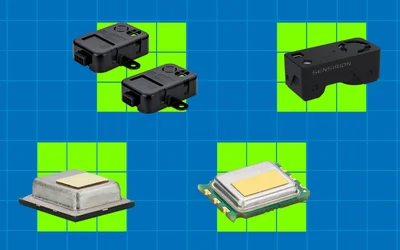
Discover how SGD4x, SFA40, STCC4, and SEN6x sensors by Sensirion help engineers measure refrigerants, formaldehyde, CO₂, and multiple air quality parameters in compact, low-power designs.
Exploring the shift to additive digital printing in modern electronics fabrication.
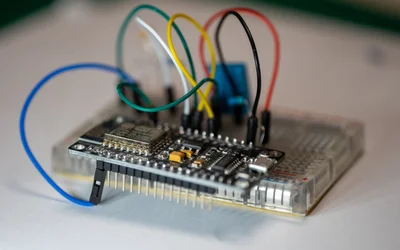
This article explains the ESP8266 pinout, covering GPIO mapping, boot-strapping pins, safe-to-use pins, flash connections, ADC limits, deep-sleep functions, and NodeMCU and D1 mini pin labels.
Learn how a Hall Effect Current Sensor works, including principles, topologies, specifications, comparisons and engineering applications.
Controlled impedance is the control of PCB trace impedance within specified tolerances. This article covers microstrip and stripline designs, IPC-2141A formulas, stackup selection, impedance tolerances, routing practices, and TDR testing for signal integrity.
Agent part of Cadence's ChipStack software generates Verilog RTL through C++ and high-level synthesis
One year after unveiling a first-of-its-kind 'microwave brain' microchip capable of computing on ultrafast data and wireless signals, researchers from the Cornell Duffield College of Engineering have shown how the chip can encode information into its own language.
Ultra-efficient chip design enables extremely strong cryptography algorithms to run on energy-constrained edge devices.
Article #3 of Connectivity and Sensing in Harsh Environments Series: Rugged switchgear connectors and terminations enable the handling of electrical energy safely and efficiently in the harsh environments of marine applications.
Wireless technology has transformed the lives of hundreds of thousands of Type 1 diabetics. And the developments keep coming.

3 minutes read
Inspired by the human ear, a new acoustic fabric converts audible sounds into electrical signals.
The Cornell startup specializes in creating soft, stretchable fiber-optic sensors that can be woven into clothing to recognize different types of touch.

6 minutes read
With Inertial Sensor Modules

3 minutes read
Maintaining supply chain resilience in the face of increasing global uncertainty.
Designed to bring machine learning to the Earth's last great frontier, a prototype smart sensor platform users on-device inference to classify marine mammal calls — powering itself exclusively from the sounds it captures.
Article #2 of Connectivity and Sensing in Harsh Environments Series: As the bandwidth consumed by vehicular electronics increases, manufacturers need to adopt the latest communication standards, and make various design considerations to ensure signal integrity in harsh environments.
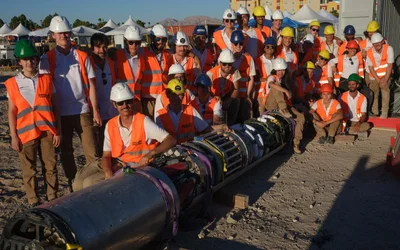
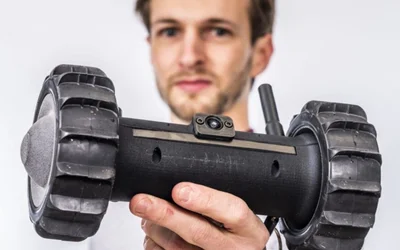
This article outlines what Swissloop Tunneling is, how Groundhog Alpha is structured, what potential applications it has, which milestones have been achieved, and what is planned for the future.
For the second consecutive year, we have compiled a list of Campus companies that Eindhoven, the Netherlands and the world will hear more about in 2022. This year, we’re focusing on companies created in High Tech Campus’s startup ecosystem, or that landed on the Campus during 2021.

8 minutes read
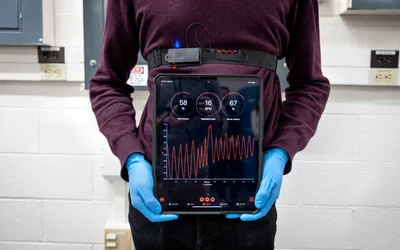
Research collaboration leads to a new way for smartwatch-like wrist-worn devices to better assess sleep apnea.
Article #1 of Connectivity and Sensing in Harsh Environments Series: Electrical components that enable the transfer of control and power are improving to fulfill the requirements of cutting-edge industrial applications.
Multifunctional shape-morphing material with reversible and rapid polymorphic reconfigurability implemented into a soft robotic morphing drone that autonomously transforms from ground to air vehicle and an underwater morphing machine.
The Industrial IoT (IIoT) is the foundation of Industry 4.0. By sending sensor data to the cloud and using it to feed machine learning algorithms, manufacturers can detect process problems immediately, rather than at later stages when rework and field failures are much more expensive.
3 minutes read
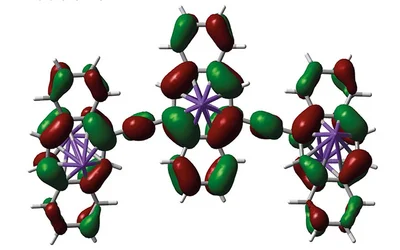
An oligomeric [8]annulene-based material has been shown to be suitable for creating single-molecule components including logic elements, switches, and gates — and could be one of the ways Moore's Law is kept marching in the semiconductor industry.