Featured

Using smart sensor and measurement techniques to make farming more efficient and sustainable is the goal of a team of researchers at TUM.

This guide is written for engineers and technical teams building connected devices who need clear, field-ready guidance without getting lost in standards documentation.
PCB Trace Width Calculator
Using smart sensor and measurement techniques to make farming more efficient and sustainable is the goal of a team of researchers at TUM.
In this episode, we talk about why minimization of speakers and energy storage devices is crucial for the next generation of electronics and medical devices.
Understanding your rights and responsibilities is essential to securing your innovation. Further, taking advantage of cloud manufacturing can mitigate substantial risk.
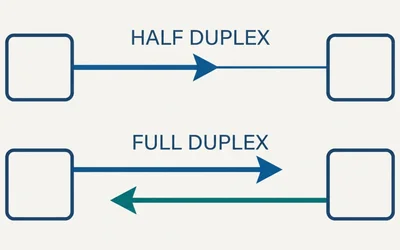
Half-duplex links take turns, while full-duplex links talk in both directions at once. This guide explains how each mode is built on real hardware, from Ethernet and RS-485 to Wi-Fi and 5G, what each costs you in throughput and latency, and how to choose between them.
14 minutes read.
15 minutes read.
17 minutes read.
26 minutes read.
24 minutes read.

Electronics
Mouser Electronics is a worldwide leading authorized distributor of semiconductors and electronic components.
219 Posts
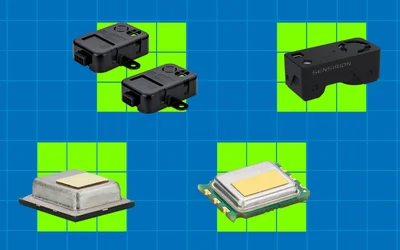
Discover how SGD4x, SFA40, STCC4, and SEN6x sensors by Sensirion help engineers measure refrigerants, formaldehyde, CO₂, and multiple air quality parameters in compact, low-power designs.
Exploring the shift to additive digital printing in modern electronics fabrication.
This article explains the ESP8266 pinout, covering GPIO mapping, boot-strapping pins, safe-to-use pins, flash connections, ADC limits, deep-sleep functions, and NodeMCU and D1 mini pin labels.
Learn how a Hall Effect Current Sensor works, including principles, topologies, specifications, comparisons and engineering applications.
Controlled impedance is the control of PCB trace impedance within specified tolerances. This article covers microstrip and stripline designs, IPC-2141A formulas, stackup selection, impedance tolerances, routing practices, and TDR testing for signal integrity.
Agent part of Cadence's ChipStack software generates Verilog RTL through C++ and high-level synthesis
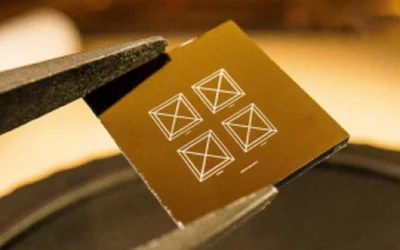
One year after unveiling a first-of-its-kind 'microwave brain' microchip capable of computing on ultrafast data and wireless signals, researchers from the Cornell Duffield College of Engineering have shown how the chip can encode information into its own language.
Ultra-efficient chip design enables extremely strong cryptography algorithms to run on energy-constrained edge devices.
Using smart sensor and measurement techniques to make farming more efficient and sustainable is the goal of a team of researchers at TUM.
In this episode, we talk about why minimization of speakers and energy storage devices is crucial for the next generation of electronics and medical devices.

Understanding your rights and responsibilities is essential to securing your innovation. Further, taking advantage of cloud manufacturing can mitigate substantial risk.
The advance allows the particles to be placed deeper within biological tissue, which could aid with cancer diagnosis or monitoring.
In order to operate wind turbines more efficiently in the future and also to be able to use them in locations that are less wind-intensive, even larger and at the same time lighter blades are needed.

5 minutes read
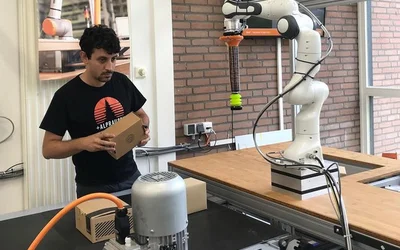
Robot arms could become safer in industrial settings by applying an artificial skin containing proximity heat sensors to detect humans in all directions.
In this episode, we talk about how performance limitations of current microchips are being addressed by utilizing novel materials like graphene and bioinspired designs to address the needs of next generation computing and electronics.
Article #1 Electronics Innovation Series. Enabling continued innovation while dealing with the constraints of supply chain uncertainty is a task for both designers and suppliers.
“We are still making not enough use of solar and wind energy,” says Horst Fietje, co-founder of the start-up Voltgoed, which he founded together with Stan Hoppenreijs and Jasper Verhoeve. They are working on a smart box for home heat pumps. This would enable them to make flexible use of green power.

4 minutes read
Although the billions of battery-powered wireless IoT sensors connecting tomorrow's world will undoubtedly have an upstream energy impact, research suggests considerable net savings will be realized in the future.

4 minutes read
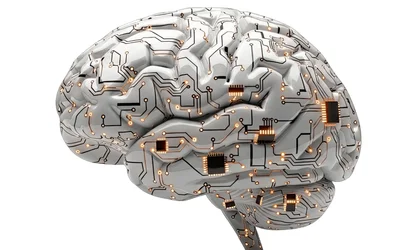
Researchers have developed a new material for an electronic component that can be used in a wider range of applications than its predecessors. Such components will help create electronic circuits that emulate the human brain and that are more efficient at performing machine-learning tasks.

3 minutes read
Article #1 of the Enabling IoT Series. "Intuitive sensing” applications enable humans to interact with smart devices in a more natural and seamless way.
With today’s most advanced cloud manufacturing platforms, users can access the full capabilities needed to move seamlessly between prototyping, testing, and full-scale production

4 minutes read
In this episode, we talk about how a novel approach for wind turbine design could alleviate the supply chain bottleneck while maintaining or increasing energy output followed by the initiatives to reduce construction related emissions while focusing on increasing structural longevity.
Rapid PCBA prototyping using electronics cloud manufacturing offers many advantages including problem identification, reduced error rate, lower costs, and shortened manufacturing timelines.
4 minutes read