

This session is built for design, packaging, and reliability engineers working on chiplet-based or 2.5D/3D IC systems, along with engineering managers evaluating how AI fits into their multiphysics and reliability workflows.
This guide is written for engineers and technical teams building connected devices who need clear, field-ready guidance without getting lost in standards documentation.
This session is built for design, packaging, and reliability engineers working on chiplet-based or 2.5D/3D IC systems, along with engineering managers evaluating how AI fits into their multiphysics and reliability workflows.
This guide is written for engineers and technical teams building connected devices who need clear, field-ready guidance without getting lost in standards documentation.
This session is built for design, packaging, and reliability engineers working on chiplet-based or 2.5D/3D IC systems, along with engineering managers evaluating how AI fits into their multiphysics and reliability workflows.
Article #4 of Connectivity and Sensing in Harsh Environments Series: Cars, Construction Equipment, Trucks, Buses, Airplanes, Trains, and other vehicles require connectors that withstand vibrations, shocks, humidity, dust, and other unfavorable conditions to perform reliably.

In this episode, we talk about how a group of researchers were inspired by the adaptive immune system found in humans to fortify vulnerable neural networks and a joint effort between universities to create electric skin with unmatched performance.
Using a highly-scalable approach to creating dense sensor networks, yet requiring only a pair of address lines, these researchers have taken inspiration from the human somatosensory system for a rapid-response sensitive sense of electronic touch.
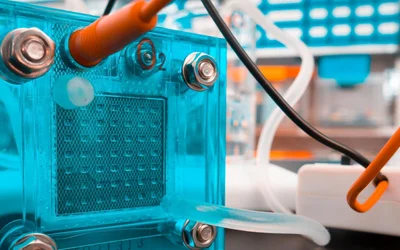
A PEM fuel cell converts hydrogen and oxygen into electricity at around 80 degrees C, with water and heat as the only products. This guide covers electrochemistry, layer materials, efficiency limits, and cost and durability to help you understand the practical applications of this technology.
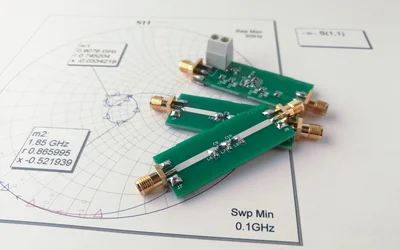
A guide covering the full radio-frequency design workflow, starting from setting specifications and choosing topologies to matching, simulation, layout, and verification, to help antenna engineers.
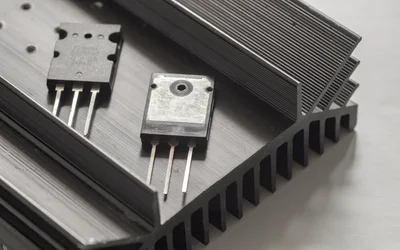
This article presents a detailed technical exploration of SiC MOSFET devices, covering material physics, device structure, switching behavior, and practical design considerations for high-efficiency power electronics systems.
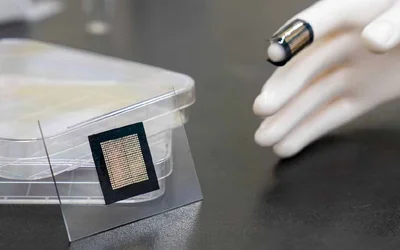
One year after unveiling a first-of-its-kind 'microwave brain' microchip capable of computing on ultrafast data and wireless signals, researchers from the Cornell Duffield College of Engineering have shown how the chip can encode information into its own language.
Article #4 of Connectivity and Sensing in Harsh Environments Series: Cars, Construction Equipment, Trucks, Buses, Airplanes, Trains, and other vehicles require connectors that withstand vibrations, shocks, humidity, dust, and other unfavorable conditions to perform reliably.
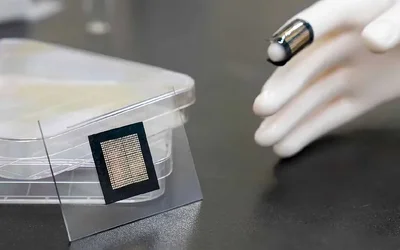
In this episode, we talk about how a group of researchers were inspired by the adaptive immune system found in humans to fortify vulnerable neural networks and a joint effort between universities to create electric skin with unmatched performance.
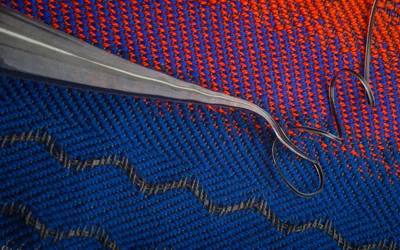
Using a highly-scalable approach to creating dense sensor networks, yet requiring only a pair of address lines, these researchers have taken inspiration from the human somatosensory system for a rapid-response sensitive sense of electronic touch.
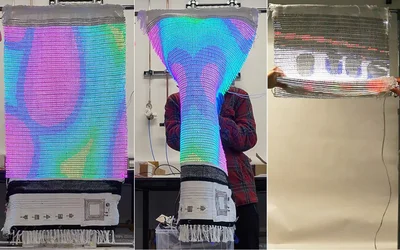
Featuring "fiber devices" including a large-format display, temperature and ultraviolet sensors, a touch-sensitive input matrix, and even a heart-rate monitor, this foldable fabric is being positioned as a breakthrough for smart homes and the IoT.
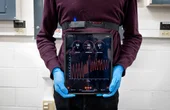
In this episode, we talk about how a group at MIT has developed an easy-to-use handheld device to treat internal bleeding and a joint effort between MIT and Imperial College London which resulted in a marine mammal call sensor that can leverage machine learning models locally
Article #3 of Connectivity and Sensing in Harsh Environments Series: Rugged switchgear connectors and terminations enable the handling of electrical energy safely and efficiently in the harsh environments of marine applications.
The Cornell startup specializes in creating soft, stretchable fiber-optic sensors that can be woven into clothing to recognize different types of touch.
Designed to bring machine learning to the Earth's last great frontier, a prototype smart sensor platform users on-device inference to classify marine mammal calls — powering itself exclusively from the sounds it captures.
Article #2 of Connectivity and Sensing in Harsh Environments Series: As the bandwidth consumed by vehicular electronics increases, manufacturers need to adopt the latest communication standards, and make various design considerations to ensure signal integrity in harsh environments.
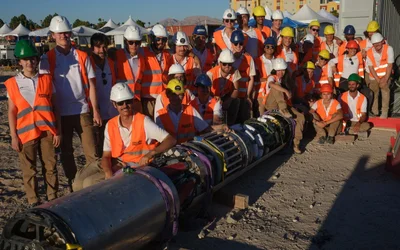
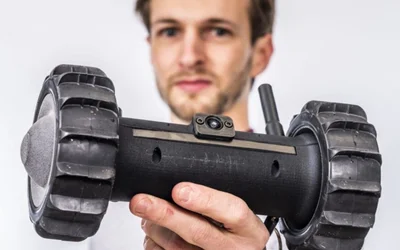
This article outlines what Swissloop Tunneling is, how Groundhog Alpha is structured, what potential applications it has, which milestones have been achieved, and what is planned for the future.
For the second consecutive year, we have compiled a list of Campus companies that Eindhoven, the Netherlands and the world will hear more about in 2022. This year, we’re focusing on companies created in High Tech Campus’s startup ecosystem, or that landed on the Campus during 2021.