
Featured

Creating a greener aerospace sector is key for the industry to bounce back from Covid-19 according to a new report released today.
Creating a greener aerospace sector is key for the industry to bounce back from Covid-19 according to a new report released today.
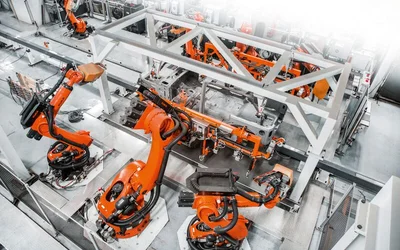
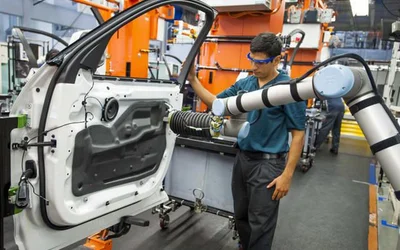
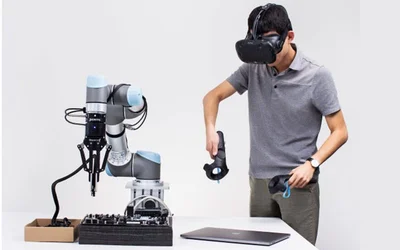
Article 6 of our Cobot Series: Motion control of today's sophisticated robotic arms is as difficult as ever.
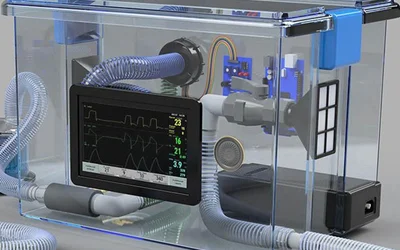
Ethan Chiu and Pallavi Gunalan from Respira.Works discuss the design process, challenges, and motivations for building an open-source ventilator to combat COVID-19.
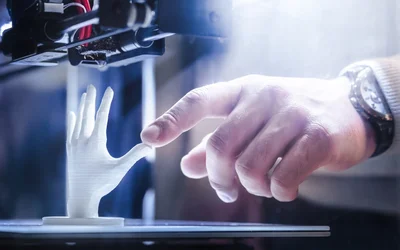
What is 3D printing? This article goes over the basics of 3D printing, otherwise known as additive manufacturing, covering its engineering principles and applications.
14 minutes read.
17 minutes read.
11 minutes read.
18 minutes read.
13 minutes read.
10 minutes read.


Entertainment
The Next Byte Podcast is hosted by two young engineers - Daniel and Farbod - who select the most interesting tech/engineering cont...
165 Posts
With just one month before the South Asian 3D printing trade show, we look at the events and showcases visitors will be able to take part in.
Lean manufacturing focuses on creating more value with less waste. Pioneered by Toyota in the 1950s, this approach helps businesses streamline processes, improve efficiency, and eliminate activities that don't add value to the final product.
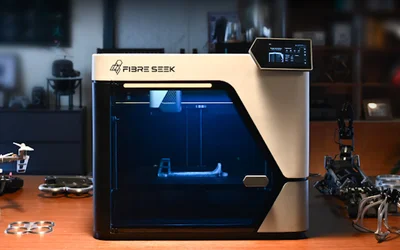
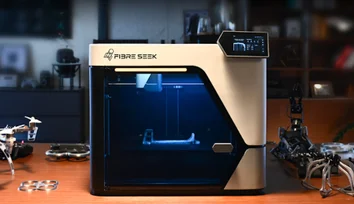
Following a successful crowdfunding campaign, the FibreSeeker 3 from FibreSeek is bringing continuous carbon fiber printing to a new audience.
ADDITIV Medical 2026 will bring together more than 500 medical professionals
The data problem
From leading experts at the CDFAM Computational Design Symposium
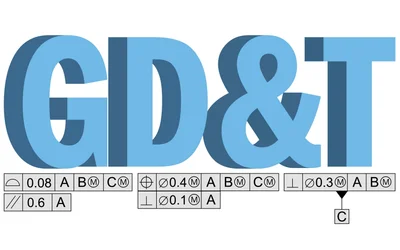
GD&T is the symbolic language engineers use to state exactly how much a part can vary and still work. This guide covers the basics.
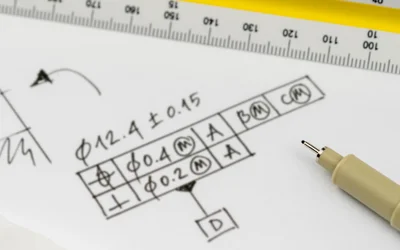
This guide covers the true position formula, how to read the feature control frame, and how MMC and LMC generate bonus tolerance.
Creating a greener aerospace sector is key for the industry to bounce back from Covid-19 according to a new report released today.

3 minutes read
Article 6 of our Cobot Series: Motion control of today's sophisticated robotic arms is as difficult as ever.
Ethan Chiu and Pallavi Gunalan from Respira.Works discuss the design process, challenges, and motivations for building an open-source ventilator to combat COVID-19.
Randomly arranged objects of irregular shapes, made of flexible materials that are easily deformable, wrinkled, and thus difficult to localize? This is now a problem of the past.

2 minutes read
We will go through all the advantages of additive manufacturing for this sector, and see what the latest innovations and evolutions are regarding 3D printed garments!

9 minutes read
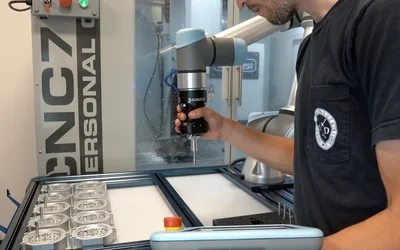
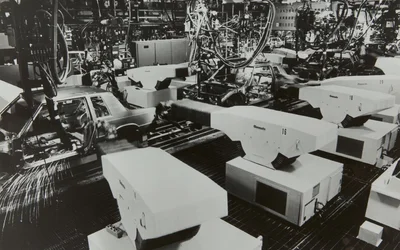
Article 5 of our Cobot Series: Traditionally, robotics have served limited roles in manufacturing environments; however, various technologies have converged to make robots work well as collaborators with humans and to succeed in various applications.
3D printing reshapes the way we produce energy. Solar panels, wind turbines, nuclear reactors: See how this technology fits all energy industries.
5 minutes read
Article 4 of our Cobot Series: Collaborative robots are becoming invaluable for industry, as they improve safety and increase productivity, but there are still improvements to be made in design and regulation.
COR Alpha offers the quality and strength of an injection molded part with the complex geometry and customization of 3D printing.
Article 3 of our Cobot Series: Advances in sensor technologies have enabled the cobot to sense its environment, internal state, relative position, and more, yet the complexity of human-machine collaboration is a puzzle still unfolding.
Article 2 of our Cobot Series: Driven by advances in software, sensors, and electronics, the market for industrial robots has greatly evolved over the past half-century. In today’s industrial workspaces, the evolution continues with collaborative robots—or cobots—working side-by-side with humans.
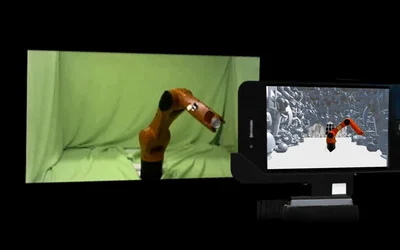
Using AR and robotics as Storytelling Mediums

4 minutes read
After the introduction of radiotherapy, the use of metallic knives in the field of tumor treatment decreased. Now the knife has been experiencing a revival for several years. Yet, the knife in question is not a physical instrument, but a virtual one.
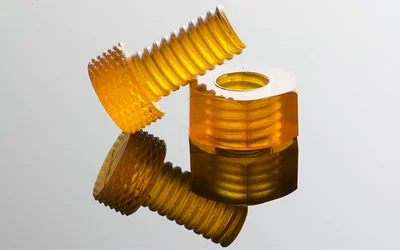
New 3D printing materials will help you turn your ideas into reality.
Quality control managers in the automotive and aerospace industries are responsible for ensuring that manufactured parts meet customers’ requirements, specifications, and tolerances.

4 minutes read