How 3D-Printed Tooling Is Changing Rapid Injection Molding
From Functional Prototypes to Complex, Low-Volume Parts.

27 Oct, 2026. 4 minutes read
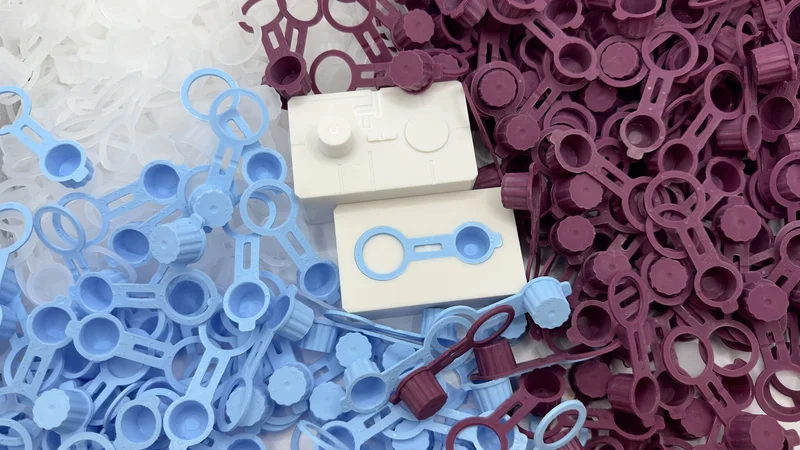
Injection molding is hard to beat for making plastic parts at scale, but the road to the first good part runs through tooling. Machined steel or aluminum molds take weeks to produce and require a significant up-front cost, and both time requirement and cost continue to grow with every design change. For teams that are still iterating, the mold is often the slowest and most expensive step in development.
3D-printed polymer molds and inserts loosen that constraint. They can’t replace conventional injection molding, but they do feed it, letting engineers mold real parts before committing to production tooling. iAM Marketplace offers a rapid injection molding solution built on two Forward AM photopolymers that address different needs: a rigid resin for reusable inserts and a dissolvable resin for sacrificial molds.
Why Traditional Tooling Slows Iteration
Metal tooling makes sense once a design is final. Before that, it creates a risky compromise. A team must lock in mold geometry early, pay for it, and then discover during testing that a wall thickness, gate location, or snap-fit needs to change. Each correction means more machining, more cost, and more waiting.
The same problem hits material testing and low-volume production. Evaluating a part in two or three candidate thermoplastics, or building a few hundred units for a trade show or pilot run, rarely justifies a full steel tool. The goal is to iterate digitally and test parts in the final thermoplastic without paying for production tooling too early.
The Rigid Approach: Ultracur3D® RG 3280 Inserts
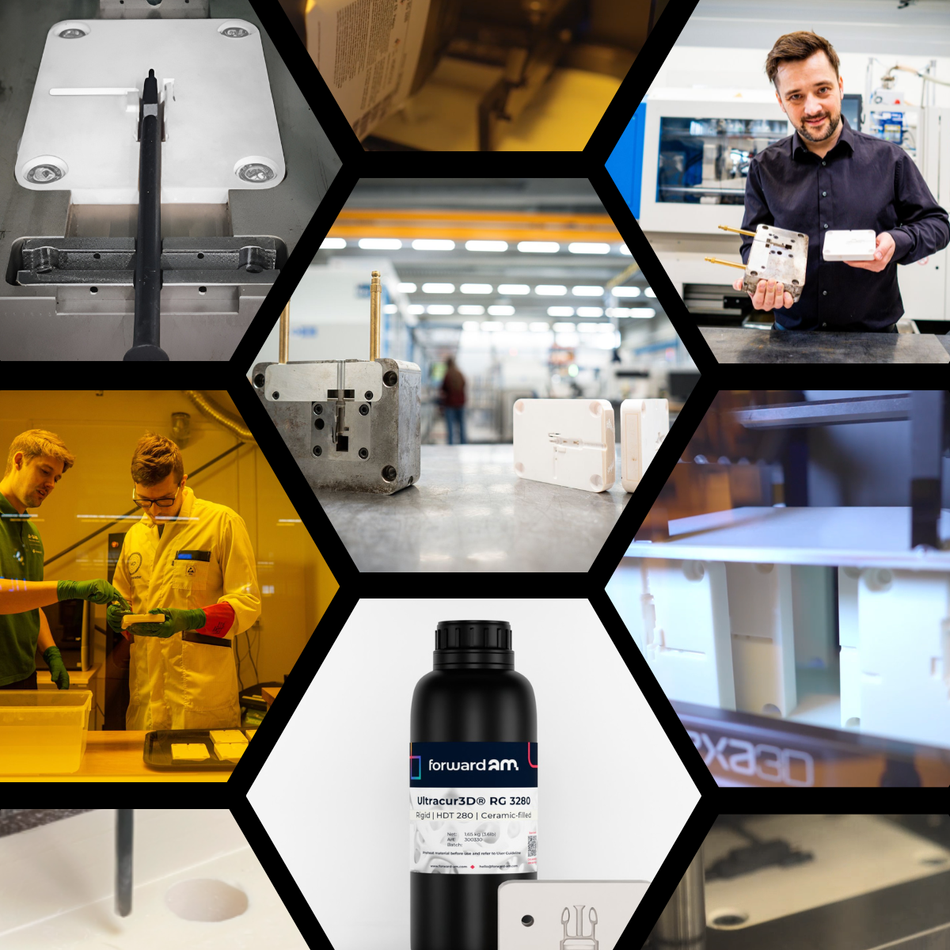
Ultracur3D® RG 3280 is a ceramic-filled photopolymer built for stiffness and heat resistance. It includes a modulus of roughly 10GPa and a heat deflection temperature above 280°C. A low viscosity keeps it practical to print. Those properties let printed inserts hold up under molding pressure and temperature, so engineers can make functional prototypes and small batches in conventional injection molding materials.
Two published case studies show what that looks like in practice. Automotive supplier MD Elektronik used RG 3280 inserts to overmold data-cable prototypes in series material. Eight mold components were printed in about two hours, and more than 60 parts were molded in 90 minutes with little to no wear on the inserts. The company reports a path from 3D data to finished prototype in three to four days and savings of over €5,000.
Becton Dickinson took the approach further for low-volume medical parts. A printed core and cavity insert, machined to fit a standard mold frame, was ready for the press in under five hours. The tool molded 30-plus polypropylene parts with manual ejection, then more than 100 polypropylene and 100 polycarbonate parts with automatic ejection.
These results come from specific setups, and tool life will vary with processing parameters, mold geometry, and the injected material. RG 3280 suits parts that demold conventionally and need testing in real material.
The Dissolvable Approach: Ultracur3D® xMOLD
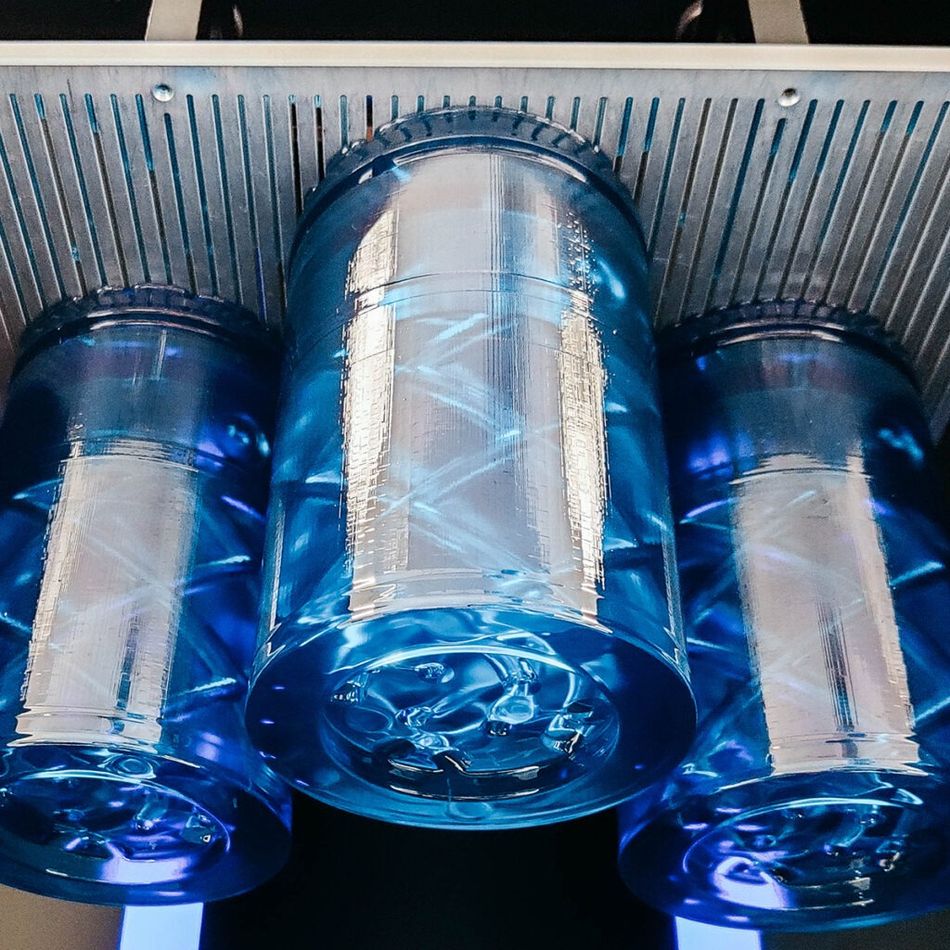
Some geometries can't be demolded. Undercuts, internal features, and complex contours often force toolmakers into multi-part molds, side actions, or design compromises. Ultracur3D® xMOLD takes a different route: print the mold, inject the part, then remove the mold.
xMOLD is a sacrificial resin designed to be dissolved away after molding, which removes demolding constraints from the design. The standard route is chemical dissolution (NaOH solution). Partner HoliMaker has also reported success with an ultrasonic cleaner and hot water, running until the mold cracks so the part can be removed by hand.
The larger benefit is design iteration. Because the mold is a digital file and a print job, teams can change the geometry, reprint, and test the result in the final thermoplastic, without being limited early by conventional mold design. The manufacturer Forward AM says the approach can cut tooling costs by up to 90% compared with steel or aluminum tooling and shorten the path from CAD to molded part to hours or days. Those figures come from the manufacturer, so readers should validate them against their own parts and volumes.
Choosing Between Rigid and Dissolvable
The two materials work as complementary tools, and the choice mostly comes down to part geometry and purpose.
RG 3280 (rigid) | xMOLD (dissolvable) | |
Mold life | Reusable inserts; lifetime depends on process, geometry, and material | Sacrificial; one mold per molded part |
Geometry | Parts that demold conventionally | Undercuts and complex shapes that are hard or impossible to demold |
Typical use | Functional prototypes and small series | Design iteration and complex low-volume parts |
After molding | Eject the part, reuse the insert | Dissolve or break away the mold |
A team might use xMOLD to iterate on a complex geometry, then move to RG 3280 inserts for a short production run once the design settles.
An Open, Printer-Agnostic Workflow
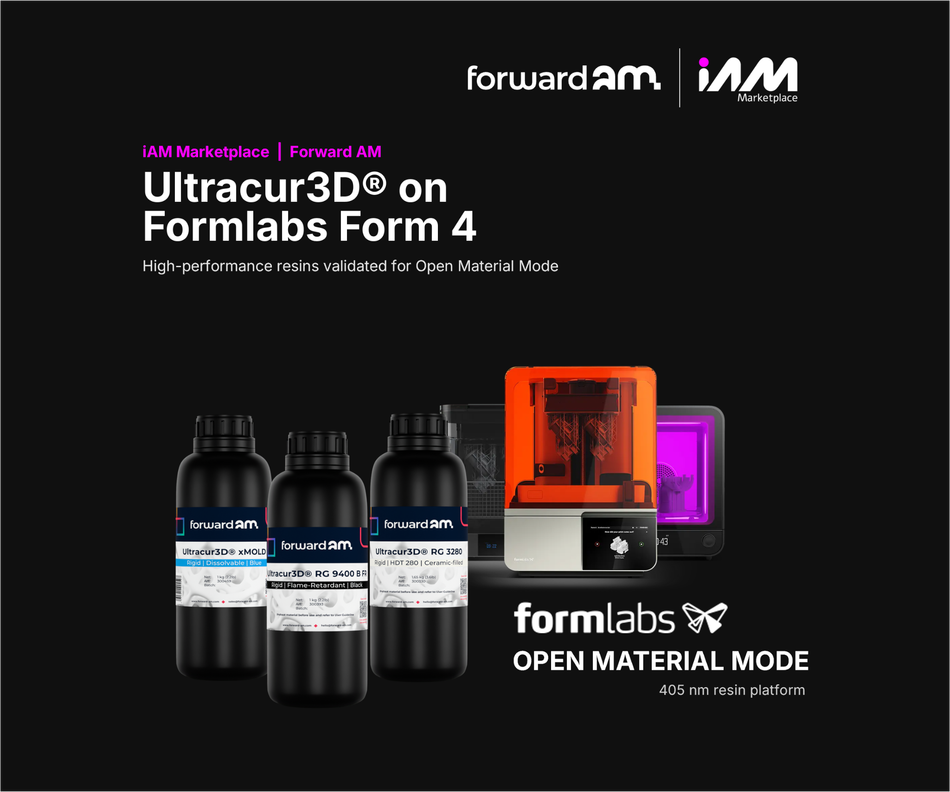
Both resins run on compatible open-material resin printers using LCD and DLP technology, including the Formlabs Form 4 in Open Material Mode. The solution isn't tied to a single printer manufacturer, so teams can often use the hardware they already own rather than buy a dedicated system.
See it Live at Formnext 2026
Seeing the process end to end is the best way to judge it. At Formnext 2026, iAM Marketplace will run live injection molding demonstrations on the APSX-PIM V3 desktop injection molding machine, showing how 3D-printed tooling fits a practical workflow.
The demonstrations run November 17–20 in Frankfurt, Germany, daily at 11:00 AM and 2:00 PM, at the iAM Marketplace booth in Hall 12.1, booth D61. Visitors can discuss tooling design, production workflows, material compatibility, and the practical differences between rigid and dissolvable molds.
Conclusion
3D-printed tooling widens what conventional injection molding can do during development and low-volume production. Rigid inserts bring speed and real-material testing, while dissolvable molds open up geometries that metal tooling can't easily produce. Used together, they shorten the loop between design and a molded part.
To learn more, visit iAM Marketplace.