NFPA 79: The Electrical Standard for Industrial Machinery
NFPA 79 governs the electrical equipment inside industrial machines, picking up where the National Electrical Code stops. This guide covers its scope, how it splits responsibility with the NEC and UL 508A, what the 2024 edition requires, and the 2027 revision in progress.

24 Oct, 2026. 17 minutes read
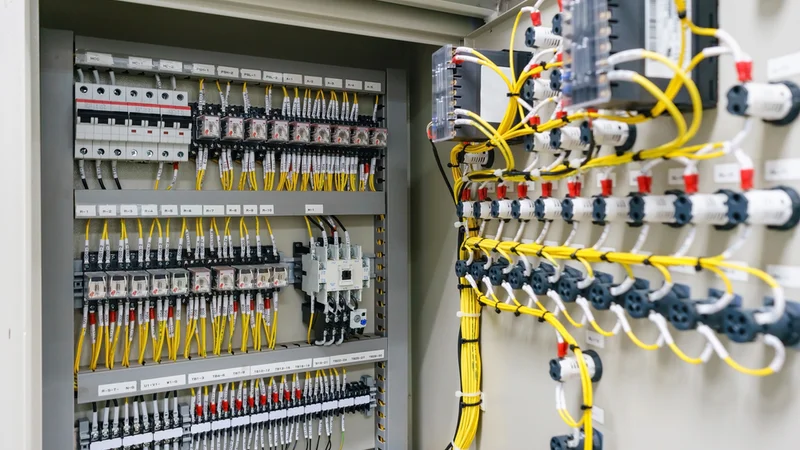
NFPA 79 - Electric Control Panel Enclosure for Power and Distribution Electricity
Key Takeaways
Standard Scope and Connection Point – NFPA 79 applies to electrical equipment of industrial machines operating at 1,000 V or less, with its requirements taking effect at the point where supply circuit conductors connect to the machine.
Standards Boundary Mapping – The National Electrical Code (NEC) governs supply wiring up to the disconnect, NFPA 79 covers internal machine wiring and controls, and UL 508A governs the fabrication of the control panel itself.
Edition and Revision Status – The current effective edition is the 2024 standard (issued December 2023), while the upcoming 2027 edition progresses through its formal revision cycle following the release of the Second Draft Report in late 2026.
Nameplate and SCCR Requirements – Industrial machines require a compliant nameplate under Clause 16.4 displaying the short-circuit current rating (SCCR), which is calculated using the UL 508A Supplement SB methodology.
Safety Protocols and Functional Safety – Machine safety standards require dedicated emergency stop circuits, color-coded conductor identification, and compliant protective bonding to shield operators from electrical and mechanical hazards.
Access and Viewing Options – NFPA provides full, free read-only access to the complete standard on its official portal with a registered user account, though downloading or printing the document remains restricted.
Introduction
Most electrical work in a factory answers to NFPA 70, the National Electrical Code. That covers the building: the service, the feeders, the branch circuits, the conductors running to each machine. It does not tell you how to build the machine.
That job belongs to NFPA 79, the Electrical Standard for Industrial Machinery. NFPA describes its purpose as providing "safeguards for industrial machinery to protect operators, equipment, facilities, and work-in-progress from fire and electrical hazards".
If you design, build, specify or inspect industrial machines for the North American market, NFPA 79 is the document that decides whether your wiring, protection, marking and documentation are acceptable. This guide explains what it covers, where its authority begins and ends, and how it interacts with the two standards engineers most often confuse it with.
What NFPA 79 Covers?
NFPA 79 states its own purpose as providing "detailed information for the application of electrical/electronic equipment, apparatus, or systems supplied as part of industrial machines that will promote safety to life and property". [2]
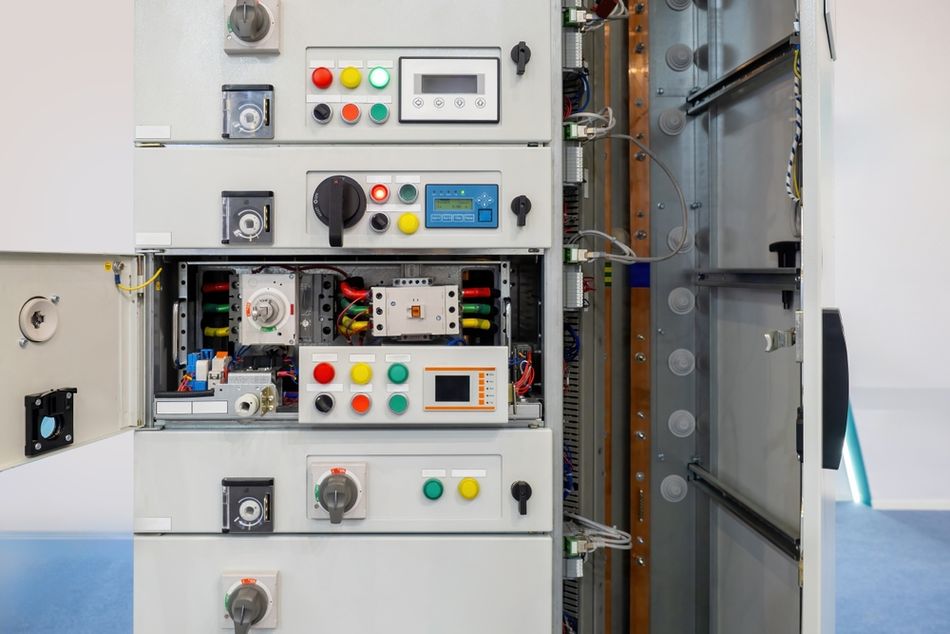
Here, two limits define the scope. The standard applies to industrial machines operating at 1000 volts or less, and its requirements commence at the point where the supply circuit conductors connect to the electrical equipment of the machine.
The exact wording in Section 1.1.1 frames that ceiling as a nominal voltage: it applies to machines "supplied from a nominal voltage of 1000 volts or less". [3]
That voltage ceiling is not historical. The 2018 edition raised it from 600 V to 1000 V to track a parallel change in the NEC, which had moved from a 600 V threshold to a 1000 V one with the 2017 edition. [4]
Which Machines Count?
Annex C of NFPA 79 gives examples, grouped into machine tools, plastics machinery, wood machinery, assembly machines, material-handling machines, inspection and testing machines, and packaging machines. The named examples include injection molding machines, sawmill machines, industrial robots, conveyors, coordinate measuring machines, and carton-strapping machines. [2]
The definition behind those categories is narrower than "anything with a motor". The industrial machine is a power-driven machine, or a group of machines working together in a coordinated manner, that is not portable by hand while working, and that is used to process material. The associated equipment for material transport, tooling, assembly, inspection and packing forms part of the machine, and so do the controller, its software, and the actuators and sensors.
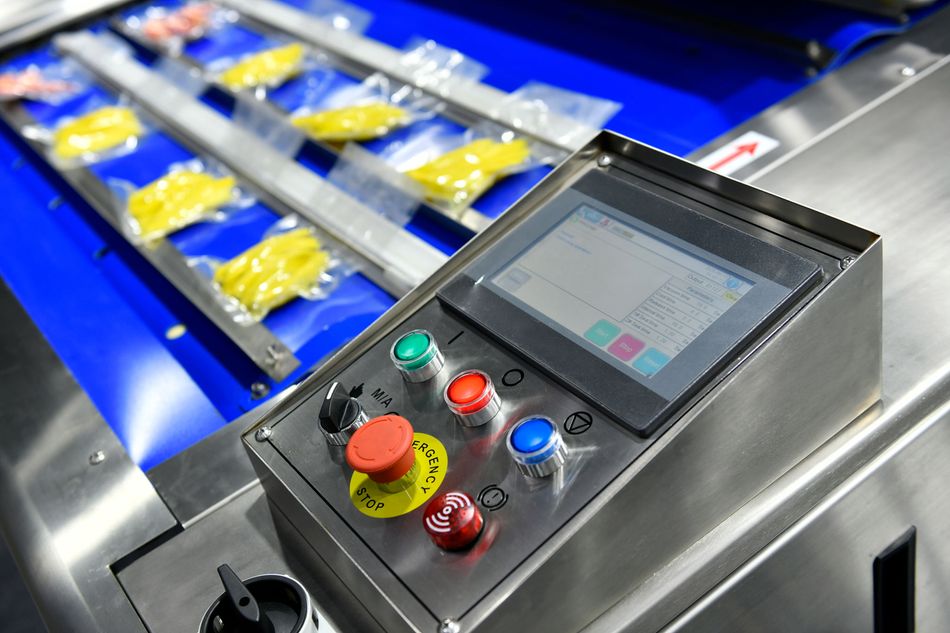
That last point catches people out. Where a machine is run by a PLC, the PLC and its associated software and I/O are not a separate system sitting outside the standard. They are part of the machine's electrical equipment, and NFPA 79 applies to them. [4]
Whatever the machine type, NFPA 79 requires that the equipment be listed or labeled, and used only where it is approved for the location and use. Each machine must also be evaluated through a risk assessment, with the risks from identified hazards reduced to an appropriate level of safety.
That risk assessment requirement is what makes NFPA 79 a machine safety document and not just a wiring specification. NFPA guidance is that risk mitigation begins in the initial design and development phases; where that is not possible, safeguarding should be considered, including awareness, proper working procedures, and other protective measures. [2]
What it Excludes?
The summary of the 2018 edition by Siemens sets out the exclusions: the standard does not apply retroactively, though it must be applied to changes other than repairs on existing machinery, and it does not apply to machinery in hazardous areas. It is also not applied to fixed or portable tools judged under the requirements of a testing laboratory acceptable to the authority having jurisdiction, nor to machinery in dwelling units. [4]
Recommended Reading: What Is a PLC? Complete Guide to Programmable Logic Controllers
NFPA 79 vs NEC vs UL 508A
The distinction between these three documents becomes clearer when you follow the electrical supply from the building to the machine and into its control panel.
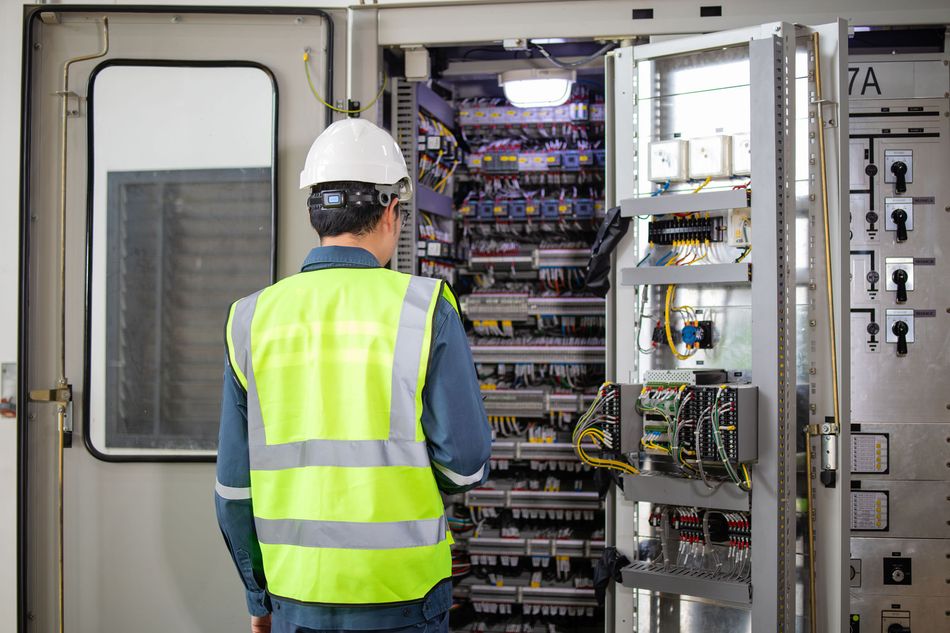
The NEC addresses the installation and machine supply, NFPA 79 addresses the electrical equipment of the machine, and UL 508A addresses the construction of the industrial control panel. Their scopes meet and overlap, so they should not be treated as three entirely separate zones. [2]
NFPA 70, the National Electrical Code (NEC), governs the premises wiring supplying the machine. NFPA describes the boundary at the point where the supply circuit conductors terminate within the machine; NFPA 79 then applies to the electrical equipment of the machine. [2] Article 670 specifically addresses industrial machinery, including the sizing and overcurrent protection of machine supply conductors. NFPA 79 Section 1.4 explicitly refers these requirements back to Article 670, connecting the installation code with the machine standard. [3]
NFPA 79 covers the electrical equipment of industrial machinery operating at 1000 V or less. Its scope begins at the connection of the supply circuit conductors to the machine’s electrical equipment and extends to the loads in the machinery field. [2][4] This makes its scope broader than the control panel alone: it addresses the machine’s electrical system, including the equipment and wiring beyond the panel.
UL 508A focuses on the industrial control panel itself. It is a product standard for panel construction, with a scope extending from the panel’s supply point to its field wiring terminals. The machinery wiring and loads connected beyond those terminals fall outside that panel boundary. [4] UL 508A covers industrial control panels rated 1000 V or less, AC or DC. [7]
For a machine with a control panel, these requirements work together. The incoming supply must meet the applicable NEC requirements, the electrical equipment of the machine must meet the applicable NFPA 79 requirements, and the panel can be evaluated to UL 508A. The panel evaluated to UL 508A does not, by itself, establish compliance of the complete machine with NFPA 79 or of the installation with the NEC.
Where Do the Two Overlap in Practice?
Siemens puts it this way: because the machine supply and the control panel supply generally involve the same supply terminal, you can apply both standards to control panels.
The recommendation is to agree in advance with the user which standard is relevant; where that is not possible, comply with both. The two are mostly not contradictory, but where they differ, the advice is to comply with the more stringent requirement.
The worked example given is control circuit voltage. Under NFPA 79, a maximum of 120 V AC or 250 V DC generally applies to control circuits, while UL 508A permits up to 600 V for Class 1 control circuits, so designing to the NFPA 79 limit satisfies both. [4]
NFPA 79 Reaches into UL 508A by Reference
NFPA 79 cites UL 508A in its own requirements. Section 6.2.3 requires that equipment enclosures, enclosure openings and observation windows meet the requirements of UL 508, UL 508A, UL 50 or NEMA 250, and Section 11.1.2 applies the same list to minimum control enclosure construction. The annex note to 11.2.1.3 sends the reader to ANSI/UL 508A, Part 1, Section 10 for industrial control panel component spacings. [3]
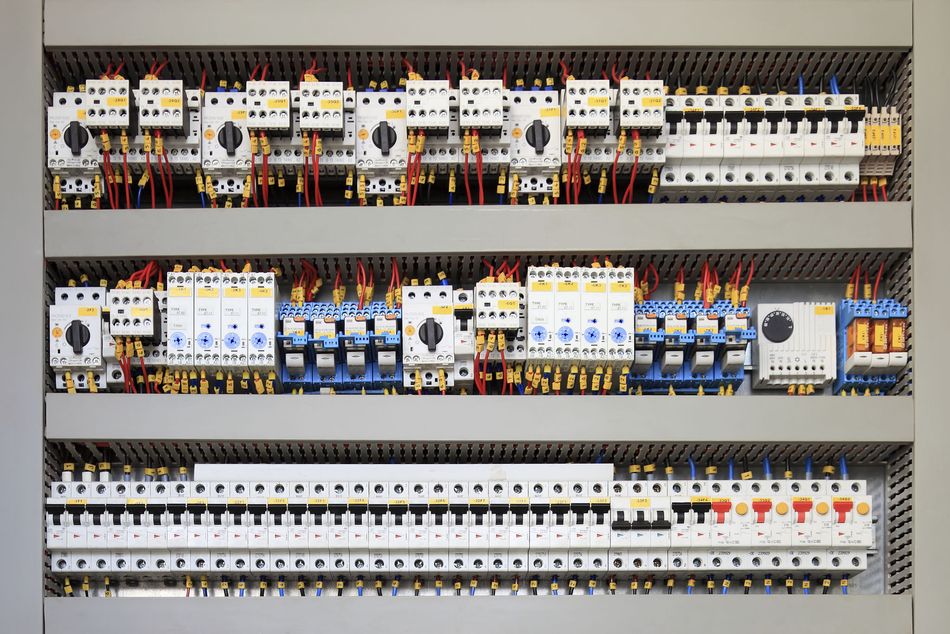
UL 508A returns the favor with a dedicated body of requirements for industrial machinery panels, in Section 66 of the standard. [7]
Where NFPA 70E Fits?
NFPA 79 is a design standard: it tells you how to build the machine. NFPA 70E, the Standard for Electrical Safety in the Workplace, governs how people work on electrical equipment once it is installed. NFPA 79 lists NFPA 70E among its referenced publications, updated to the 2024 edition in the current revision cycle. [3]
The link between them is hazard exposure. NFPA notes that a failure or fault in electrical equipment on the machine can result in electrical shock or arc flash exposure to personnel, and possibly an electrical fire. [2] NFPA 79 works to design that hazard down. NFPA 70E governs the work practices of the electricians and technicians who still have to open the panel. Neither safety standard substitutes for the other.
Recommended Reading: UL 508A: The Standard for Industrial Control Panels
Inside the Standard
NFPA 79 is organized by hazard and electrical subsystem rather than machine type. Its chapters address how machinery is disconnected, protected, wired, enclosed, and operated.
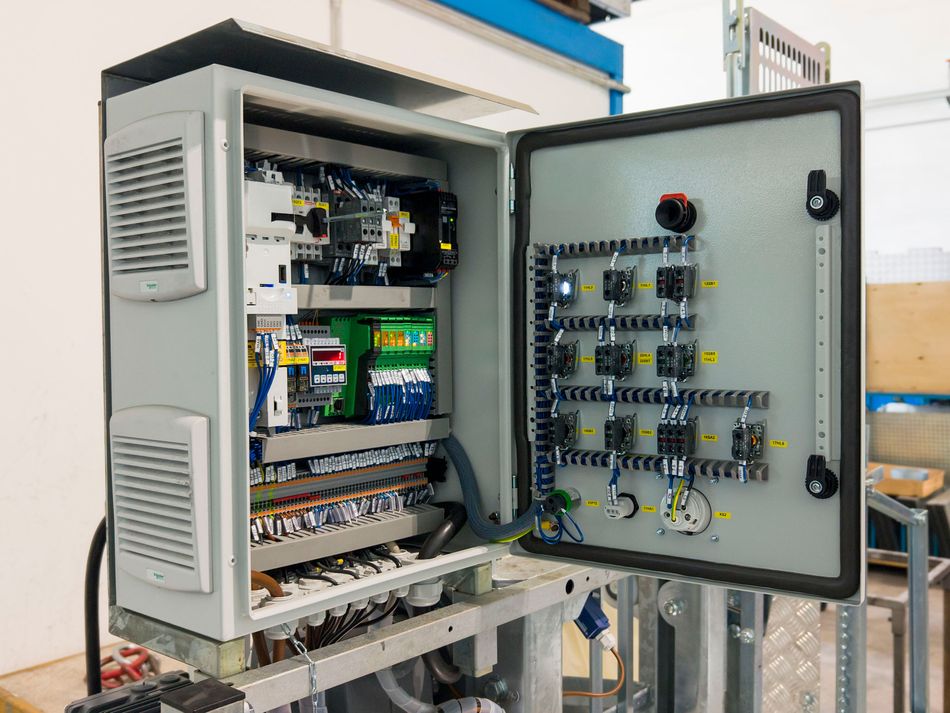
The requirements below draw partly on the Fall 2026 First Revisions Report (NFPA), which includes existing text and proposed changes. [3] Proposals are identified separately; confirm requirements against the edition enforced by your authority having jurisdiction (AHJ).
Chapter 5: Disconnecting Means
The supply circuit disconnecting means is generally required for each machine supply circuit and each onboard power source, such as a generator or uninterruptible power supply. The Fall 2026 first revision proposes explicitly adding batteries. Certain communication, remote-control, and signaling circuits below 50 V AC rms or 60 V DC are excepted. [3]
Opening the main disconnect does not necessarily de-energize every circuit. Section 5.1.13 permits exceptions, including maintenance lighting and equipment that must remain energized to function correctly. Where these circuits exist, a permanent safety sign beside the disconnect handle must warn that exposed live parts can remain energized. The machine documentation must carry the same warning. [3]
The line-side conductors inside the control enclosure must be separated from other conductors and enclosed in a raceway when their length exceeds 460 mm.
Siemens describes interlocking requirements and an exception for qualifying dead-front enclosures secured by a key or tool and marked with a warning sign. [4] Because that analysis covers the 2018 edition, confirm its distances, thresholds, and section references against the applicable edition.
Chapter 6: Protection Against Electrical Hazards
Chapter 6 addresses electrical hazards through measures including interlocking, fault protection, double insulation, protective extra-low-voltage (PELV) circuits, and Class 2 circuits. [2] The Fall 2026 first revision proposes adding NEC Article 722 alongside Article 725 in the Class 2 circuit references to reflect changes introduced in the 2023 NEC. [3]
Chapter 7: Protection of Equipment
Chapter 7 addresses damage caused by short circuits, motor overloads or loss of cooling, ground faults, overvoltages, abnormal temperatures, supply-voltage loss or reduction, overspeed, and incorrect phase sequence. Its overcurrent provisions cover supply conductors, power and control circuits, lighting circuits, transformers, and short-circuit current ratings. [2]
For listed self-protected combination motor controllers with adjustable instantaneous trips, the cited text limits settings to 1300% of motor full-load current, or 1700% for Design B energy-efficient motors. The Fall 2026 first revision proposes extending the 1700% limit to Design B premium-efficient and Design BE motors. [3] These limits apply to the specified controller arrangement, not to every motor protective device.
Chapter 8: Grounding and Bonding
Grounding and bonding has its own chapter. The 2018 edition renamed it from "Grounding" to "Grounding and Bonding" and revised it, a change Siemens flagged as one of the significant structural updates in that cycle. [4] NFPA lists grounding and bonding among the specific component areas the standard addresses, alongside disconnecting means, control equipment and electric motors. [2]
The conductor identification rules in Chapter 13 are the visible half of this: a protective bonding path is only as good as an installer's ability to recognize it.
Chapter 10: Operator Interface
Pushbutton colors communicate function. Green is preferred for start or on, while black, white, or gray are permitted; red must not be used. Red is preferred for stop or off, while black, white, or gray are permitted; green must not be used. [3]
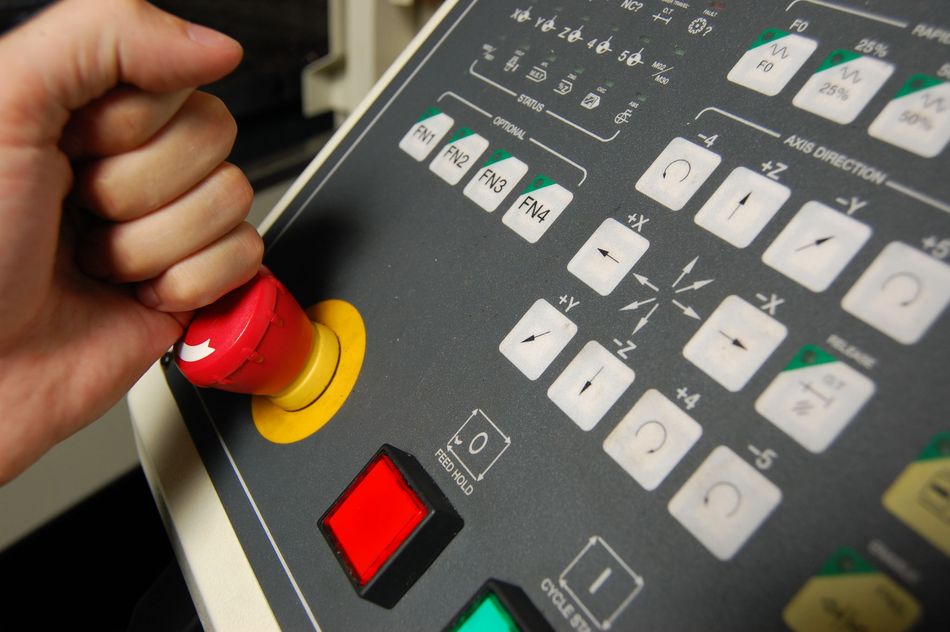
Emergency-stop switches must not be flat switches or software-based graphical representations. The Fall 2026 first revision proposes modernizing the wording to “graphical user interfaces,” but the practical distinction remains: a touchscreen icon is not an emergency-stop switch.
Chapter 11: Enclosures and Spacings
For exposed, non-arcing, bare live parts operating at 50 V AC rms or 60 V DC and above, the cited text requires at least 13 mm of air space to uninsulated enclosure or compartment walls, including conduit fittings. The minimum clearance to uninsulated doors is 25 mm. [3]
Chapter 13: Conductors and Wiring
Conductor identification distinguishes grounding conductors, grounded circuit conductors, and circuits that remain energized after the main disconnect is opened. The key assignments include:
Green, with or without Yellow Stripes: Insulated or covered equipment grounding conductors; reserved for this purpose.
White with a Blue Stripe: Grounded, current-carrying DC conductors.
White with an Orange Stripe: Grounded AC or DC conductors that remain energized with the main disconnect off.
Orange: Ungrounded AC conductors that remain energized with the main disconnect off.
Orange with a Blue Stripe: Ungrounded DC conductors that remain energized with the main disconnect off.
The orange identification requirements connect directly to the excepted circuits in Section 5.1.13. The 2024 edition added orange with a blue stripe for DC conductors and clarified that both ungrounded orange color assignments are reserved for these applications.
Exceptions to the ungrounded conductor color requirements include internal wiring in devices purchased completely wired and specialty insulation unavailable in the specified colors. Other power and control conductor color assignments should be checked in the applicable edition of Section 13.2.
Chapter 13 also permits cable trays to support specified machine wiring, including single conductors sized 1/0 AWG or larger, multiconductor flexible cables, associated raceways, and other permitted conductors and cables. [3]
Recommended Reading: Future Trends in Control Panels
The Machine Nameplate and SCCR
NFPA 79 Section 16.4 requires a nameplate on the outside of the enclosure or on the machine immediately beside it. [5] The marking must be legible, durable, and visible after installation.
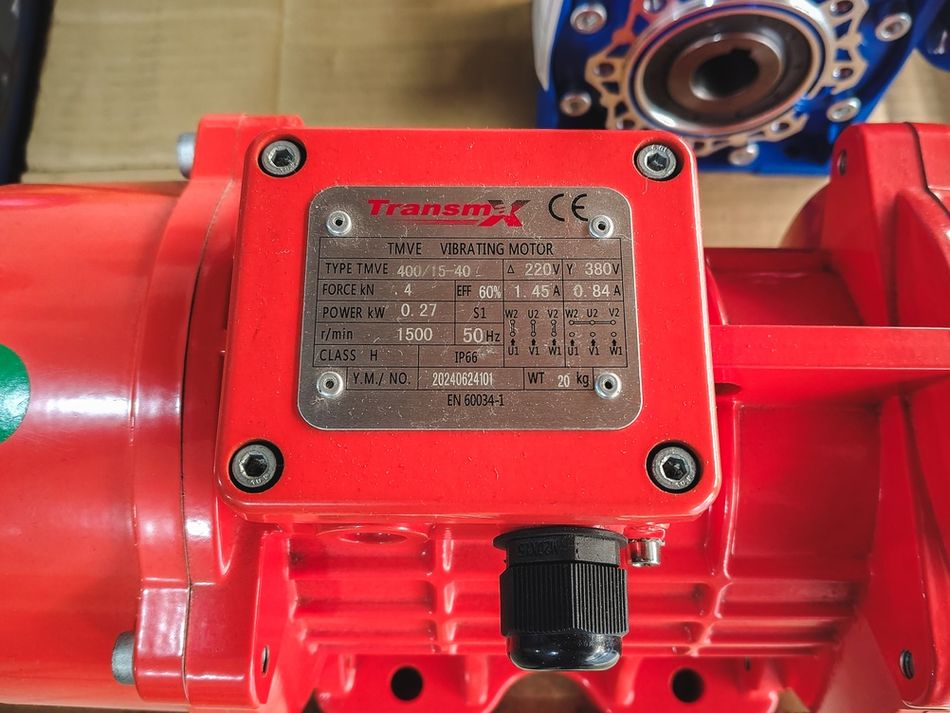
Section 16.4.1 specifies seven items:
Supplier Identification: Name or trademark.
Machine Identification: Model, serial number, or other designation.
Supply Ratings: Rated voltage, phases and frequency for AC, and full-load current for each supply.
Largest Load: Ampere rating of the largest motor or load.
Protective Device Rating: Maximum ampere rating of the branch-circuit short-circuit and ground-fault protective device, where provided.
SCCR: Short-circuit current rating of the industrial control panel.
Drawing Reference: Electrical diagram numbers or the electrical drawing index number.
The 2024 edition clarified the supply ratings by adding “for each supply” and the protective device information by adding “branch-circuit” and “where provided.” These wording changes matter when updating older nameplate templates.
Protective Device Rating vs SCCR
The ampere rating of the protective device and the SCCR of the panel describe different limits. The former identifies the maximum permitted rating of the specified protective device. The latter identifies the short-circuit current rating of the panel, which must equal or exceed the available fault current at its line terminals. [5][8]
UL Solutions identifies UL 508A Supplement SB as the method used to determine SCCR for UL Listed industrial machinery, while NFPA 79 guides the electrical design and construction of the machine. Once a machine contains several industrial control panels, each panel must have an adequate SCCR for the available fault current at its own line terminals. [5]
How the Nameplate Supports Installation?
The 2024 annex notes connect these ratings to NEC Article 670:
Largest Motor Rating supports machine supply-conductor calculations under Article 670.4(A).
Maximum Branch-Circuit Protective Device Rating informs the rating or setting of the overcurrent protective device supplying the machine under Article 670.4(C).
Marked SCCR accounts for additional panels supplied from the panel containing the supply disconnect of the machine, where applicable. [5]
The nameplate therefore provides essential information for sizing the supply, selecting protection, and checking whether the machine is suitable for the available fault current.
Recommended Reading: SCCR Rating: How to Determine, Raise, and Mark It
Documentation
NFPA 79 addresses the technical documentation needed to understand, operate, and maintain the electrical equipment of the machine. Its annexes also provide guidance on minimizing the probability of control-function failure. [2] The clear documentation helps technicians trace circuits, identify components, diagnose faults, and understand how protective functions operate.
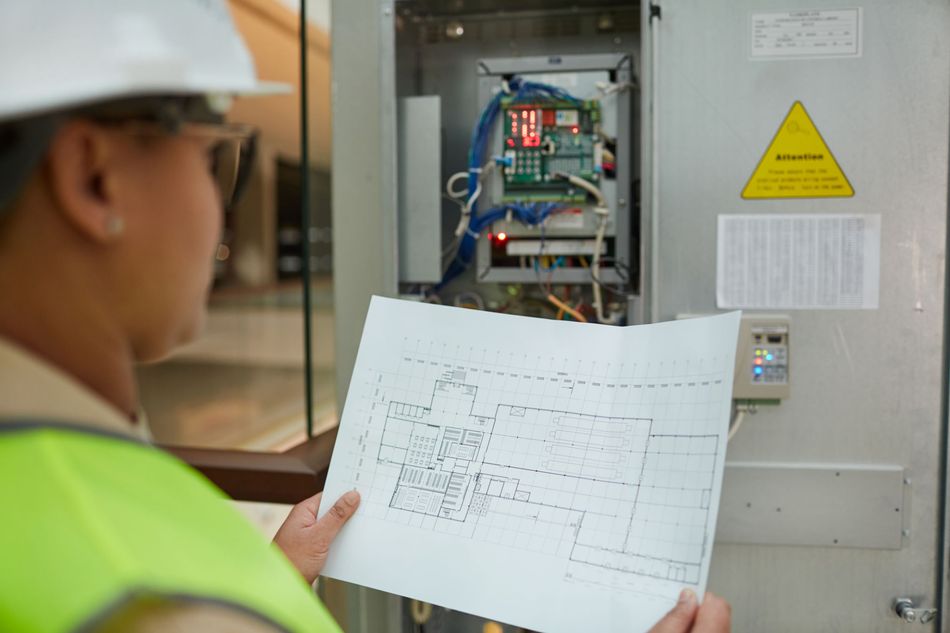
The useful documentation package brings together electrical diagrams, component references, operating instructions, and maintenance information. Drawings should reflect the machine as installed, including subsequent modifications, and use identifiers that match the labels on conductors and devices. Circuits that remain energized after the main disconnect is opened should be clearly identified, with the required warning included in the machine documentation. [3]
The drawings must also be accessible where they are needed. The cited requirement calls for a print pocket, sized to hold physical electrical diagrams or software media, attached to the inside or outside of the control enclosure or compartment door. For digital information, practical access also depends on having compatible software and a clearly identified, current version of the files.
The proposed first revision in the Fall 2026 cycle would clarify that at least one print pocket is required, specify that it must suit the surrounding environment, and permit diagrams to be stored at a marked remote location. [3] These changes remain proposals in the cited report; documentation arrangements should follow the edition enforced by the authority having jurisdiction.
The 2024 Edition and the 2027 Revision
The current edition is 2024. NFPA records show it was issued on 1 December 2023, as a consent standard not presented at the NFPA Technical Meeting. Its notable changes include a new cybersecurity section, while the 2027 revision cycle proposes updates to voltage limits, conductor materials, terminology, and robotics. [1]

Cybersecurity in the 2024 Edition
Section 4.10 addresses network-connected industrial machinery where the network connection permits control of any part of the machine. It outlines three cybersecurity measures:
Assessment: Identify vulnerabilities in the connected system.
Commissioning Certification: Confirm that the system is designed to address cyberattacks and known vulnerabilities.
Documentation: Make assessment and certification records available to authorized inspection, operation, and maintenance personnel.
These provisions are permissive, not mandatory. The wording “shall be permitted” allows this approach without making it a universal condition of NFPA 79 compliance, a distinction also highlighted by Intertek. [9]
The supporting annex identifies resources including ANSI/ISA 62443, NIST Cybersecurity Framework Version 1.1, UL 2900-2-3, and ISO/TR 22100-4. It also describes certification routes through the ISA Security Compliance Institute, a nationally recognized testing laboratory, or the system manufacturer.
Proposed Changes for 2027
NFPA lists the next edition as 2027 under the Fall 2026 revision cycle. [1] Key changes accepted at the first-draft stage include:
Voltage Scope: Extend coverage to machinery supplied at up to 1000 V AC or 1500 V DC.
Terminology: Replace “industrial manufacturing system” with “integrated machinery system” to align with ANSI B11.20.
Supply Conductors: Explicitly permit copper, copper-clad aluminum, or aluminum machine supply conductors, provided the terminals are identified for the material used.
Robotics: Add annex examples covering articulated arms, Cartesian gantries, delta and SCARA robots, and mobile robots.
Enclosure References: Replace references to NEMA 250 with NEMA EN 10250.
The published schedule places the public-comment deadline on 6 January 2026, the Second Draft Report posting on 22 September 2026, and the Notice of Intent to Make a Motion (NITMAM) deadline on 3 November 2026. [1]
The first-draft revisions are proposals, not published requirements. They may change during later stages. Base compliance decisions on the published edition applicable to the installation, rather than proposed wording.
How to Read NFPA 79 Without Buying It?
The common question about this standard is whether a free PDF exists. The free copy to download does not, but free reading does.
NFPA makes its codes and standards available online to the public at no charge, and describes itself as the first organization to provide free public access to privately developed codes and standards. The route is to find the standard, select "Read More", choose the edition year from the drop-down, then click "View Free Access" and accept the terms. [10]
Here, two limits matter. You will be asked to sign in or create an account. The viewer is strictly read-only: NFPA states that documents cannot be downloaded or printed because it relies on revenue from copy sales to fund its work. In addition to standard purchasing methods, the standard can be accessed through NFPA LiNK, which serves as the digital subscription platform of the organization. [1]
Common Mistakes
Below are some common mistakes:
Treating the control panel listing as machine compliance. UL certification for an enclosed industrial control panel covers the enclosure and the components in and on it. UL is explicit that an industrial control panel does not include the controlled loads, such as motors, luminaires, heaters or utilization equipment. The listed panel does not make the machine NFPA 79 compliant. [6]
Marking the protective device rating in place of the SCCR. Items 5 and 6 on the nameplate are different values.
Assuming one SCCR covers a multi-panel machine. Each panel needs its own rating against the fault current at its own line terminals. [5]
Marking a nameplate from an older copy of the standard. The 2024 edition reworded two of the seven items in 16.4.1, adding "for each supply" to the rated voltage line and "branch-circuit" to the protective device line. The annex also notes that the rating marked for the machine accounts for additional panels supplied from the panel containing the machine supply circuit disconnecting means.
Using green or green-and-yellow conductors for anything else. That identification is strictly reserved for the equipment grounding conductor.
Putting the emergency stop on the HMI. Emergency stop switches must not be flat switches or graphic representations based on software applications. [3]
Applying only one of NFPA 79 and UL 508A to a panel at the boundary. Where both can apply, the workable approach is to agree the governing standard in advance, and otherwise comply with the more stringent requirement. [4]
Recommended Reading: Human Machine Interfaces Enhance User Experience through Touchless Technology
Conclusion
NFPA 79 is best understood as the third piece of a set. The NEC brings power to the machine, UL 508A governs how the control panel is built, and NFPA 79 governs the machine's electrical equipment from the supply terminals inward.
Getting the boundary right resolves most of the questions engineers bring to this standard, from which document sets conductor sizing to why a panel listing does not settle machine compliance. Treat electrical safety on a machine as a shared problem across all three documents rather than something any one of them solves alone.
The 2024 edition is the one to design to today. The 2027 edition is close enough that anyone specifying long-lived equipment should be reading the revision reports now.
Frequently Asked Questions
Q. What is NFPA 79?
A. NFPA 79 is the Electrical Standard for Industrial Machinery. NFPA describes it as providing safeguards for industrial machinery to protect operators, equipment, facilities and work-in-progress from fire and electrical hazards. It applies to industrial machines operating at 1000 volts or less, starting where the supply conductors connect to the machine's electrical equipment.
Q. What is the difference between NFPA 70 and NFPA 79?
A. NFPA 70 is the National Electrical Code and covers the premises wiring that brings power to the machine, including the size and overcurrent protection of the supply conductors under Article 670. NFPA 79 takes over at the point where those conductors terminate in the machine and governs the machine's own electrical equipment.
Q. What is the difference between NFPA 79 and UL 508A?
A. The scope of NFPA 79 runs from the machine supply point to the loads in the machinery field. The scope of UL 508A runs from the control panel supply point to the field wiring terminals. One is a standard for the machine, the other a product standard for the panel inside it. Where both could apply, complying with the more stringent requirement is the recommended approach.
Q. What is the current edition of NFPA 79?
A. The 2024 edition, issued on 1 December 2023. The 2027 edition is in the Fall 2026 revision cycle, with its Second Draft Report posted on 22 September 2026 and the NITMAM stage closing on 3 November 2026.
Q. Can I get NFPA 79 as a free PDF?
A. NFPA provides free online read-only access to its codes and standards through its website, which requires a free account, and the viewer does not permit downloading or printing.
Q. Does NFPA 79 apply to machines already in service?
A. The summary of the 2018 edition by Siemens states that the standard does not apply retroactively, but must be applied to changes other than repairs on existing machinery. Confirm against the edition your authority having jurisdiction enforces.
Q. How is the short-circuit current rating determined?
A. UL Solutions states that for UL Listed industrial machinery, UL 508A Supplement SB is the method used to determine the SCCR, with NFPA 79 serving as the standard for designing and building the machinery.
References
[1] NFPA. NFPA 79 Standard Development [Cited 2026 October 23] Available at: Link
[2] NFPA. Beyond the NEC: Closer Look at NFPA 79, Electrical Standard for Industrial Machinery [Cited 2026 October 23] Available at: Link
[3] NFPA. First Revisions Report, NFPA 79, Fall 2026 Revision Cycle [Cited 2026 October 23] Available at: Link
[4] Siemens. NFPA 79: Changes in Edition 2018 [Cited 2026 October 23] Available at: Link
[5] UL Solutions. Determining Short-Circuit Current Rating (SCCR) for Machinery [Cited 2026 October 23] Available at: Link
[6] UL Solutions. Does a UL Certified Industrial Control Panel Certification Cover the Equipment That It Controls? [Cited 2026 October 23] Available at: Link
[7] UL Solutions. UL 508A Summary of Requirements, Third Edition [Cited 2026 October 23] Available at: Link
[8] Lewis Bass International. Machine Nameplates: The A-Z of NFPA 79 Requirements [Cited 2026 October 23] Available at: Link
[9] Intertek. What's New in the 2024 Updates to NFPA 79, Part 1 [Cited 2026 October 23] Available at: Link
[10] NFPA. Free Access NFPA Codes and Standards [Cited 2026 October 23] Available at: Link
in this article
1. Key Takeaways2. Introduction3. What NFPA 79 Covers?4. NFPA 79 vs NEC vs UL 508A5. Inside the Standard6. The Machine Nameplate and SCCR7. Documentation8. The 2024 Edition and the 2027 Revision9. How to Read NFPA 79 Without Buying It?10. Common Mistakes11. Conclusion12. Frequently Asked Questions13. References