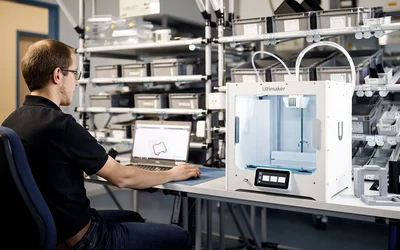
This Report shows how tools like artificial intelligence, digital twins, and on-demand manufacturing are no longer emerging concepts, but are already delivering measurable impact across the product lifecycle.

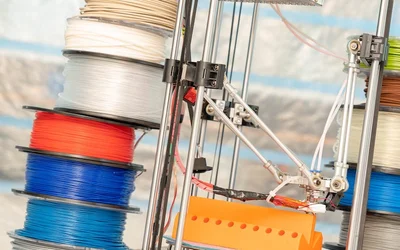
When choosing between 3D printer filaments, strength is often a deciding factor. So what is the strongest 3D printer filament? And what does “strength” really mean here?
EPFL researchers have developed a way to use holograms to guide laser light for ultra-efficient, fast, and precise volumetric 3D printing. The innovation enables cell-compatible, high-resolution 3D printing at scales suitable for biomedical applications.
Princeton researchers have combined brain cells and advanced electronics into a 3D device that can be programmed to recognize patterns using computational techniques.
Discover how iAM Marketplace simplifies industrial additive manufacturing by unifying materials, validation services, and multi-brand technologies into one open ecosystem for efficient AM sourcing.
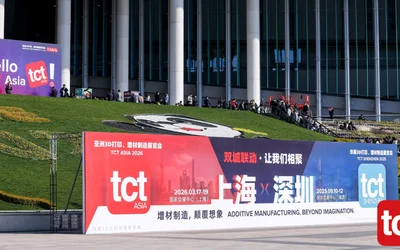
This article discusses what attendees can expect from TCT Asia 2026, including its conference format, focus areas, and the experts contributing to industry-specific discussions.
This article discusses the exhibitors, products, and industrial trends defining additive manufacturing across the Asia-Pacific region at TCT Asia 2026.
This article discusses how the Asia-Pacific region is advancing additive manufacturing and the role of TCT Asia as the leading 3D printing and additive manufacturing event in the Asia-Pacific.
When choosing between 3D printer filaments, strength is often a deciding factor. So what is the strongest 3D printer filament? And what does “strength” really mean here?
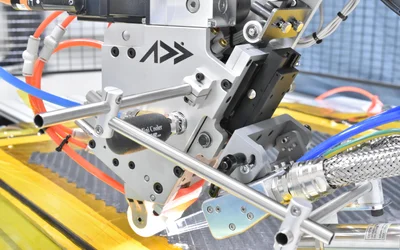
An air-breathing jet engine (turbofan) is widely used in aircraft propulsion. AFP systems are used for making the fan blades and containment casing for these jet engines. Here step by step process of making a jet engine blade via the AFP process is explained.
One of the main reasons why manufacturers and designers prefer injection moulding over other processes is its ability to produce a smooth surface finish. Injection moulding is economical when producing large batches, but how about small batches and prototypes? The evident solution is 3D printing.
Laser powder bed fusion, a 3D-printing technique, offers potential in the manufacturing industry, particularly when fabricating nickel-titanium shape memory alloys with complex geometries.
Thermoplastic polyurethane is one of the best flexible 3D printing materials, but TPU print settings differ greatly from rigid material settings and can be difficult to configure.
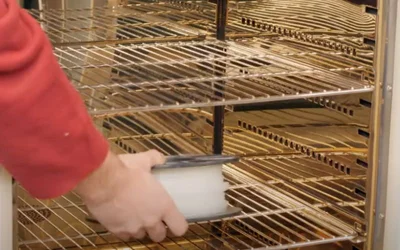
Post-curing is an important step in SLA 3D printing. Knowing how long to cure resin 3D prints and what curing methods to use can help you attain the highest quality parts.
There are many ways to be more sustainable and respectful to our planet. One key way lies within production. How can this process become more sustainable while still being competitive?
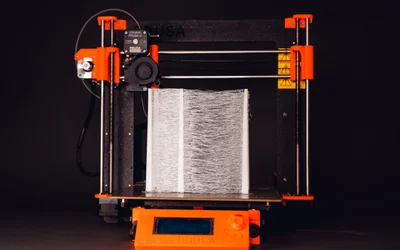
Retraction is a useful feature of FDM 3D printers that helps to prevent common issues like oozing and stringing. Cura retraction settings enable precise control over the retraction process, but the parameters can be confusing to beginners.
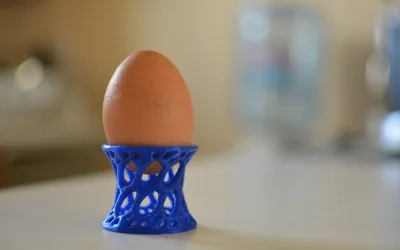
Lattice structures are becoming increasingly common in product design. But what are they exactly, and how can you take advantage of them to develop the next generation of high-performing 3D printed products? This article guides you through the basics of lattice structures to get you started.
Modeled in software before being printed on a commercial 3D printer in a single pass, these "lenticular objects" from MIT show different imagery depending on the angle at which they're viewed — for everything from exercise form feedback to secret messaging.
Prints covered in plastic cobwebs? Like many FDM users, you’re probably the victim of 3D printer stringing. Fortunately, stringing can be prevented via printer maintenance and adjustment of slicer settings.