A Closer Look at Exhibitors and Cutting-Edge Products at TCT Asia 2026
This article discusses the exhibitors, products, and industrial trends defining additive manufacturing across the Asia-Pacific region at TCT Asia 2026.

05 Mar, 2026. 4 minutes read
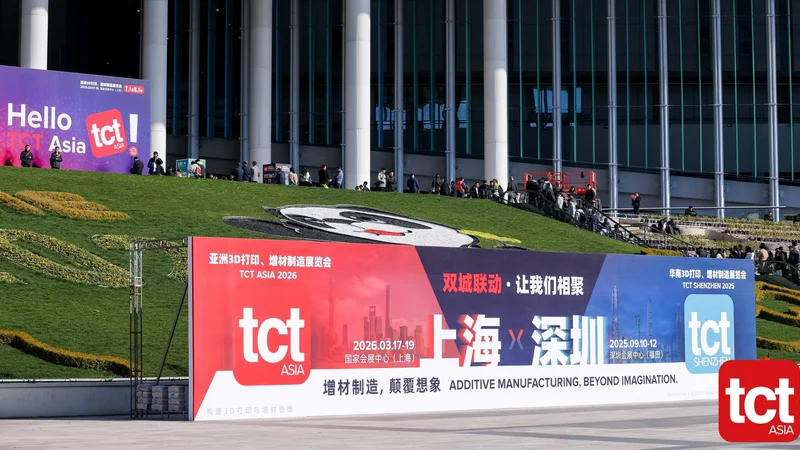
Additive manufacturing is moving from prototyping into production-grade applications across industries. This change can be observed through the exhibitors and technologies on display at TCT Asia 2026. This article discusses the exhibitors, products, and industrial trends defining additive manufacturing across the Asia-Pacific region at TCT Asia 2026.
Asia-Pacific Leaders and Global Names on the Floor
As a regional hub for 3D printing and additive manufacturing, TCT Asia 2026 brings together hundreds of exhibitors spanning the full value chain, including machine manufacturers, material suppliers, software developers, and service providers. This gives an idea of where the industry is headed next.
Among the confirmed participants visitors can explore are Xi’an Bright Laser Technologies Co., Ltd. who are a key Chinese provider of industrial laser systems and metal additive solutions, Tianjin LiM Laser Technology Co., Ltd. specializing in laser-based additive systems tailored for precision metal parts, Farsoon Technologies, a major player in polymer and metal additive platforms used in industrial and aerospace production, UnionTech known for its high-performance polymer 3D printing systems that blend speed and material versatility, and Shenzhen Kings 3D Printing Technology Co., Ltd. integrating hardware and software for agile prototyping and small-batch production.
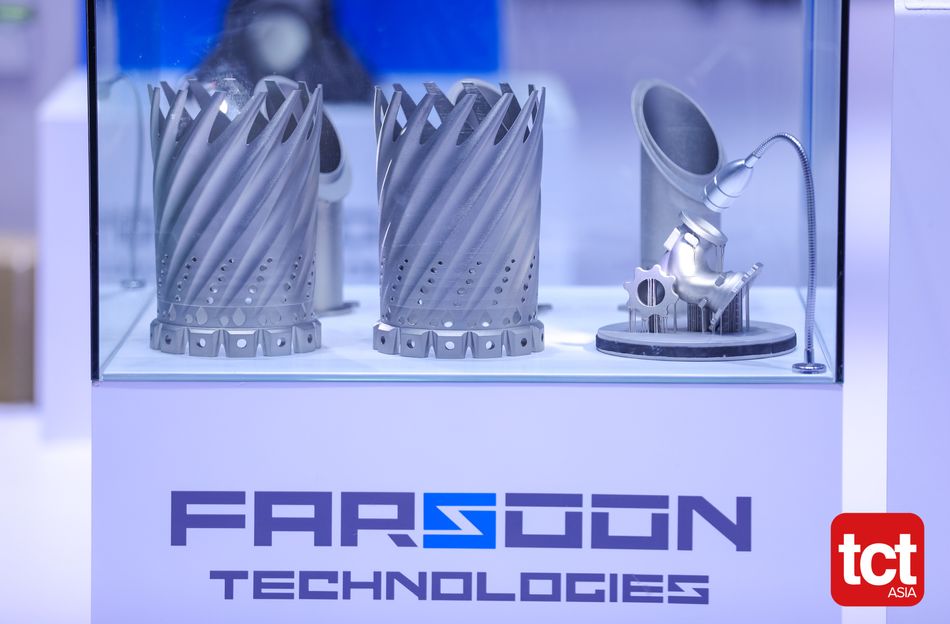
Alongside these, the broader exhibitor lineup spans established multinationals and emerging innovators, encompassing machine builders, software developers, service bureaus, and material suppliers.
Industrial Systems Designed for Production Reality
Many exhibitors at TCT Asia are industrial machine manufacturers prioritizing throughput, build volume, and process stability. Chinese and Asia-based OEMs now compete directly in industrial metal and polymer additive manufacturing globally. This is evident in the approaches taken by companies such as Farsoon Technologies and BLT (Bright Laser Technologies). For instance, Farsoon’s open-platform philosophy, applied across its polymer and metal systems, has made machines like the FS421M metal laser powder bed fusion system widely used in aerospace, tooling, and research environments.
BLT has expanded its portfolio of large-format metal LPBF systems, designed to support batch production of aerospace and industrial components. These systems are typically showcased alongside application-specific workflows at TCT Asia that address design, material selection, and post-processing under production constraints.
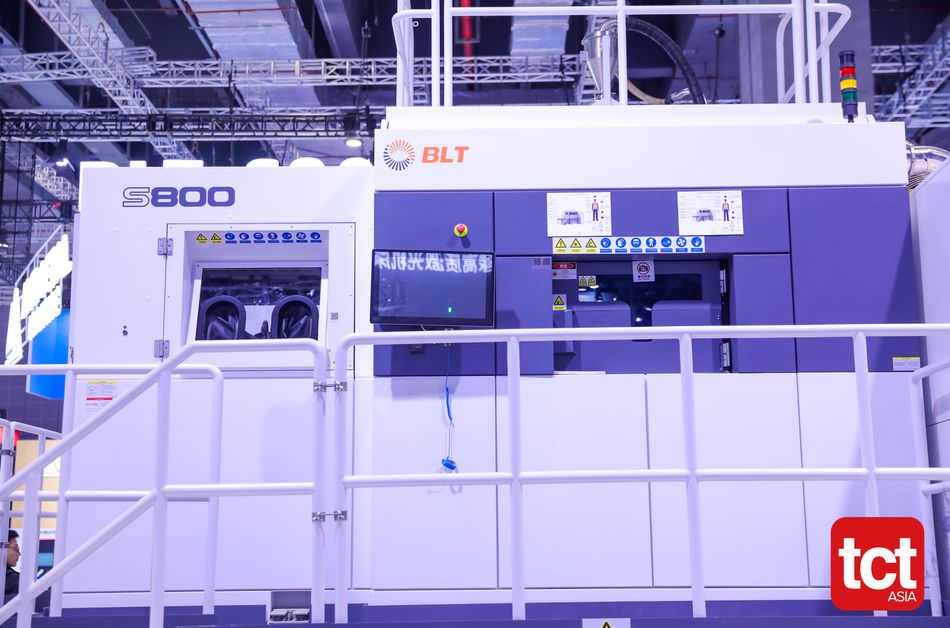
Some of the key exhibits and products confirmed on the official TCT Asia showroom platform include RS450F SLM, XH-M100G & XH-M160G Series, RA900, SLS-P260 & FDM-1000, and FGF-1800. In metal additive platforms, RS450F SLM is a high-precision metal selective laser melting system designed for industrial-grade production. XH-M100G & XH-M160G Series represent modular, scalable metal additive platforms suited for medium to large build volumes. Similarly, in polymer and multi-material systems, FGF-1800 is a professional-grade polymer additive manufacturing machine capable of handling large builds and advanced polymers. SLS-P260 & FDM-1000 polymer additive technologies represent the diversity of formats on the floor.
Polymer Printing Beyond Prototyping
Polymer-focused exhibitors at TCT Asia cover applications related to functional parts and end-use components, including consumer products, electronics housings, tooling, and jigs and fixtures. The manufacturers, including Raise3D, UnionTech, and Bambu Lab, operate across different segments of this range.
For instance, UnionTech, associated with industrial stereolithography systems, develops large-format SLA platforms aimed at automotive, healthcare, and industrial design applications where surface finish and dimensional accuracy are critical. Similarly, Bambu Lab is known for desktop polymer systems, yet the Bambu Lab X1 series integrates automation, material handling, and closed-loop calibration features that are associated with industrial-grade printing. At TCT Asia, these technologies are presented as part of distributed manufacturing and rapid iteration workflows.
Materials as a Competitive Differentiator
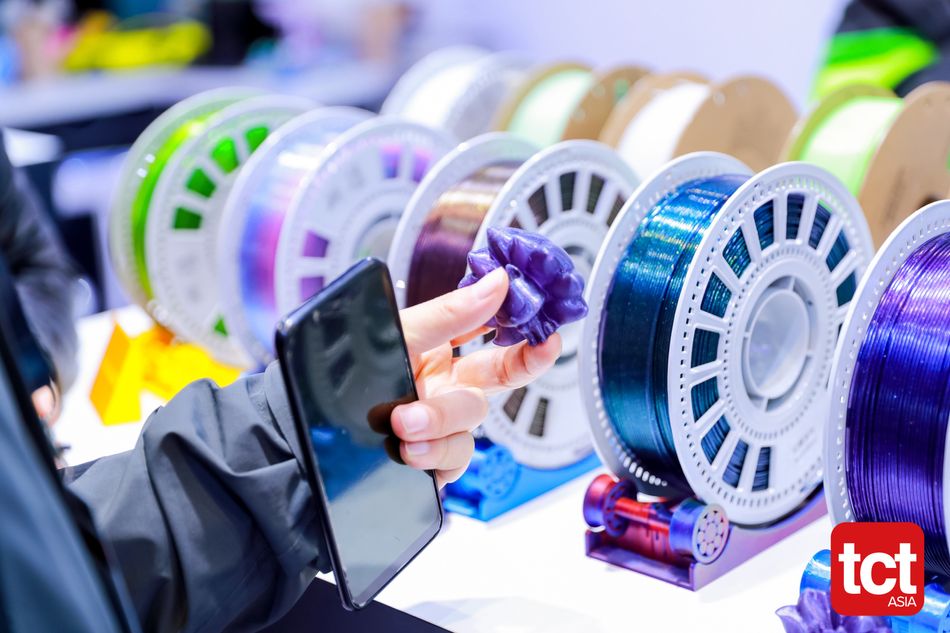
Materials development is another area where TCT Asia’s exhibitor base reflects progress. Alongside established global suppliers, the event features several Asia-based material producers supplying metal powders, photopolymers, and engineering-grade thermoplastics. For instance, companies such as Polymaker show how material innovation targets specific performance requirements rather than general-purpose use. Engineering filaments designed for higher temperature resistance, improved layer adhesion, or reduced warping are now tailored for functional parts rather than visual prototypes.
In metal additive manufacturing, locally produced powders ranging from stainless steels to aluminium and titanium alloys play a role in lowering supply chain risk and cost. These materials are often presented alongside validated parameter sets and reference applications at TCT Asia.
Medical, Healthcare, and Manufacturing Applications
Healthcare is one of the most active application areas represented at TCT Asia, spanning dental devices, orthopedic implants, surgical guides, and anatomical models. Exhibitors serving this market combine multiple technologies, such as SLA or SLS printing with biocompatible materials and validated workflows. The presence of healthcare-focused forums and applications reinforces TCT Asia’s role as a place where engineers and clinicians can assess how additive manufacturing fits into regulated production environments.
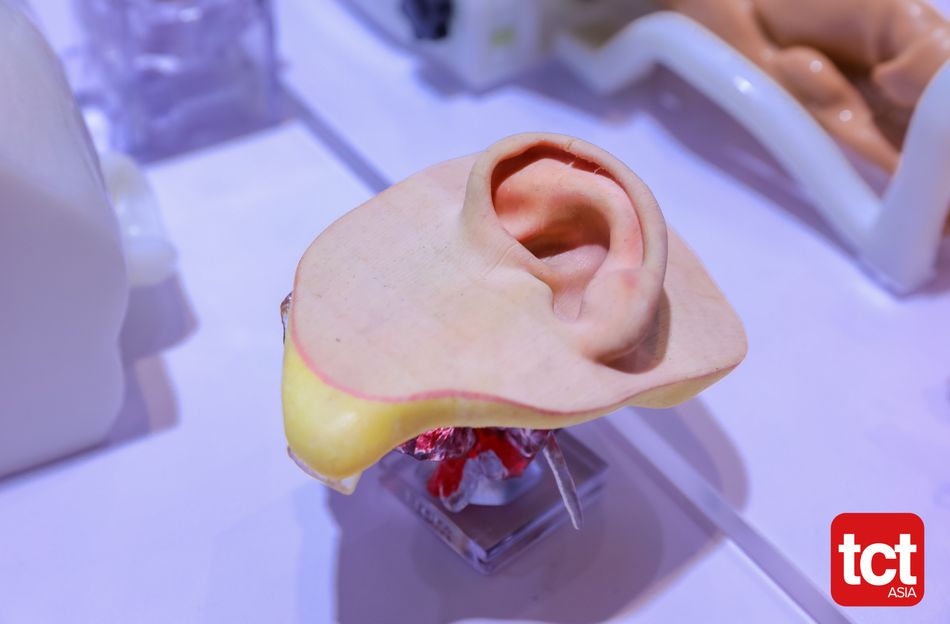
Similarly, for manufacturing applications, tooling inserts with conformal cooling, lightweight fixtures, and low-volume production parts are recurring themes across exhibitors’ stands.
Metal additive manufacturing systems are demonstrated with tooling and mould components, showing how additive processes complement traditional machining rather than replacing it outright. This hybrid manufacturing narrative resonates with production engineers seeking incremental improvements.
Reflecting Asia-Pacific Innovation Momentum
What distinguishes TCT Asia’s exhibitor mix is not just the number of companies involved, but the practical orientation of the technologies on display. Many products shown are not conceptual prototypes or future roadmaps, but systems and materials already in use across factories, labs, and service bureaus in the region. To find more about TCT Asia, visit their website.
References
- TCT Asia Summit. [Online] Available at: tctasia.cn/asiasummit (Accessed on 24 January 2026)
- TCT Asia 2026. Products Categories. Companies. [Online] Available at: online.tctasia.cn/en/showroom-2026 (Accessed on 24 January 2026)
- TCT Asia 2026. Products Categories. Products [Online] Available at: online.tctasia.cn/en/showroom-2026/products (Accessed on 24 January 2026)