Featured
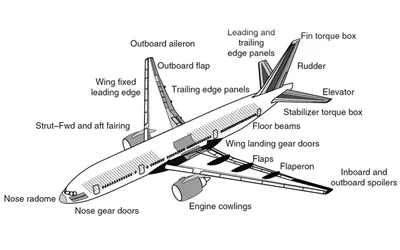
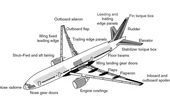
In this article, the focus is on understanding the key steps in designing structural composites with examples of aerospace components; i.e. wing and fuselage.
This Report shows how tools like artificial intelligence, digital twins, and on-demand manufacturing are no longer emerging concepts, but are already delivering measurable impact across the product lifecycle.
In this article, the focus is on understanding the key steps in designing structural composites with examples of aerospace components; i.e. wing and fuselage.
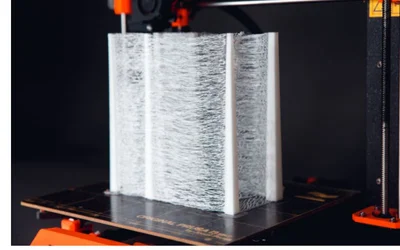
An inline filament dryer that dries hygroscopic filament on demand fast and effortlessly.
Do you need to dry your printing materials prior to processing? Why? The Drywise team has conducted a number of tests on Nylon filaments to determine how necessary it is to dry your filaments. The results might surprise you!
An engineer’s guide to understanding the state of the art in metal 3D Printing
15 minutes read.
22 minutes read.
11 minutes read.
18 minutes read.
12 minutes read.
16 minutes read.


Entertainment
The Next Byte Podcast is hosted by two young engineers - Daniel and Farbod - who select the most interesting tech/engineering cont...
165 Posts
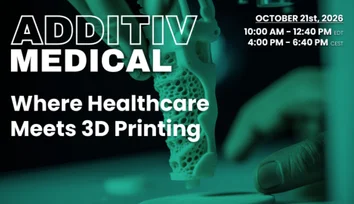
ADDITIV Medical 2026 will bring together more than 500 medical professionals
Choosing between 3D printing and injection molding is one of the key decisions in product development—especially in case of prototyping.
Explore how the right finishes and coatings can improve aerospace parts by boosting durability, extending service life, enhancing environmental resistance, and delivering the performance and appearance required for demanding applications.
The choice between 3D printing and CNC machining is the most common decision regarding manufacturing methods that must be made before placing the first order for prototypes. The correct answer depends on tolerance requirements, material specifications, component geometry, and schedule.
Discover how iAM Marketplace simplifies industrial additive manufacturing by unifying materials, validation services, and multi-brand technologies into one open ecosystem for efficient AM sourcing.
This article discusses what attendees can expect from TCT Asia 2026, including its conference format, focus areas, and the experts contributing to industry-specific discussions.
This article discusses the exhibitors, products, and industrial trends defining additive manufacturing across the Asia-Pacific region at TCT Asia 2026.
This article discusses how the Asia-Pacific region is advancing additive manufacturing and the role of TCT Asia as the leading 3D printing and additive manufacturing event in the Asia-Pacific.
In this article, the focus is on understanding the key steps in designing structural composites with examples of aerospace components; i.e. wing and fuselage.

3 minutes read
An inline filament dryer that dries hygroscopic filament on demand fast and effortlessly.

2 minutes read
Do you need to dry your printing materials prior to processing? Why? The Drywise team has conducted a number of tests on Nylon filaments to determine how necessary it is to dry your filaments. The results might surprise you!
4 minutes read
Z offset is an important 3D printer setting that allows users to perfect their first layer. It can be adjusted in slicer software or by inputting G-code commands.
There are numerous reasons to choose 3D printing: the geometry it offers, the absence of any kind of mould/tooling, the ease in which you can make changes to your design, speed and even cost. This video will discuss each of these benefits in more detail and explain why 3D printing is so appealing.

3 minutes read
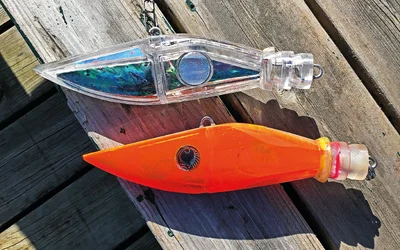
With the challenge to develop two high-performance fishing lures that revolutionise the approach to offshore fishing, start-up company Salta Lure turned to Protolabs’ 3D printing services to support product development.
5 minutes read
Powder bed fusion (PBF) is an additive manufacturing process that fuses atomised powder to build parts
3 minutes read
Whether you are a hobbyist or an expert, most of your projects need materials that are strong and tough. With this article, we aim to compare the toughest 3D printing materials and provide you with an answer.

7 minutes read
In this video we look at the huge number of post-processing options that can improve a DMLS part’s dimensional accuracy, surface finish quality, and mechanical properties.
4 minutes read
A team of EPFL engineers has developed a 3D-printing method that uses light to make objects out of opaque resin in a matter of seconds. Their breakthrough could have promising applications in the biomedical industry, such as to make artificial arteries.

3 minutes read
Everything you need to know about 3D printing supports and how to facilitate their removal post printing.
With its low melting point and resistance to warping, PLA is one of the easiest materials to print. However, users should still optimize the PLA bed temperature and nozzle temperature to obtain the best results.
Selecting the right filament settings, print temperature, and flow rate can help solve the common problem of over extrusion in FDM 3D printing.
An air-breathing jet engine (turbofan) is widely used in aircraft propulsion. AFP systems are used for making the fan blades and containment casing for these jet engines. Here step by step process of making a jet engine blade via the AFP process is explained.
4 minutes read
Find out how to print with one of the most versatile 3D printing materials available as well as which applications it's best suited to.
4 minutes read