TCT Asia: How the Asia-Pacific Region Is Shaping the Next Phase of Additive Manufacturing
This article discusses how the Asia-Pacific region is advancing additive manufacturing and the role of TCT Asia as the leading 3D printing and additive manufacturing event in the Asia-Pacific.

19 Feb, 2026. 4 minutes read
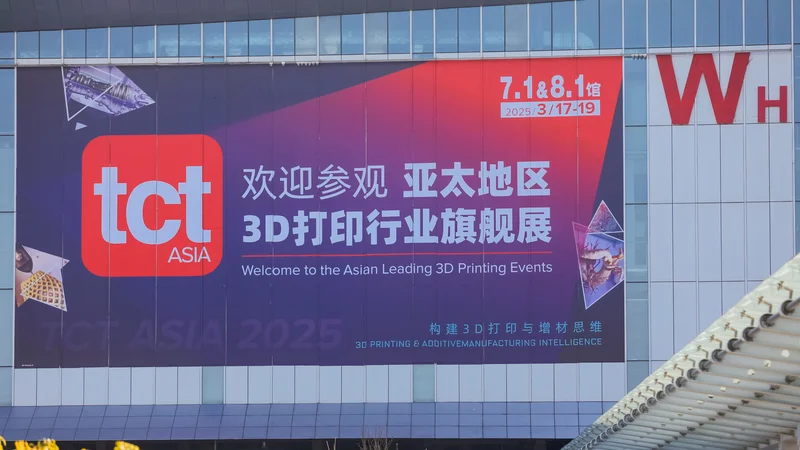
Additive manufacturing has moved from a specialist prototyping tool to a production-ready technology used across aerospace, healthcare, automotive, energy, and consumer industries. Although it is a global change, much of the significant momentum in recent years has come from the Asia-Pacific region. This article discusses how the Asia-Pacific region is advancing additive manufacturing and the role of TCT Asia as the leading 3D printing and additive manufacturing event in the Asia-Pacific.
TCT Asia
TCT Asia is an established, leading 3D printing and additive manufacturing event in the Asia-Pacific. As it is returning to Shanghai from 17-19 March 2026, TCT Asia is becoming a focal point for understanding where additive manufacturing is headed, and how it is being deployed at scale in real-world production environments.
Additive Manufacturing as Industrial Infrastructure
When TCT Asia first launched more than a decade ago, additive manufacturing in the region was still largely associated with prototyping and research applications. That picture looks very different today. Additive manufacturing is being integrated across Asia-Pacific into industrial workflows, supporting tooling, end-use parts, customized medical devices, and complex metal components that are difficult or inefficient to produce using conventional methods.
Several converging factors are responsible for this change. For instance, hardware costs have fallen, machine reliability has improved, and material portfolios have expanded past basic polymers to include advanced composites and production-grade metals. Moreover, local manufacturers and research institutions have focused on scaling systems, improving throughput, and optimizing designs for additive processes rather than treating them as drop-in replacements for subtractive manufacturing.
TCT Asia began as a technology showcase and has become a platform where engineers, manufacturers, and decision-makers assess how additive manufacturing can deliver measurable value.
A Snapshot of Scale and Maturity
The scale of TCT Asia today reflects both the size of the regional market and the maturity of its additive manufacturing ecosystem. The 2025 edition welcomed 31,352 total visits, representing a 31% increase year-on-year, alongside 450 exhibitors across 45,000 square meters of exhibition space. More than 60% of visitors came from end-user companies, which shows that TCT Asia now attracts manufacturers and decision-makers, not just technology suppliers.
International engagement has also grown notably, as overseas visitor numbers increased by 140% compared with 2024, with strong representation from across Asia, Europe, and North America. This internationalization shows that TCT Asia functions as a regional event, and also as a point of connection between global additive manufacturing developments and the Asia-Pacific manufacturing scene.
This mix creates a practical environment for both exhibitors and attendees, where engineers evaluating machines and materials engage alongside procurement teams, R&D managers, and manufacturing leaders involved in adoption decisions.
Cost-Effective Innovation at Industrial Scale
Additive manufacturing developments in the Asia-Pacific region focus on scaling production in a cost-conscious way. Instead of targeting only high-end, low-volume applications, manufacturers in the region prioritize manufacturability, throughput, and integration with existing production lines. This is reflected across the additive manufacturing value chain. Machine suppliers are introducing systems designed for continuous operation and larger build volumes, while material providers are expanding locally produced powder and filament options to improve supply stability and manage costs. Software tools for data preparation, process monitoring, and quality control are becoming more mature to support more consistent production outcomes. TCT Asia provides a rare opportunity to see how these elements come together. It brings hardware, materials, software, and post-processing technologies into a single venue.
Connecting Industry, Research, and Application
Another factor that contributes to TCT Asia’s influence is that it connects industry, academia, and applied research. The event hosts a comprehensive program of forums, summits, and technical sessions alongside the exhibition that focus on application-driven case studies rather than abstract concepts.
For instance, the TCT Asia Summit centers on real-world deployment across aerospace, healthcare, tooling, and consumer goods sectors. Speakers typically include end users, system integrators, and technology developers who share practical lessons from implementation, covering qualification, design optimization, and scaling production challenges. Moreover, the Tech Stage provides a platform for universities, research institutes, and government-affiliated organizations to present recent findings and novel techniques.
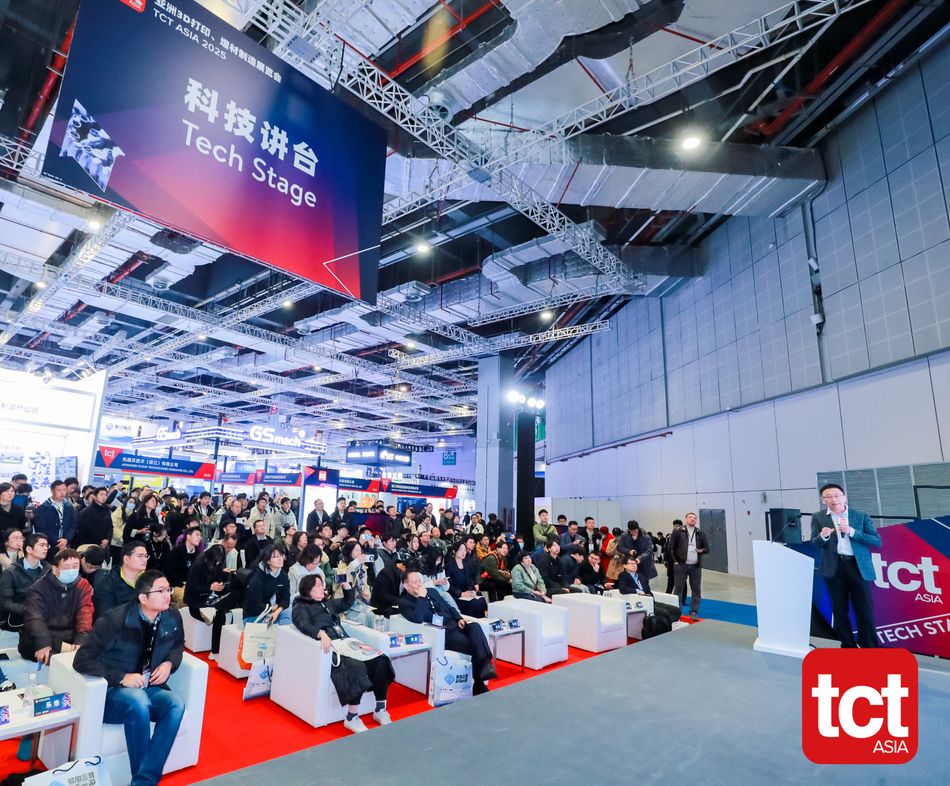
Moreover, the Tech Stage provides a platform for universities, research institutes, and government-affiliated organizations to present recent findings and novel techniques. These discussions also reflect the growing role of generative AI in 3D content creation, where AI-assisted design tools are being used to accelerate geometry generation, optimize designs, and streamline production workflows. Platforms such as Tripo AI, MeshyAI, DreamTech, Hyper3D.AI, and Hitem3D are expected to feature at TCT Asia 2026, to show how AI-driven approaches are being integrated into additive manufacturing applications.
A Market Shaped by Real Demand
Data from recent editions of TCT Asia suggests that visitor interest is aligned with production needs. For instance, according to the 2025 post-show report, over 66% of visitors attended with purchasing intentions, and more than 13% represented budgets exceeding USD 5 million. This purchasing power shows that the event is a business-focused platform.
Looking Ahead to 2026
The TCT Asia 2026 edition in Shanghai plans for 550+ exhibitors, 100+ conference sessions, and tens of thousands of professional visitors, and is set to reflect both the current state of the industry and the directions it is moving in. To find more about TCT Asia, visit their website.
Source:
1. TCT Asia Summit. [Online] Available at: tctasia.cn/asiasummit (Accessed on 24 January 2026)