What Is PLA? Composition, Properties, and Uses of Polylactic Acid
What is PLA filament and why is it so popular for entry-level 3D printing and beyond? This article covers the basics of Polylactic Acid.

Last updated on 02 Jul, 2026. 12 minutes read
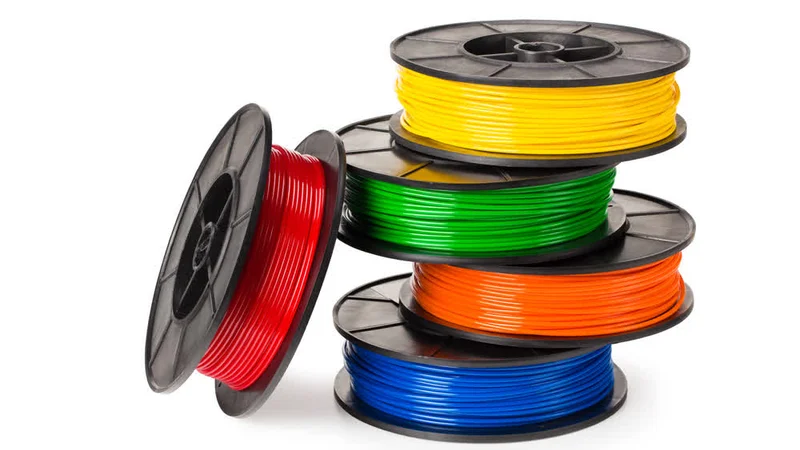
PLA, or polylactic acid, is a bio-based thermoplastic polyester made from lactic acid, usually derived by fermenting renewable carbohydrates such as corn starch, sugarcane, or cassava. It is used as a bioplastic in packaging and medical products, and as the most common filament for desktop 3D printing.
PLA’s popularity comes from an unusual combination of properties: it is stiff, dimensionally stable, easy to process, available in many grades, and compostable under specific industrial conditions. Compared with many petroleum-based plastics, PLA can reduce dependence on fossil resources, but its environmental benefits depend heavily on feedstock, manufacturing energy, product design, collection systems, and end-of-life treatment.
For engineers and makers, PLA is best known as a low-warping FDM/FFF filament. For product designers and sustainability teams, it is also a broader material platform used in food packaging, disposable food service items, fibers, biomedical scaffolds, agricultural products, and consumer goods.
What Is PLA?
PLA is a thermoplastic polymer, meaning it softens when heated and solidifies again when cooled. Chemically, it is a linear aliphatic polyester. Its repeating units are derived from lactic acid, a small organic acid that can be produced by fermentation. Depending on stereochemistry, molecular weight, additives, and processing, PLA can be amorphous, semi-crystalline, transparent, opaque, flexible, rigid, brittle, or impact-modified.
In the plastics industry, PLA is usually described as a bioplastic because it can be made from renewable biomass. In compostability discussions, it is described as industrially compostable when it is certified under appropriate standards and processed in a facility that maintains the required heat, humidity, oxygen, and microbial activity. In additive manufacturing, PLA is sold as a spooled filament, usually 1.75 mm or 2.85 mm in diameter, for extrusion through a heated nozzle. PLA's low toxicity and minimal fumes during printing make PLA a popular choice for environmentally conscious makers and businesses alike.
Many material suppliers offer PLA filament. Hatchbox offers reliable and affordable PLA, favored by both beginners and experts. Polymaker's range includes the durable PolyMax PLA and versatile PolyLite PLA. Prusament by Prusa Research is celebrated for its high precision and quality standards. eSun offers diverse PLA options, including the enhanced PLA+. ColorFabb is known for unique blends like PLA/PHA, which add flexibility and durability. MatterHackers produces PRO Series PLA in vibrant colors.
Composition and How PLA Is Made
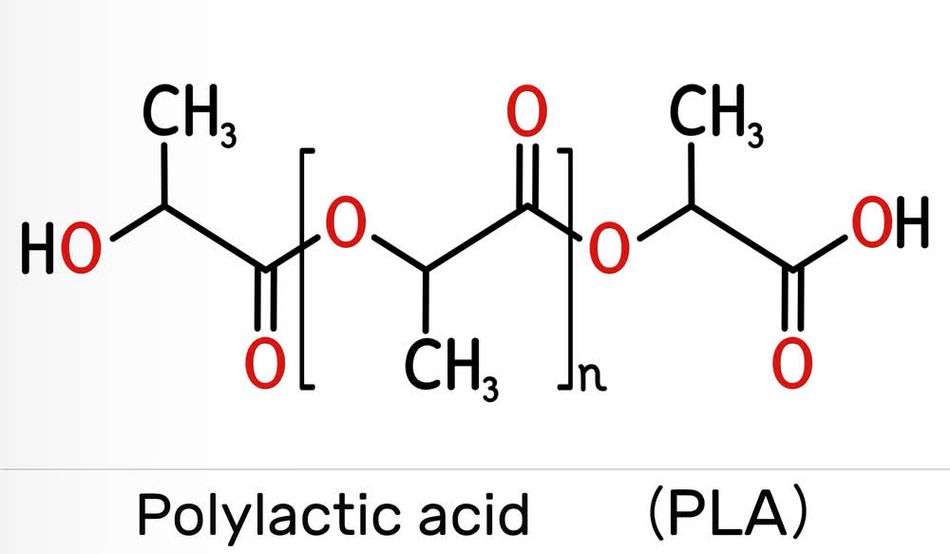
PLA begins with sugars. Starch from corn, cassava, or other crops is broken down into glucose, while sugarcane and sugar beet provide fermentable sugars more directly. Microorganisms ferment these sugars into lactic acid. The lactic acid is then converted into higher-molecular-weight PLA, most commonly through lactide formation followed by ring-opening polymerization. Direct condensation polymerization can also be used, but lactide-based routes are common for commercial high-performance PLA because they allow better control over molecular weight and stereochemistry.[1][2]
The “L” and “D” forms of lactic acid influence PLA crystallinity. PLA rich in L-lactic acid, often called PLLA, tends to be semi-crystalline and mechanically strong. More racemic or mixed compositions can be more amorphous and transparent. Manufacturers tune this chemistry to create grades for thermoforming, injection molding, films, fibers, extrusion coating, and filament.
Commercial PLA is rarely just neat polymer. Additives and masterbatch packages can change color, opacity, toughness, melt flow, UV stability, crystallization rate, flame resistance, food-contact suitability, and print behavior. In 3D printing filament, pigments, matting agents, silk-effect additives, flow modifiers, fillers, nucleating agents, and impact modifiers are common. These additives are why two “PLA” filaments can print and fail very differently.
Properties of PLA
PLA’s properties sit between commodity plastics and engineering plastics. It is stiffer than many flexible packaging polymers, easier to print than ABS, and less heat-resistant than PETG, ABS, nylon, or polycarbonate. Its low glass transition temperature is the key limitation: many PLA parts begin to soften around the temperature of a hot car interior or dishwasher.
PLA’s semi-crystalline behavior is important. Crystallinity can improve heat resistance and stiffness, but it can also increase shrinkage, warping, opacity, and slower degradation. Annealing printed PLA parts at controlled temperatures can increase crystallinity and heat deflection temperature, but it can also distort dimensions if the part is not fixtured or designed for post-processing.[3]
| Property | Typical PLA Range | Explanation |
| Polymer family | Bio-based aliphatic polyester | Explains hydrolysis, compostability, and moderate heat resistance |
| Density | ~1.24 g/cm3 | Slightly denser than ABS, similar to PETG |
| Glass transition temperature, Tg | ~55-65°C | Parts soften and creep above this range |
| Melting temperature, Tm | ~150-180°C, grade-dependent | Enables low-temperature extrusion and molding |
| FDM nozzle temperature | ~180-220°C | Lower than PETG, ABS, nylon, and PC |
| FDM bed temperature | ~20-60°C | Heated bed helpful but not always required |
| Tensile strength | ~50-70 MPa | Good stiffness and strength for non-hot, non-impact parts |
| Elongation at break | Often ~2.5-10%, grade-dependent | Standard PLA is comparatively brittle |
| Crystallinity | Amorphous to semi-crystalline | Controls clarity, shrinkage, heat resistance, and degradation |
| Biodegradability | Industrial composting, not ambient disposal | Needs controlled temperature, moisture, oxygen, and time |
PLA Grades in 2026: PLA+, Tough, High-Speed, Matte, Silk, and High-Temp
Standard PLA remains the easiest baseline material for desktop FDM printing, but in 2025-2026 the market has shifted toward specialized grades.
Tough PLA and PLA+, discussed in more detail in Wevolver’s PLA vs PLA+ guide, are modified versions of PLA designed to reduce brittleness. Suppliers use impact modifiers, copolymers, plasticizers, or proprietary blends to improve toughness while preserving PLA’s low warping and easy printing. These grades are useful for jigs, fixtures, housings, brackets, and snap-fit prototypes where standard PLA may crack.
High-speed PLA is formulated for modern fast CoreXY and bedslinger printers. The goal is faster melting, smoother flow, and consistent extrusion at high volumetric flow rates. It is not automatically stronger than standard PLA, but it helps maintain print quality when pushing higher accelerations and speeds.
Matte PLA and silk PLA are aesthetic grades. Matte PLA reduces shine and can hide layer lines, which is useful for architectural models, product mockups, and photography. Silk PLA uses additives that create a glossy, metallic-looking surface, but these formulations can be weaker or more brittle than standard PLA.
High-temperature or annealable PLA grades use crystallization control to improve heat resistance after post-processing. These can be useful for tooling, fixtures, or display parts exposed to moderate heat, but they do not turn PLA into ABS, PETG, nylon, or polycarbonate. Always check the datasheet for heat deflection temperature, annealing instructions, and dimensional change.
PLA vs PLA+, PETG, and ABS
For 3D printing, PLA is usually the first filament to try, but not always the final material. The right choice depends on heat, impact, chemical exposure, aesthetics, and printer hardware.
Material | Best For | Main Strength | Main Limitation |
PLA | Models, prototypes, fixtures, education | Easiest printing, low warp, sharp detail | Low heat resistance, brittleness |
PLA+ / tough PLA | Functional prototypes, jigs, brackets | Better impact resistance than standard PLA | Formulations vary by brand |
PETG | Outdoor-ish parts, brackets, containers | Better toughness and temperature resistance than PLA | More stringing, less crisp detail |
ABS | Enclosures, automotive-like prototypes, post-processing | Higher heat resistance, acetone smoothing | Warping, odor, enclosure recommended |
For users choosing between common filaments, Wevolver’s PETG vs PLA and ABS vs PLA comparisons provide deeper guidance. As a rule of thumb, use PLA for dimensional accuracy and ease, PLA+ for tougher PLA-like parts, PETG for improved ductility and moisture tolerance, and ABS or ASA for higher-temperature enclosed-printer work.
Mastering 3D Printing with PLA
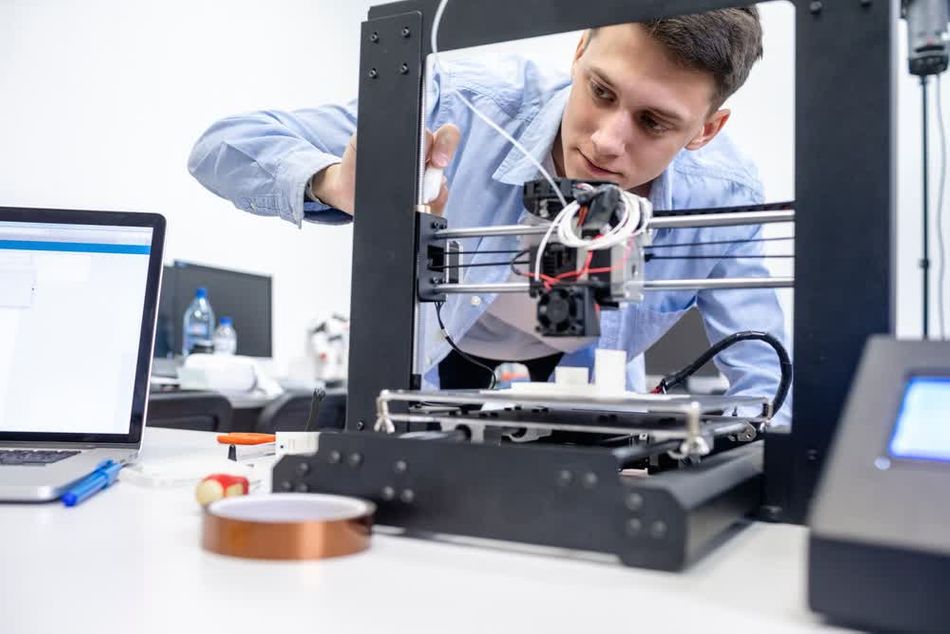
PLA is one of the easiest materials to print, although it requires specific printing conditions to achieve optimal results. The extruder temperature typically ranges from 180°C to 220°C, with 200°C being a common starting point. The print bed temperature for PLA is relatively low, usually between 20°C and 60°C. Some prints may not require a heated bed at all, but a slightly warm bed (around 40°C) can improve first layer adhesion.
Adequate cooling of PLA prints helps prevent sagging or drooping, especially in overhanging areas or intricate details. Most 3D printers come equipped with part cooling fans, which should be set to 100% after the first few layers. This rapid cooling ensures that each layer solidifies quickly, maintaining the print's structural integrity and surface quality.
To achieve the best print quality with PLA, consider the following tips:
Use a quality build surface: PLA adheres well to various surfaces, including glass, PEI, or specialized build plates.
Adjust layer height: Start with a 0.2mm layer height and adjust based on your print's requirements for detail or speed.
Optimize print speed: A speed of 40-60 mm/s works well for most PLA prints. Slower speeds may improve quality but increase print time.
Fine-tune retraction settings: Proper retraction prevents stringing and oozing, typically around 5mm at 40mm/s for direct drive extruders.
Maintain filament quality: Store PLA in a cool, dry place to prevent moisture absorption, which can affect print quality.
Calibrate your extruder: Ensure proper filament flow by calibrating your extruder's steps per millimeter.
Use appropriate infill: 15-20% infill is sufficient for most prints, but adjust based on the object's intended use.
By optimizing these conditions and following these tips, you can significantly enhance the quality and success rate of your PLA 3D prints.
Recommended reading: PLA Bed Temperature & Print Temperature Settings
Advantages and Disadvantages of PLA in 3D Printing
PLA filament offers numerous advantages in 3D printing, making it a popular choice for both beginners and experienced users. Its unique properties contribute to high-quality prints and user-friendly operation.
Key advantages of PLA in 3D printing include:
Low warping: PLA has minimal thermal expansion, reducing the risk of print deformation.
Excellent layer adhesion: PLA layers bond well, resulting in strong, cohesive prints.
Low printing temperature: PLA extrudes at lower temperatures, reducing energy consumption and wear on printer components.
Minimal odor: Unlike some other filaments, PLA produces little to no unpleasant smell during printing.
High print speed: PLA can be printed at relatively high speeds without significant quality loss.
Wide color range: PLA is available in a vast array of colors and finishes, including translucent and glow-in-the-dark options.
Biodegradability: PLA is compostable under industrial conditions, making it more environmentally friendly than other plastics.
PLA's low warping property allows for printing large, flat surfaces without the need for a heated bed, reducing equipment costs and energy consumption. Its excellent layer adhesion contributes to the structural integrity of printed objects, making it suitable for functional parts and prototypes.
The low printing temperature of PLA (typically 180-220°C) not only saves energy but also allows for safer operation, especially in educational settings. This characteristic, combined with its minimal odor, makes PLA ideal for use in homes, offices, and schools.
While PLA filament offers numerous advantages in 3D printing, it also comes with certain limitations and challenges that users should be aware of.
Disadvantages of PLA 3D printing include:
Low heat resistance: PLA has a low glass transition temperature (60-65°C), making it unsuitable for high-temperature applications. Workaround: For parts requiring higher heat resistance, consider post-processing techniques like annealing or using PLA blends with higher temperature resistance.
Brittleness: PLA can be brittle, especially when exposed to impact or stress. Solution: Adjust print settings for higher infill density or use PLA blends with impact modifiers for improved toughness.
Limited outdoor durability: PLA degrades when exposed to UV light and moisture, making it less suitable for outdoor applications. Solution: For outdoor use, consider coating PLA prints with UV-resistant sealants or opt for more weather-resistant materials like ASA or PETG.
Post-processing challenges: PLA is difficult to sand or smooth compared to other materials like ABS. Workaround: Use filler primers before painting or explore chemical smoothing techniques specifically designed for PLA.
Recommended reading: PLA Smoothing: How to Smooth 3D Prints
Applications of PLA Filament
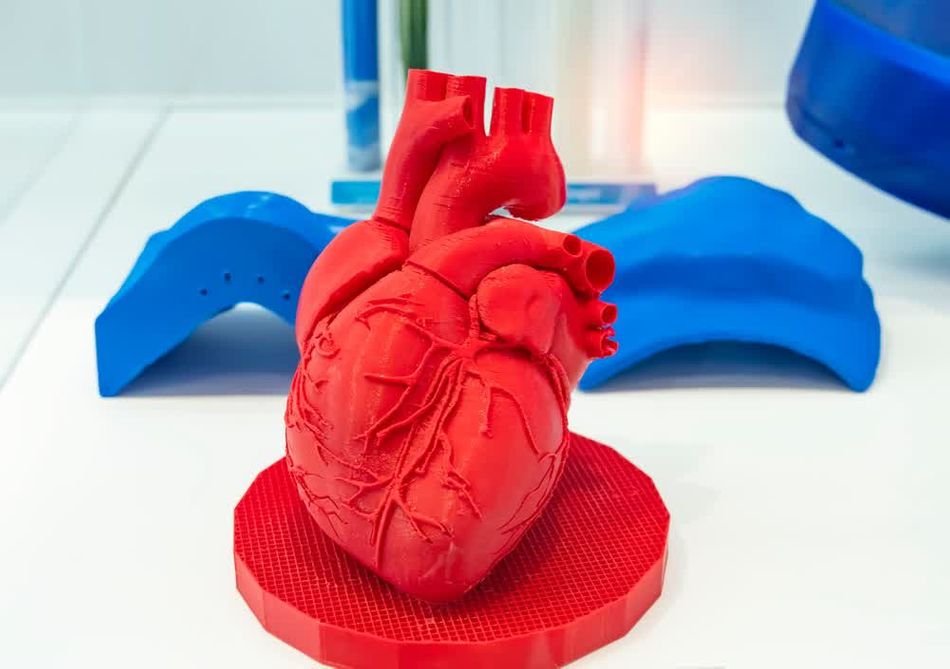
PLA filament has a wide range of applications due to its ease of use, biodegradability, and versatility. Its low melting temperature and minimal warping make it an ideal choice for both novice and experienced users, enabling the creation of diverse objects with varying degrees of complexity.
Prototypes
One of the most common applications of PLA filament is in prototyping. Engineers and designers use PLA to quickly produce prototypes of their designs, allowing for rapid iteration and testing. The ease of printing with PLA, combined with its relatively low cost, makes it a practical choice for creating functional prototypes and models that can be used to test form, fit, and function before moving to more expensive materials or manufacturing processes.
Education
PLA is also extensively used in the education sector. Schools and universities leverage 3D printing with PLA to enhance learning experiences in STEM (science, technology, engineering, and mathematics) programs. Students can design and print their projects, gaining hands-on experience with 3D modeling and printing technology. The biodegradability of PLA adds an environmentally friendly aspect to its use in educational settings, aligning with sustainability goals.
Art and Design
In the realm of art and design, PLA filament is favored for its ability to produce detailed and aesthetically pleasing objects. Artists use PLA to create intricate sculptures, jewelry, and decorative items. The wide range of available colors and finishes, including matte, glossy, and even metallic, allows for a high degree of customization and creativity. Moreover, specialty PLA blends, such as those infused with wood fibers or metal particles, enable artists to achieve unique textures and effects.
Medicine
The medical field has also embraced PLA filament for various applications. PLA’s biocompatibility makes it suitable for creating custom medical devices, such as prosthetics, braces, and implants. It also has uses in tissue engineering scaffolds and drug delivery systems. Additionally, PLA is used in the production of anatomical models for surgical planning and education. These models can be printed to precise dimensions, providing surgeons with a tangible reference for complex procedures.
Makers
Hobbyists and makers benefit greatly from the versatility of PLA filament. It is commonly used to print a wide array of items, from custom toys and gadgets to household items and replacement parts. The ease of printing with PLA, coupled with its affordability, makes it an attractive option for personal projects and DIY enthusiasts.
Packaging
Lastly, the packaging industry utilizes PLA filament for creating biodegradable and compostable packaging solutions. With increasing emphasis on reducing plastic waste, PLA offers an eco-friendly alternative for producing packaging materials that can break down naturally over time, contributing to environmental sustainability.
Environmental Impact and Biodegradability
PLA is often called biodegradable, but the precise claim is narrower: PLA is industrially compostable when the product formulation, thickness, additives, and certification match the composting system. Industrial composting provides sustained heat, moisture, oxygen, and microbial activity. ASTM D6400 covers plastics designed for aerobic composting in municipal or industrial facilities where thermophilic conditions are achieved.[4]
PLA degradation occurs mainly through hydrolysis of ester bonds, followed by microbial assimilation of smaller molecules. Under well-managed industrial composting, many PLA products can disintegrate and biodegrade over roughly 3–6 months, although the time depends on geometry, thickness, crystallinity, additives, and facility conditions. Under home composting, ordinary soil, seawater, or landfill conditions, PLA may persist much longer because temperatures and moisture are lower and less controlled. A PLA fork, cup, or failed print should therefore not be treated as litter-safe.
Recycling is possible but limited. PLA can be mechanically recycled when collected as a clean, separate stream, and some 3D printing users grind failed prints into recycled filament. In municipal recycling, however, PLA is often not accepted with PET, HDPE, or PP streams and can become a contaminant if sorted incorrectly. For most users, the practical end-of-life options are reuse, dedicated take-back, specialist recycling, or certified composting where accepted.
The carbon footprint of PLA depends on feedstock, agricultural inputs, process energy, electricity mix, transport, and end-of-life. PLA can reduce reliance on fossil carbon, and life cycle studies often report lower non-renewable energy use than petroleum-based alternatives, but the result is not automatic. Farming practices, land use, fertilizer, renewable energy, and composting or recycling access all affect the outcome.
Globally, biobased plastics remain a small part of the plastics market. European Bioplastics’ 2025 update estimates global biobased plastics production capacity at 2.31 million tonnes in 2025, roughly 0.5% of 431 million tonnes of annual plastics production, with capacity forecast to reach about 4.69 million tonnes by 2030.[5] PLA is therefore important, but it is not a drop-in solution to plastic waste without collection and processing infrastructure.
Researchers believe that the environmental performance of PLA can be improved through better sugarcane farming practices, higher efficiency bagasse boilers, reduced auxiliary chemical use, and greater use of renewable energy when converting sugar to PLA.[6]
Conclusion
PLA is both a broad bioplastic and a cornerstone 3D printing material. As filament, it is the easiest and most widely used material for FDM/FFF printers, with strengths including low warping, good stiffness, sharp detail, low odor, renewable feedstock, and industrial compostability. Its weaknesses are heat sensitivity, brittleness in standard grades, limited outdoor durability, and imperfect end-of-life infrastructure.
For most users, PLA is the best material for prototypes, models, education, visual parts, and low-load indoor applications. For tougher, hotter, wetter, or outdoor parts, compare PLA+ with PETG, ABS, ASA, nylon, or other engineering materials.
Frequently Asked Questions
What is PLA made of?
PLA is made from lactic acid, typically produced by fermenting sugars from corn starch, sugarcane, cassava, or other carbohydrate-rich biomass. The lactic acid is converted into lactide and polymerized into polylactic acid.
Is PLA the same as PLA filament?
No. PLA is the polymer raw material. PLA filament is one processed form of that material, made as a spooled strand for FDM/FFF 3D printers. PLA is also used in packaging, fibers, molded goods, films, and medical products.
Is PLA filament food-safe?
PLA plastic is generally considered food-safe, but the safety of the final product depends on additives and colorants used. For food contact applications, use FDA-approved PLA and ensure proper printing conditions to prevent bacterial growth in layer lines.
How long does PLA take to biodegrade?
Under industrial composting conditions (high temperature and humidity), PLA can decompose in 3-6 months. However, in normal environmental conditions or landfills, it may take several years to decades.
Can PLA be recycled?
Yes, PLA can be recyclable, but it requires specialized facilities. It's not commonly accepted in standard recycling streams. Some 3D printing enthusiasts grind and reuse 3D printed PLA, though this may affect print quality.
Is PLA better than PETG?
PLA is easier to print, stiffer, and usually gives crisper detail. PETG is tougher, less brittle, and more heat- and moisture-resistant. Use PLA for models and prototypes; use PETG for parts that need more ductility or environmental resistance.
What are the best storage conditions for PLA filament?
Store PLA in a cool, dry place, ideally in an airtight container with desiccant. Optimal conditions are 10-30°C (50-86°F) with relative humidity below 50% to prevent moisture absorption. High humidity can cause PLA to absorb moisture, leading to poor print quality, bubbling, and stringing.
Can PLA be used for outdoor applications?
PLA is not ideal for long-term outdoor use as it degrades when exposed to UV light and moisture. For outdoor applications, consider using ABS or PETG, or apply a protective coating to PLA prints.
Is it possible to paint PLA 3D prints?
Yes, PLA can be painted, but it may require surface preparation like sanding and priming for better paint adhesion. Acrylic paints work well with PLA, and spray paints designed for plastics can also be effective.
References
[1] Fatchurrohman N, Muhida R. From Corn to Cassava: Unveiling PLA Origins for Sustainable 3D Printing. Jurnal Teknologi. 2023 Dec 31;13(2):87-93.
[2] de Albuquerque TL, Júnior JE, de Queiroz LP, Ricardo AD, Rocha MV. Polylactic acid production from biotechnological routes: A review. International journal of biological macromolecules. 2021 Sep 1;186:933-51.
[3] Lluch-Cerezo J, Meseguer MD, García-Manrique JA, Benavente R. Influence of thermal annealing temperatures on powder mould effectiveness to avoid deformations in ABS and PLA 3D-printed parts. Polymers. 2022 Jun 27;14(13):2607.
[4] ASTM International. ASTM D6400: Standard Specification for Labeling of Plastics Designed to be Aerobically Composted in Municipal or Industrial Facilities. ASTM International.
[5] European Bioplastics. Bioplastics Market Development Update 2025. December 2025.
[6] Morão A, De Bie F. Life cycle impact assessment of polylactic acid (PLA) produced from sugarcane in Thailand. Journal of Polymers and the Environment. 2019 Nov;27(11):2523-39.
in this article
1. What Is PLA?2. Composition and How PLA Is Made3. Properties of PLA4. PLA Grades in 2026: PLA+, Tough, High-Speed, Matte, Silk, and High-Temp5. PLA vs PLA+, PETG, and ABS6. Mastering 3D Printing with PLA7. Advantages and Disadvantages of PLA in 3D Printing8. Applications of PLA Filament9. Environmental Impact and Biodegradability10. Conclusion11. Frequently Asked Questions12. References