Featured
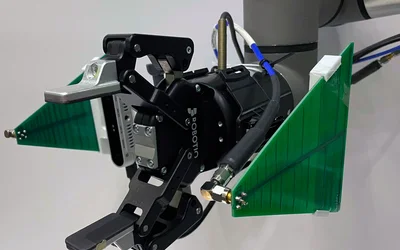
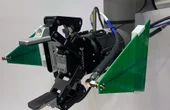
This robotic arm fuses data from a camera and antenna to locate and retrieve items, even if they are buried under a pile.
This robotic arm fuses data from a camera and antenna to locate and retrieve items, even if they are buried under a pile.
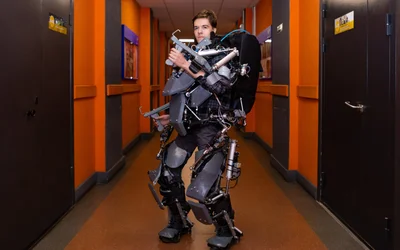
Alexey Ledyukov, a student at ITMO’s Faculty of Control Systems and Robotics, has designed an exoskeleton that will be able to help lift up to 80 kilograms easily. At the same time, the suit itself doesn’t weigh much: you can move and even run in it freely.
Article #6 Robot Control Series. Motors are becoming increasingly compact but are housing an ever-greater range of functions.
This comprehensive article dives deep into the world of robotics, exploring the history, types, engineering components, applications, and future trends of robots, offering readers an in-depth understanding of how these remarkable machines work and shape our lives.
16 minutes read.
21 minutes read.
16 minutes read.
23 minutes read.
19 minutes read.
27 minutes read.


University
At the Harvard John A. Paulson School of Engineering and Applied Sciences (...
42 Posts

Robotics & Automation
READY Robotics is a robotics software company that vastly simplifies robot ...
24 Posts

Automation Machinery Manufacturing
We are a company in flying robotics, specializing in Non-destructive inspec...
23 Posts
Everyone, guess how fast is it?
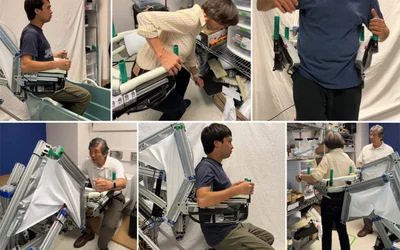
The new design could assist the elderly as they age in place at home.
The hospitality industry can leverage the gender characteristics of service robots to influence customers' decisions, according to new research from a team in the Penn State School of Hospitality Management.
Service robots have evolved from simple automated machines to intelligent adaptive systems that can navigate unpredictable environments and interact with humans.
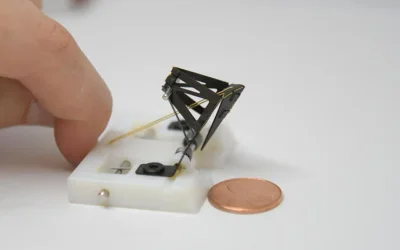
Engineers at Princeton and North Carolina State University have combined ancient paper folding and modern materials science to create a soft robot that bends and twists through mazes with ease.
A research team from ETH Zurich and the University of Zurich (UZH) has developed a novel approach to treating spinal cord injuries: controllable microrobots deliver stem cells directly to the site of an injury, where they promote nerve cell regeneration.
Cornell engineers have developed a robotic collective that behaves less like a machine and more like a material that flows, reshapes and adapts to its environment without centralized control.
From hospital wards to crop fields, from microscopic swarms to biohybrid machines powered by fungi, robotics research at Cornell spans an astonishing range of scale, application and ambition.
This robotic arm fuses data from a camera and antenna to locate and retrieve items, even if they are buried under a pile.
Alexey Ledyukov, a student at ITMO’s Faculty of Control Systems and Robotics, has designed an exoskeleton that will be able to help lift up to 80 kilograms easily. At the same time, the suit itself doesn’t weigh much: you can move and even run in it freely.

5 minutes read
Article #6 Robot Control Series. Motors are becoming increasingly compact but are housing an ever-greater range of functions.

5 minutes read
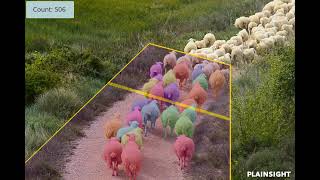
If you own, manage or operate a livestock operation, counting your animals and monitoring the movement of your livestock is a critical part of your business. See how Vision AI can help improve the process.

ATEsystem developed a high-precision solution for automated inspection of heat exchangers, which uses Photoneo 3D vision for accurate navigation.

Article #5 Robot Control Series. For several generations, industry has been well served by robots. The Industrial Internet of Things (IIoT) now brings collaborative robots—called cobots—into a synergistic working relationship with humans inside the future of industrial automation.
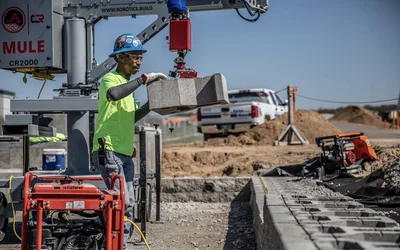
In this episode, we talk about how collaborative robotics can reinvent the construction industry and how software can be used to hack your brain.

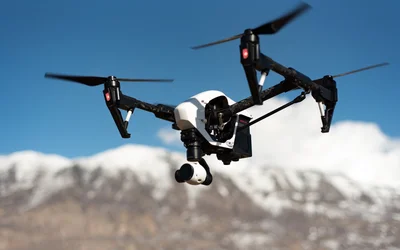
Unmanned Aerial Vehicles, UAVs, are becoming more and more available as technology becomes cheaper. This is an article about Drones which work on the principle of Artificial Intelligence.
Article #4 Robot Control Series. When dealing with harsh industrial conditions, robotic engineers need to employ compact yet reliable connectivity components to secure the flow of energy and data.
6 minutes read
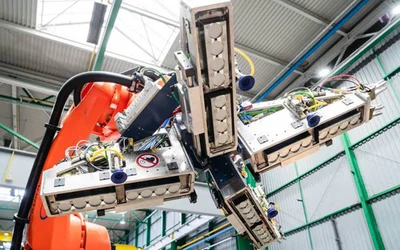
In this episode, we talk about how mantis shrimps will pave the way for next-gen robotics and what bio-hybrid robots could mean for sustainable unmanned operations.
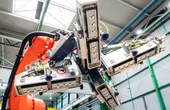
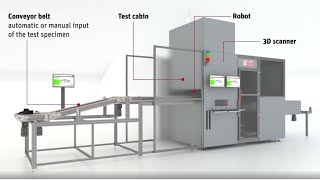
Berghof Testing developed a brilliant and innovative solution for optical quality testing. The system deploys two Photoneo PhoXi 3D Scanners and eliminates the shortcomings of conventional image processing systems.
3 minutes read
High-performance cavatappi artificial muscles, based on the shape of Italian pasta, exhibit specific work and power metrics ten and five times higher than human skeletal muscles, respectively, and up to 45 percent efficiency.
Article #3 Robot Control Series. Motor control in robotics is increasingly complex, enabling a greater range of applications. But this also comes with the need for efficient and reliable data and power interfaces.
5 minutes read
Article #2 Robot Control Series. Robots unique set of operating conditions and requirements need intricate and delicate electronic systems to deliver high-performance networking and connectivity.
4 minutes read
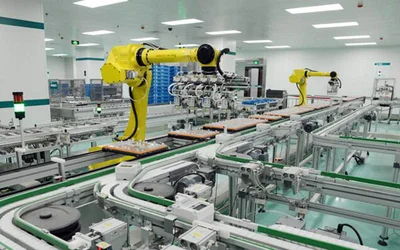
The automation of the production process of brake discs helped increase productivity and reduce the challenging nature of manually picking the brake discs from a bin.