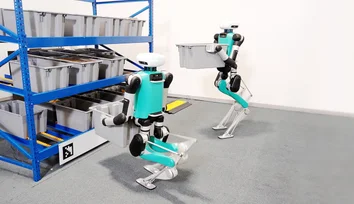
This comprehensive article dives deep into the world of robotics, exploring the history, types, engineering components, applications, and future trends of robots, offering readers an in-depth understanding of how these remarkable machines work and shape our lives.
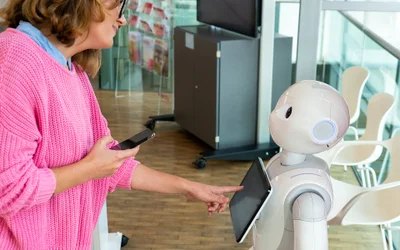
The hospitality industry can leverage the gender characteristics of service robots to influence customers' decisions, according to new research from a team in the Penn State School of Hospitality Management.
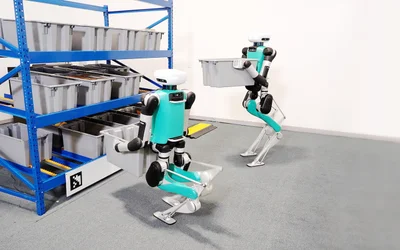
Service robots have evolved from simple automated machines to intelligent adaptive systems that can navigate unpredictable environments and interact with humans.
AI-powered artificial muscles made from pliable materials are reshaping recovery, from stroke rehabilitation to prosthetic design. These machines help people regain motion, strength, and confidence.
A team of researchers from ITMO University, Tel Aviv University, and University of Aveiro have come up with a new way to improve the mechanical properties of spider webs.
EPFL researchers have developed a customizable soft robotic system that uses compressed air to produce shape changes, vibrations, and other haptic, or tactile, feedback in a variety of configurations.
Like its predecessor, JackRabbot 2 is learning how to navigate safely through spaces occupied by people, following the rules of human etiquette. What it learns could help it move comfortably among us in the future.
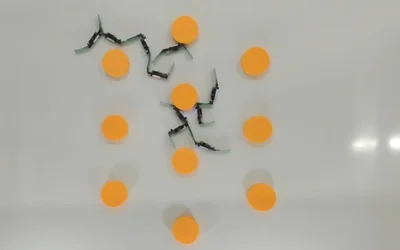
Meet Tribot, the three-legged origami robot designed and built by EPFL scientists. Tri- for three legs and -bot for robot, this super-light critter fits in the palm of your hand, is cheap to build, runs on less than one watt of power, and may one day be deployed in mass for search and rescue mission
Autonomous driving is no longer sci-fi, it’s become a reality and soon to be hitting our streets. Every week, Autotech companies are announcing their plan for self-driving tech. But, no two autonomous driving technologies are exactly alike.