Holonomic systems are important because they allow for efficient mathematical modeling and control of physical systems that have constraints on their motion.
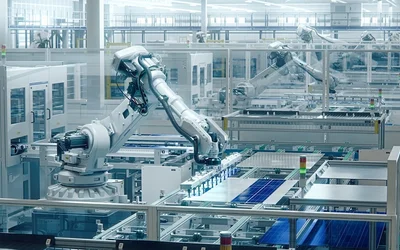
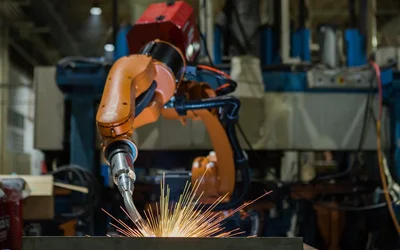
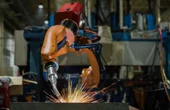
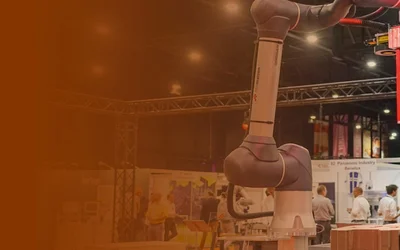
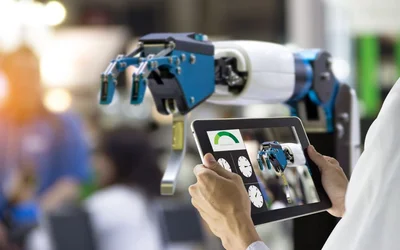
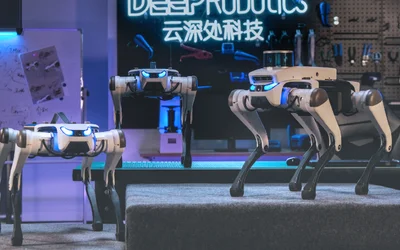
Robots have helped us solve some of the most challenging problems in the industries. They come in all shapes and sizes and take care of many repetitive and hazardous tasks. Based on their design, they can be classified into cartesian, articulated, cylindrical, delta, polar, SCARA, and cobots.

This comprehensive article dives deep into the world of robotics, exploring the history, types, engineering components, applications, and future trends of robots, offering readers an in-depth understanding of how these remarkable machines work and shape our lives.
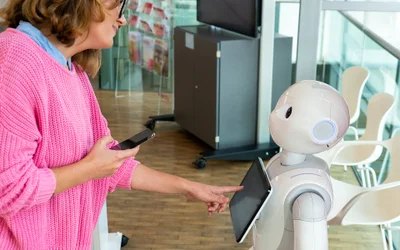
The hospitality industry can leverage the gender characteristics of service robots to influence customers' decisions, according to new research from a team in the Penn State School of Hospitality Management.
Service robots have evolved from simple automated machines to intelligent adaptive systems that can navigate unpredictable environments and interact with humans.
From hospital wards to crop fields, from microscopic swarms to biohybrid machines powered by fungi, robotics research at Cornell spans an astonishing range of scale, application and ambition.
An AI control system co-developed by SMART researchers enables soft robotic arms to learn a broad set of motions once and adapt instantly to changing conditions without retraining.
A new glove with more than three dozen actuators across all five fingers and the palm, developed by Cornell researchers, aims to reduce swelling for people suffering from edema.
AI-powered artificial muscles made from pliable materials are reshaping recovery, from stroke rehabilitation to prosthetic design. These machines help people regain motion, strength, and confidence.
Holonomic systems are important because they allow for efficient mathematical modeling and control of physical systems that have constraints on their motion.
Robots have helped us solve some of the most challenging problems in the industries. They come in all shapes and sizes and take care of many repetitive and hazardous tasks. Based on their design, they can be classified into cartesian, articulated, cylindrical, delta, polar, SCARA, and cobots.
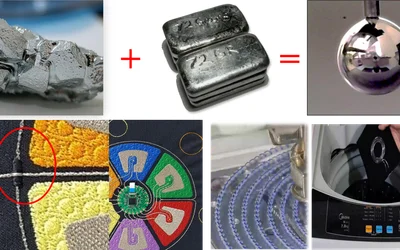
3D scanning and robotic manipulation of very thin objects such as wiring harnesses by the Department of Electrical, Electronic and Information Engineering at the University of Bologna.
Large Format Additive Manufacturing can be game-changing in product and process optimization, contributing to fighting climate breakdown. For the project Demo4Green - 𝗥𝗔𝗥𝗲-𝗪𝗔𝗦𝗧𝗘, Caracol used recycled glass fibers and polypropylene to produce a lamination tool for micro wind turbines.
Alif Semiconductor’s™ microcontrollers meet the market need for low-power, AI-enabled embedded solutions with unmatched levels of multi-layered security, and a fully integrated secure element.
Researchers have made a significant leap forward in developing insect-sized jumping robots capable of performing tasks in the small spaces often found in mechanical, agricultural and search-and-rescue settings.
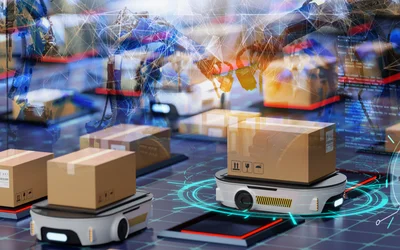
In this episode, we talk about a startup that developed a robot to eliminate the hassle of lost packages in large complexes and address the last meter delivery problem.
The hybrid “eBiobots” are the first to combine soft materials, living muscle and microelectronics, said researchers at the University of Illinois Urbana-Champaign, Northwestern University and collaborating institutions. They described their centimeter-scale biological machines in the journal Science Robotics.
Intelligent flying robots are making their way into the Non-Destructive Testing industry.
These robots are gaining attention in providing the industry with a safer and superior alternative to traditional methods.
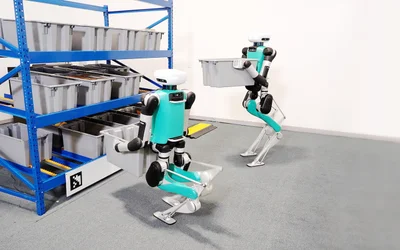
Could this be the time we say goodbye to robotic awkwardness and hello to seamless motion? This article highlights the groundbreaking concept of whole-body control, a coordinated robotic motion technique that resembles natural movement. Imagine a robot smoothly navigating its environment, performing tasks with grace and precision. This innovative approach allows for improved efficiency and greater versatility in real-world settings.