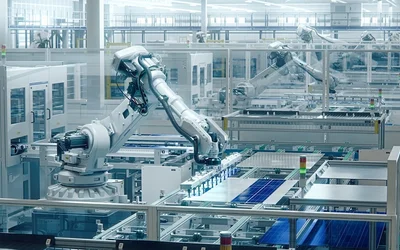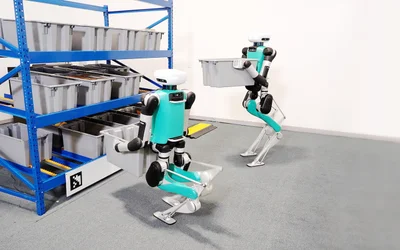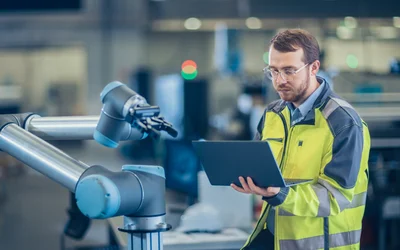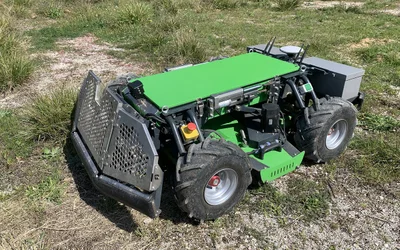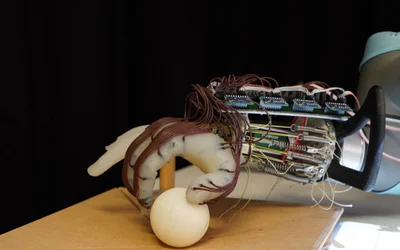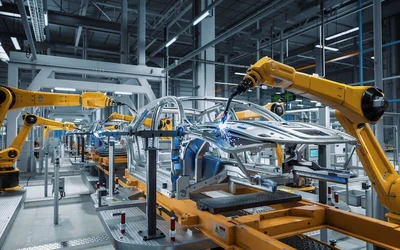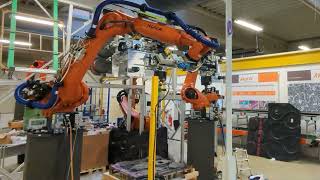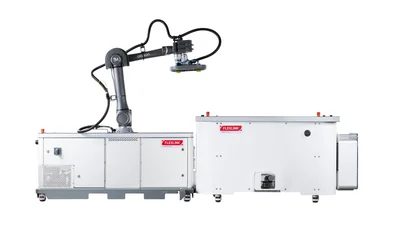
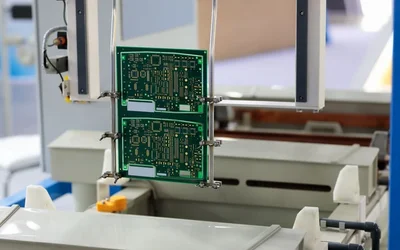
This comprehensive article dives deep into the world of robotics, exploring the history, types, engineering components, applications, and future trends of robots, offering readers an in-depth understanding of how these remarkable machines work and shape our lives.
The hospitality industry can leverage the gender characteristics of service robots to influence customers' decisions, according to new research from a team in the Penn State School of Hospitality Management.
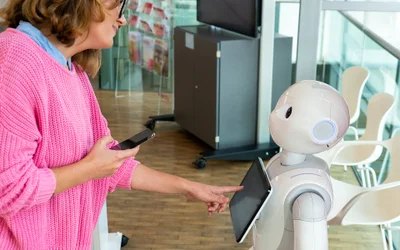
Service robots have evolved from simple automated machines to intelligent adaptive systems that can navigate unpredictable environments and interact with humans.
AI-powered artificial muscles made from pliable materials are reshaping recovery, from stroke rehabilitation to prosthetic design. These machines help people regain motion, strength, and confidence.
A team of researchers from ITMO University, Tel Aviv University, and University of Aveiro have come up with a new way to improve the mechanical properties of spider webs.
EPFL researchers have developed a customizable soft robotic system that uses compressed air to produce shape changes, vibrations, and other haptic, or tactile, feedback in a variety of configurations.
Deep-learning algorithms are enabling powerful video analytics. A practical use in manufacturing is monitoring human actions in manual operations. Some assemblies require specific torquing sequences, which can't always be tracked with traditional methods. AI-based Computer Vision advances quality management.
When you ask people to name a few cutting-edge technologies, they’ll probably mention artificial intelligence, quantum computing, autonomous vehicles, perhaps synthetic biology… but probably not welding.
Developing a tool that evaluates button and switch devices from both hardware (through physical input) and software perspectives is the next logical step in the evolution of device testing automation.
In this episode, we talk about how researchers are developing a sticker that can conduct ultrasound tests along with a machine learning powered robotic solution for choosing chemical proteins when developing new drugs and biofuels or recycling plastics.
The sophisticated artificial skin sweats where and how much the researchers want it to. This was reported in an Angewandte Chemie article by Danqing Liu and first author Yuanyuan Zhan.
Advancements in 3D printing have helped to lower the cost of robotics innovation by more than 40,000x! This article explains how that happened and highlights 5 categories of end-use robotics components that can be made on-demand with additive manufacturing today.
In a highly competitive environment, retailers are leveraging cutting-edge technologies to boost efficiency and run their businesses more effectively. AI-powered robots are transforming the retail sector by optimizing pricing strategies, inventory management, and more.
Technology for creating 3D force and proximity sensors based on silicone, offering also the ability to customize shape and characteristcs. Key application is in collaborative robots