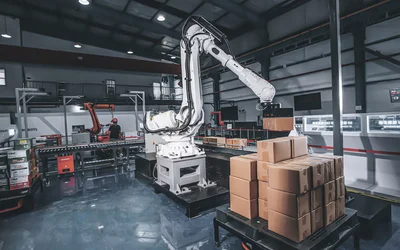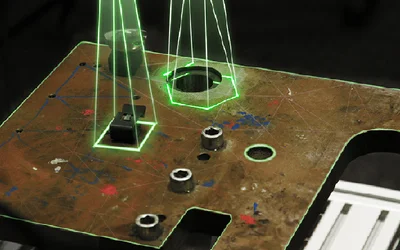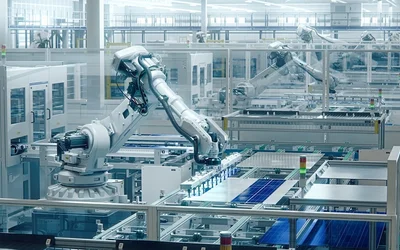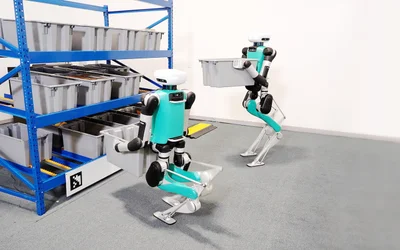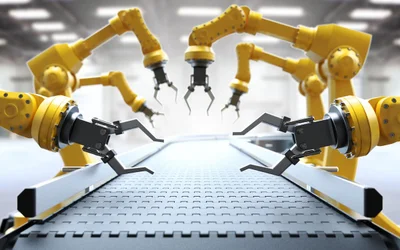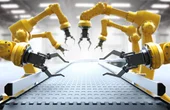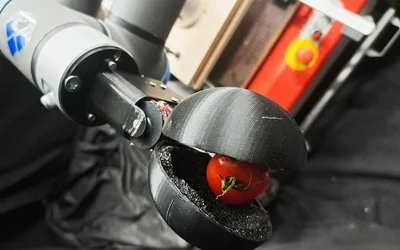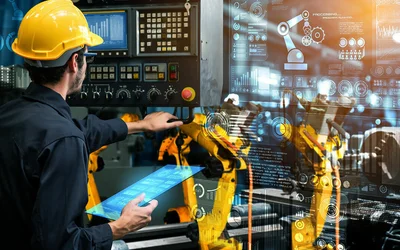
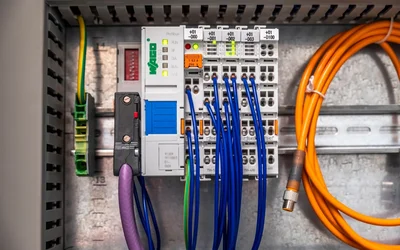
This comprehensive article dives deep into the world of robotics, exploring the history, types, engineering components, applications, and future trends of robots, offering readers an in-depth understanding of how these remarkable machines work and shape our lives.
The hospitality industry can leverage the gender characteristics of service robots to influence customers' decisions, according to new research from a team in the Penn State School of Hospitality Management.
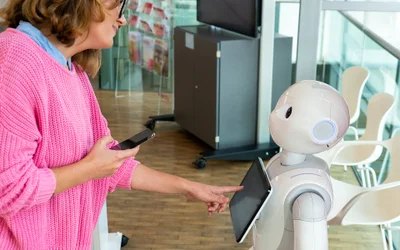
Service robots have evolved from simple automated machines to intelligent adaptive systems that can navigate unpredictable environments and interact with humans.
AI-powered artificial muscles made from pliable materials are reshaping recovery, from stroke rehabilitation to prosthetic design. These machines help people regain motion, strength, and confidence.
A team of researchers from ITMO University, Tel Aviv University, and University of Aveiro have come up with a new way to improve the mechanical properties of spider webs.
EPFL researchers have developed a customizable soft robotic system that uses compressed air to produce shape changes, vibrations, and other haptic, or tactile, feedback in a variety of configurations.
Producing chirality, a property found throughout nature, through large-scale self-assembly could lead to applications in sensing, machine perception and more.
Intelligent Flying Robots is a revolutionary approach to Non-Destructive Testing (NDT) that enables accurate contact-based inspection to fulfill industrial asset inspection standards with many advantages.
Inspired by the biomechanics of the manta ray, researchers at North Carolina State University have developed an energy-efficient soft robot that can swim more than four times faster than previous swimming soft robots.

Raspberry Pi is a UK invention, which started out as a small single-board computer (SBC) intended for educational purposes. It was originally developed by the Raspberry Pi Foundation, who wanted to produce a low-cost SBC for teaching basic computer science.
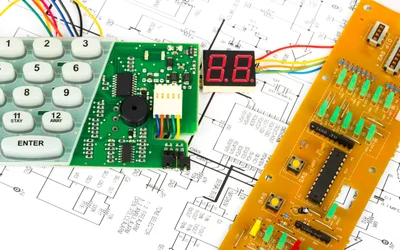
Article #6 Electronics Innovation Series. Engineers are turning to an edge computing model using SBCs to create more secure, high-performance IoT applications.
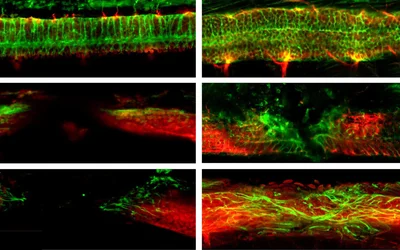
Matroid's deep-learning system comprising of 3D-CNN helps to automatically detect Glaucoma from a single raw Optical Coherence Tomography (OCT) scan. The results are close to human doctors across heterogeneous datasets and scanning environments.
Robotic actuators stand at the forefront of technological innovation, transforming energy into motion to breathe life into robots, enhancing their capabilities in an ever-evolving landscape of industrial automation.
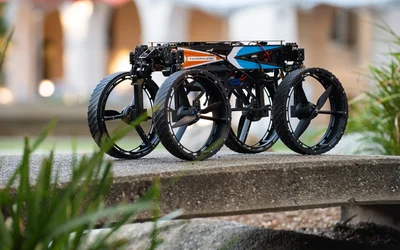
Springs, squeegees and soda straws function with a common property — they are rigid in one direction and flexible in another. Structures like these, with properties that vary across dimensions, have played critical roles in human technology from the longbow to the booster rocket.
DEEP Robotics recently released its newest robotics technique, which is autonomous coordinated multi-robot exploration; the experiment is operated under a 3,000 m2 unknown environment with five Jueying X20 robot dogs.