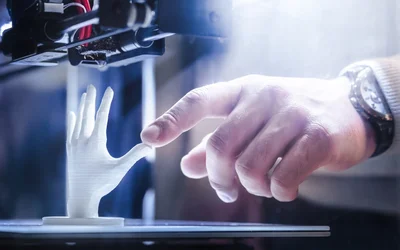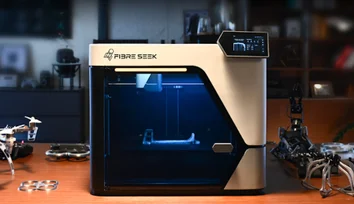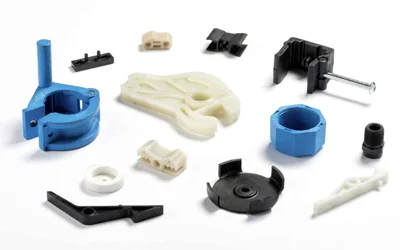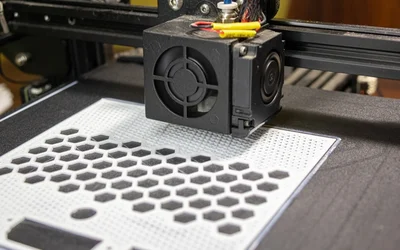

What is 3D printing? This article goes over the basics of 3D printing, otherwise known as additive manufacturing, covering its engineering principles and applications.
What is 3D printer filament made of? This guide examines polymers, additives, and composites, offering practical tips for digital design and hardware engineers.
With SCANOLOGY's KSCAN-X 3D scanner, wind turbine manufacturers can redesign blade core materials faster and more accurately than ever—cutting revision time from days to just 30 minutes.
Smarter technology, stronger performance.
Learn everything you need about the full adder circuit. From binary addition theory to low-power hardware implementations and modern ASIC/FPGA design flows, this technical article equips digital design engineers, hardware engineers with practical insights and current research trends.
Explore how a transistor works from first principles through practical circuit design. This in depth guide explains BJT and FET operation, switching and amplification modes, design calculations, modern market trends, and FAQs, ideal for digital design engineers, hardware engineers, and students.
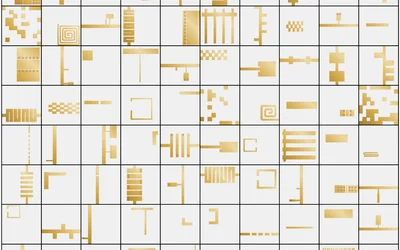
In this episode, we talk about the simple, tunable machine created using common 3D printers for manipulating microscale objects to create the next generation of highly efficient antennas enabling the future of wireless communication.
Siemens Gamesa was looking for a 3D scanning system to take exact, agile measurements of wind turbines and their components so that they could be analyzed and processed using CAD software. The main goal was to dispense with traditional and inaccurate measuring tools such as tape measures and gauges, in favor of a more agile and precise method.
Kuźnia Polska, in cooperation with ASTOR, Kawasaki Robotics CEE Hub, and Photoneo, developed an automation solution for a bin picking application that enables the picking of two types of parts from two different containers.
Engineers at Caltech have developed a method for 3-D printing pure and multicomponent metals, at a resolution that is, in some cases, an order of magnitude smaller than previously possible. The process, which uses water-based chemistry and 3-D printing, was described in a paper published in Nature on October 20.
The manufacturing industry (largely) welcomed artificial intelligence with open arms. Less of the dull, dirty, and dangerous? Say no more. Planning for mechanical assemblies still requires more than scratching out some sketches, of course — it’s a complex conundrum that means dealing with arbitrary 3D shapes and highly constrained motion required for real-world assemblies.
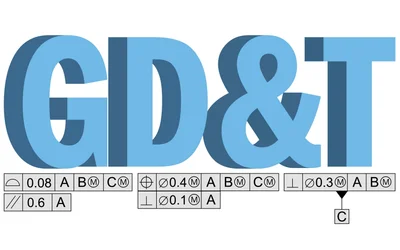
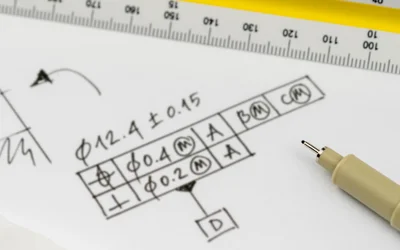
This blog post aims to guide you through the basic concepts and definitions of geometric dimensioning and tolerancing (GD&T); more precisely, this includes what GD&T is, how it works, and why it is important to implement GD&T processes. Furthermore, it emphasizes that all of the geometric characteristics and tolerances written on a technical drawing are there for a specific purpose of functionality.
A company well-known for superior analytical instruments and laboratory equipment opted for RPWORLD to produce 100 units assembly parts of a Spectrometer per order, the total demand is 400 sets per year.
The Chair of Metal Structures at the Technical University of Munich has been contributing to the development of steel and light metal structures within the construction industry for many decades. There is a long-standing tradition in the areas of bridge design, stability, construction, composite structures, fatigue and glass works.
Manufacturing platform, Hubs, has published its Supply Chain Resilience Report 2023, featuring insights from 2022 and addressing recent supply chain disruptions, including the ongoing war in Ukraine, escalating tensions between China and Taiwan, and more. Download the full report below.
Alongside aerospace, automotive, and defense, health care has long been—and will continue to be—one of the key revenue opportunities for 3D printing (also known as additive manufacturing) technology.
Replique has partnered with Alstom for the implementation of the mobility giant’s first-ever serial part production. Created with the BCN3D Metal Pack, the visible stainless steel part was found to be the most cost-effective and high-quality method.
Costumes in the annual Trinidad and Tobago Carnival often inspire awe because of their extravagance, flamboyancy, and — for some dancing sculptures — their size.