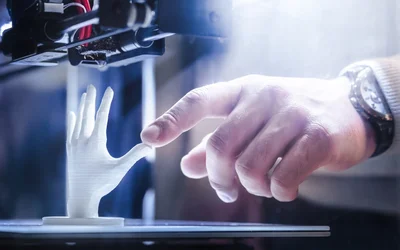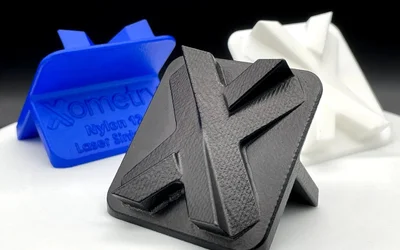


What is 3D printing? This article goes over the basics of 3D printing, otherwise known as additive manufacturing, covering its engineering principles and applications.
"MechStyle" allows users to personalize 3D models, while ensuring they're physically viable after fabrication, producing unique personal items and assistive technology.
A new method could enable users to design portable medical devices, like a splint, that can be rapidly converted from flat panels to a 3D object without any tools.
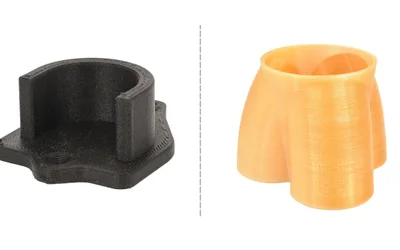
A deep dive into the physics, properties, and practical applications of 3D printing filaments, from everyday polylactic acid to performance composites.
This article explores transistor circuit design for digital design engineers, hardware engineers, and electronics engineering students. Find out the theoretical foundations with practical guidance, enabling you to confidently build and analyze analog and digital transistor circuits.
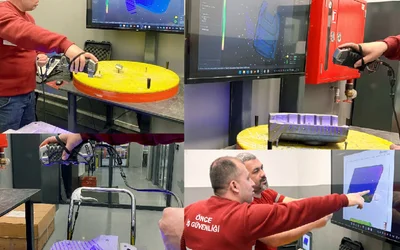
With SCANOLOGY's KSCAN-X 3D scanner, wind turbine manufacturers can redesign blade core materials faster and more accurately than ever—cutting revision time from days to just 30 minutes.
Smarter technology, stronger performance.
This article examines the anodizing process, an electrochemical surface treatment that makes metals like aluminium and titanium more durable and corrosion resistant.
Wevolver spoke with Orion Fans President, John Knight, to learn about the cooling challenges companies face, how their technologies address system reliability, and where innovation is heading in thermal management.
TrackScan Sharp-S optical 3D scanning system improves crane component inspection. Its wireless design, user-friendly operations and high-precision 3D data streamline quality control, ensuring consistent, high-precision results while improving efficiency in crane manufacturing and inspection.
Join MVTec to explore how advanced machine vision software is revolutionizing semiconductor wafer inspection with live demos, not slides—boosting precision, quality, and efficiency.
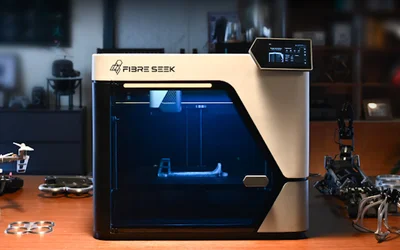
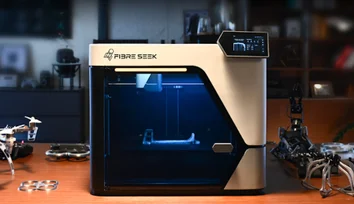
3D composite printing is transforming manufacturing by combining the flexibility of additive manufacturing with enhanced material properties.
This innovative technology enables the creation of complex parts with improved strength, stiffness, and performance characteristics.
Nexperia NEVB-MTR1-KIT1 is a motor driver evaluation kit that can be set up in under two minutes, supports USB-C Power Delivery, allows microcontroller and component swapping, and offers open-source firmware for fast customization and real-world motor control development.
Lack of process efficiency is a serious problem in engineering. It causes additional costs and cripples innovation. In this article series, we explore ways of automating engineering tasks that yield business results.
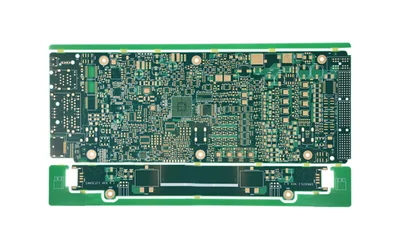
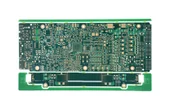
PCBs are essential for electronic circuits, providing mechanical support and electrical connections for components. Factory fabricated (or sometimes called prefabricated) PCBs are pre-manufactured, ready-to-use boards that simplify assembly and ensure consistent quality in electronic devices.