
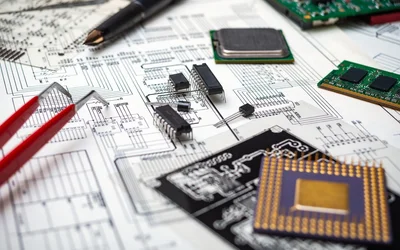
Join ATCx AI for Engineers 2025, Altair's global virtual event showcasing AI-driven innovations in design, simulation, and manufacturing. Discover 100 real-world AI use cases, gain insights from industry leaders, and explore how AI is transforming engineering workflows.
Here we look at the basics of bending sheet metal, including bending radius, K-factor, and bend allowance calculations, helping you design manufacturable sheet metal parts.
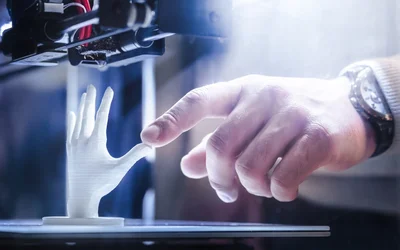
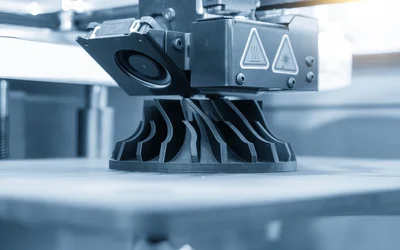
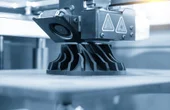
What is 3D printing? This article goes over the basics of 3D printing, otherwise known as additive manufacturing, covering its engineering principles and applications.

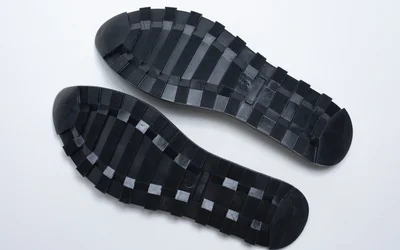
"MechStyle" allows users to personalize 3D models, while ensuring they're physically viable after fabrication, producing unique personal items and assistive technology.
A new method could enable users to design portable medical devices, like a splint, that can be rapidly converted from flat panels to a 3D object without any tools.

A deep dive into the physics, properties, and practical applications of 3D printing filaments, from everyday polylactic acid to performance composites.
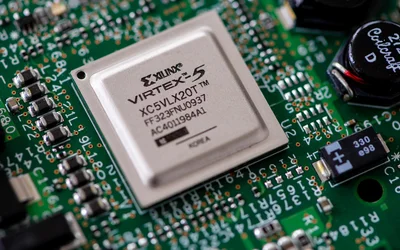
This article explores transistor circuit design for digital design engineers, hardware engineers, and electronics engineering students. Find out the theoretical foundations with practical guidance, enabling you to confidently build and analyze analog and digital transistor circuits.
With SCANOLOGY's KSCAN-X 3D scanner, wind turbine manufacturers can redesign blade core materials faster and more accurately than ever—cutting revision time from days to just 30 minutes.
Smarter technology, stronger performance.
This article examines the anodizing process, an electrochemical surface treatment that makes metals like aluminium and titanium more durable and corrosion resistant.
Join ATCx AI for Engineers 2025, Altair's global virtual event showcasing AI-driven innovations in design, simulation, and manufacturing. Discover 100 real-world AI use cases, gain insights from industry leaders, and explore how AI is transforming engineering workflows.
Here we look at the basics of bending sheet metal, including bending radius, K-factor, and bend allowance calculations, helping you design manufacturable sheet metal parts.
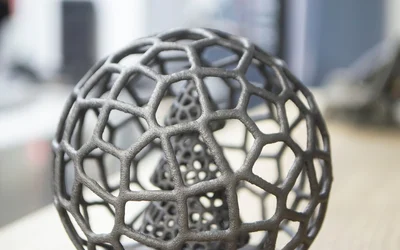
3D metal printing also known as metal additive manufacturing is transforming the production of complex metal components. This technology enables the creation of intricate geometries and internal structures that would be challenging or impossible to achieve through conventional manufacturing methods
Nearshoring brings production closer to key markets, improving responsiveness and reducing risk. It's a necessary strategy for future-ready manufacturers.
New materials like Cubic Ink 303 VP ESD and AzureFilms Prime HS deliver heat-deflection over 220 Degrees Celsius and matte finish quality - expanding plastics beyond prototyping into tooling and functional parts.
When it comes to creating plastic parts, choosing between CNC machining and 3D printing can feel like a tough call. This article breaks down the key differences between these two powerhouse technologies.
Fabspeed Motorsport revolutionized its Porsche modification process using SCANTECH's KSCAN-Magic scanner—cutting scan time, eliminating sprays, and enabling fast, precise custom parts for high-performance vehicles.
Aerospace 3D printing has emerged as a transformative technology in the aviation and space industries, revolutionizing component design, prototyping, and manufacturing.
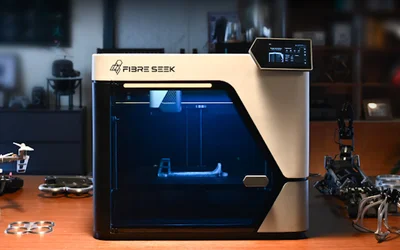
When benchmarked against outsourcing, the desktop machine repays its USD15 k capital outlay in 3 months. The industrial press crosses break even at 5 years.
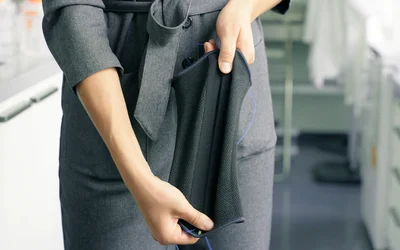
New smart textiles developed by researchers at ETH Zurich use acoustic waves and glass fibres to help make precise measurements. They are light, breathable and inexpensive, and offer great potential for medicine, sports and everyday life.
On-site printing of lightweight PSU fillers slashes carbon impact and supply chain complexity—Finnair now sources spare parts locally in Dubai, Singapore, and beyond.