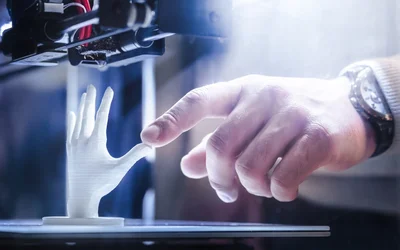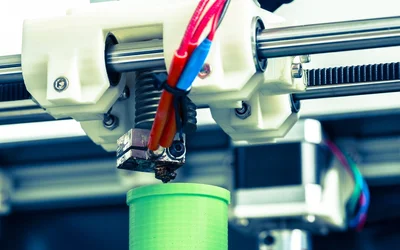

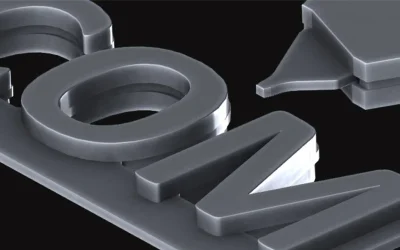
What is 3D printing? This article goes over the basics of 3D printing, otherwise known as additive manufacturing, covering its engineering principles and applications.
What is 3D printer filament made of? This guide examines polymers, additives, and composites, offering practical tips for digital design and hardware engineers.
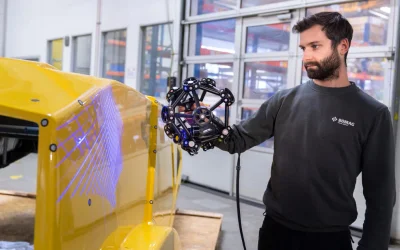
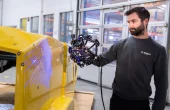
With SCANOLOGY's KSCAN-X 3D scanner, wind turbine manufacturers can redesign blade core materials faster and more accurately than ever—cutting revision time from days to just 30 minutes.
Smarter technology, stronger performance.
Learn everything you need about the full adder circuit. From binary addition theory to low-power hardware implementations and modern ASIC/FPGA design flows, this technical article equips digital design engineers, hardware engineers with practical insights and current research trends.
Explore how a transistor works from first principles through practical circuit design. This in depth guide explains BJT and FET operation, switching and amplification modes, design calculations, modern market trends, and FAQs, ideal for digital design engineers, hardware engineers, and students.
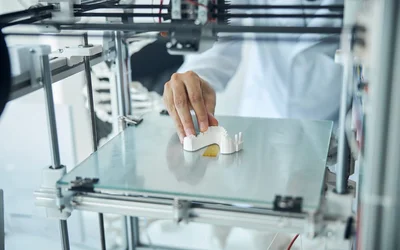
When digitization meets connectivity, you enter the smart factory. As an essential part of the fourth industrial revolution (Industry 4.0), it aims to optimize smart manufacturing processes. The fully digitized manufacturing facility of the smart factory uses devices, sensors, machinery, and production systems to continuously collect and share data.
A company well-known for superior analytical instruments and laboratory equipment opted for RPWORLD to produce 100 units assembly parts of a Spectrometer per order, the total demand is 400 sets per year.
The world needs educated children to help solve major challenges. But what does a well-rounded, effective education look like? There is scientific evidence to suggest that the key developmental benefit of play is an important part of a holistic education.
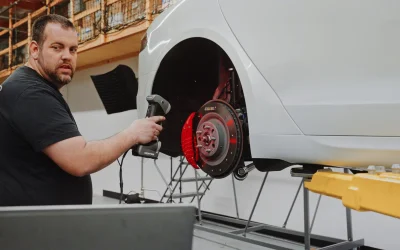
The global pandemic has receded to less painful horizons this year, but the changes it inspired continue to impact industrial innovation. We’re seeing more automated technologies and more AI integration. The IIoT (Industrial Internet of Things) is becoming more deeply embedded.
Intelligent flying robots are making their way into the Non-Destructive Testing industry.
These robots are gaining attention in providing the industry with a safer and superior alternative to traditional methods.
Could this be the time we say goodbye to robotic awkwardness and hello to seamless motion? This article highlights the groundbreaking concept of whole-body control, a coordinated robotic motion technique that resembles natural movement. Imagine a robot smoothly navigating its environment, performing tasks with grace and precision. This innovative approach allows for improved efficiency and greater versatility in real-world settings.
Fast localization and picking of multiple objects with Photoneo's Locator Studio for 3D picking in collision-free environments, PhoXi 3D Scanner, and a universal gripper.
Multi Jet Fusion makes it possible to produce functional nylon prototypes and end-use parts in as fast as 1 day. This video looks at the process and what it can offer you.
Ever since the first close-up picture of Mars captured in 1965, the hazy and pink world has revealed its mysterious veil. The pace of human exploration of the unknown universe has never stopped. Over the past decades, we have discovered that today’s Martian wasteland hints at a once active world where volcanoes raged, and flash floods rushed over the land.
There’s a lot to think about when it comes to plastics for medical parts. At the top of the list are safety and, for parts going inside the body, longevity. So, which is the best to choose for your application?
Elisava Racing Team are creating a fully electric, intelligent motorcycle equipped for mountain rescue in hostile terrains. Collaborating with us at BCN3D, 19 end-use parts were printed using 3D FFF technology in a variety of different technical materials and sizes.