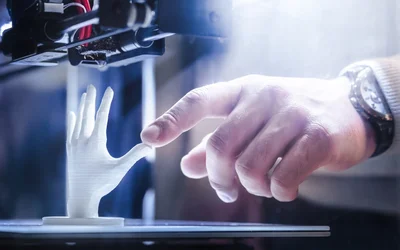


What is 3D printing? This article goes over the basics of 3D printing, otherwise known as additive manufacturing, covering its engineering principles and applications.
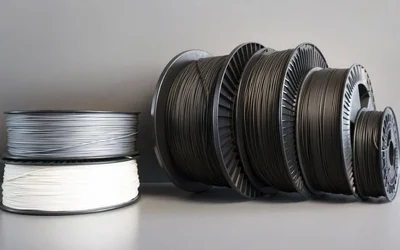
What is 3D printer filament made of? This guide examines polymers, additives, and composites, offering practical tips for digital design and hardware engineers.
Learn everything you need about the full adder circuit. From binary addition theory to low-power hardware implementations and modern ASIC/FPGA design flows, this technical article equips digital design engineers, hardware engineers with practical insights and current research trends.
Explore how a transistor works from first principles through practical circuit design. This in depth guide explains BJT and FET operation, switching and amplification modes, design calculations, modern market trends, and FAQs, ideal for digital design engineers, hardware engineers, and students.
Advanced 3D scanning delivers comprehensive, high-accuracy inspection for massive grinding roller shells. It replaces manual measurement with fast, traceable digital analysis, enabling smarter maintenance and reduced operational costs.
Entryphone have developed an entry phone product that perfectly meets the demands of the 21st century. Keen to get their exciting new product to market as quickly as possible, Protolabs' high-speed low-volume production model provided the support needed.

Art, culture and the craft of metal – Bryan Fuller´s automotive and motorcycle design and customization shop “Fuller Moto” inspires, educates and entertains those with a creative spirit and a do-it-yourself attitude and combines all these aspects together by creating “rolling works of art”.
The laboratory for additive manufacturing (LaF) at Landshut University, deals with the process of reverse engineering headed by Prof. Dr.-Ing. Norbert Babel.
3D measurement is a metrology process that uses different types of 3D measurement tools, such as 3D scanners, to collect 3D data from physical objects, such as their shapes, textures, geometries and colours.
Is 3D printing the future of construction? Can it really become an alternative to traditional construction techniques in the future? That’s what we are going to see!
In the near future, 3D bioprinting will allow medical professionals to engineer and 3D print patient-specific organs for organ transplants in a few hours.
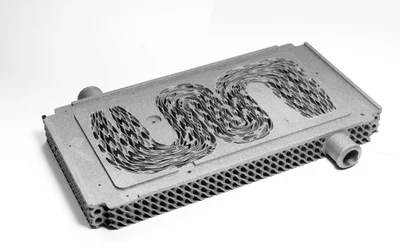
Fueled by computational modeling and the ability to synthesize data and leverage it within a design, coupled with technology to create complex geometries, industries are able to deliver more cost efficient parts without sacrificing performance.
Mass customization: production strategy aimed at satisfying customer needs while preserving the efficiency of mass production. At .Zero here's how we view mass customization, and how we are using nTop Platform helps us achieve it successfully.
AM lattices often have a down skin surface roughness different from the up skin one. The workflow shown below enables the design of a virtual “CAD with Designed Surface”. The latter has a surface roughness closer to the actual AM lattice, measured using X-ray Computed Tomography.