
Featured
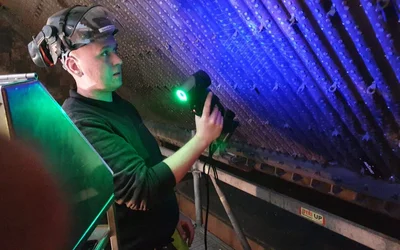
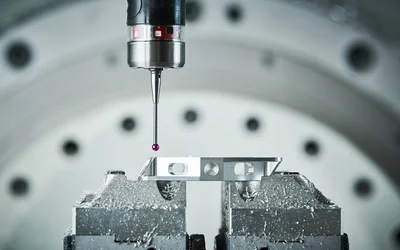
When power plants conduct overhauls and ad hoc maintenance, scheduled inspections need to be carefully planned out to ensure that downtimes are kept to a minimum and that operations can resume to full capacity as quickly as possible.
When power plants conduct overhauls and ad hoc maintenance, scheduled inspections need to be carefully planned out to ensure that downtimes are kept to a minimum and that operations can resume to full capacity as quickly as possible.
Rosti provide injection molding and contract manufacturing services to industries as diverse as packaging, consumer and business appliances, automotive, and healthcare and medical.
Boosting the quality and repeatability of parts by decreasing tool deflection to fulfill customers' precision demands is critical. Tool deflection leads to rapid tool wear and elevates the possibility of tool breakage.
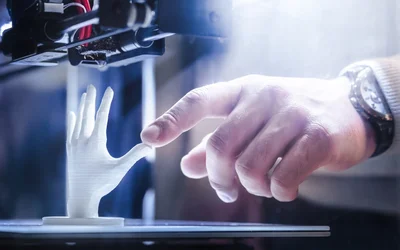
What is 3D printing? This article goes over the basics of 3D printing, otherwise known as additive manufacturing, covering its engineering principles and applications.
14 minutes read.
17 minutes read.
11 minutes read.
18 minutes read.
13 minutes read.
10 minutes read.


Entertainment
The Next Byte Podcast is hosted by two young engineers - Daniel and Farbod - who select the most interesting tech/engineering cont...
165 Posts
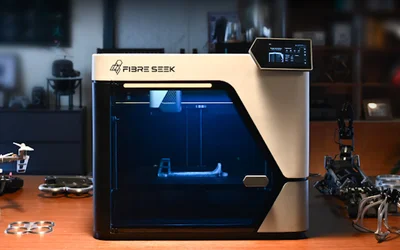
Following a successful crowdfunding campaign, the FibreSeeker 3 from FibreSeek is bringing continuous carbon fiber printing to a new audience.
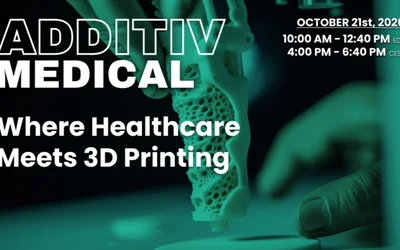
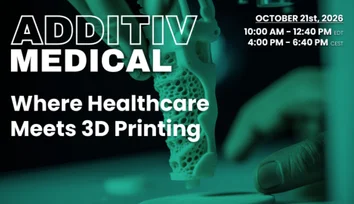
ADDITIV Medical 2026 will bring together more than 500 medical professionals
Choosing between 3D printing and injection molding is one of the key decisions in product development—especially in case of prototyping.
Explore how the right finishes and coatings can improve aerospace parts by boosting durability, extending service life, enhancing environmental resistance, and delivering the performance and appearance required for demanding applications.
The data problem
From leading experts at the CDFAM Computational Design Symposium
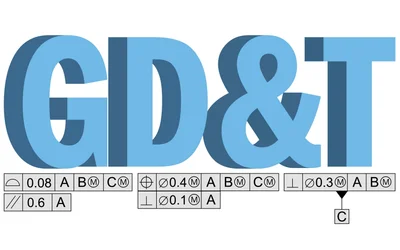
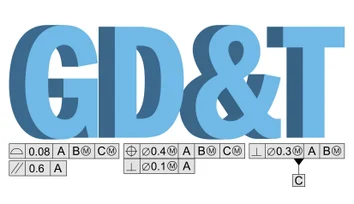
GD&T is the symbolic language engineers use to state exactly how much a part can vary and still work. This guide covers the basics.
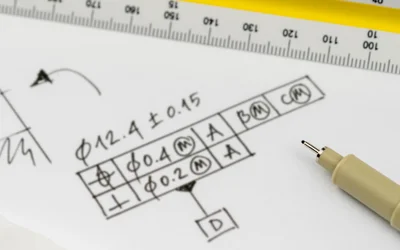
This guide covers the true position formula, how to read the feature control frame, and how MMC and LMC generate bonus tolerance.
When power plants conduct overhauls and ad hoc maintenance, scheduled inspections need to be carefully planned out to ensure that downtimes are kept to a minimum and that operations can resume to full capacity as quickly as possible.

3 minutes read
Rosti provide injection molding and contract manufacturing services to industries as diverse as packaging, consumer and business appliances, automotive, and healthcare and medical.

4 minutes read
Boosting the quality and repeatability of parts by decreasing tool deflection to fulfill customers' precision demands is critical. Tool deflection leads to rapid tool wear and elevates the possibility of tool breakage.

5 minutes read
Deoxidizing is the process that is prepared for subsequent surface treatment. The use of deoxidizer deteriorates can remove the natural oxide layer formed on the surface of the aluminum
5 minutes read
Quality is a keyword related to production results in all sectors of the manufacturing industry, especially the results of CNC machining.
5 minutes read
Impact Footwear is a startup that developed the first customizable flip flop sandal with three different pressure zones that is manufactured-on-demand with SLS 3D printing.

6 minutes read
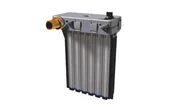
Protolabs supported Mahle, one of the largest automotive manufacturers in the world, with the development of a new generation of high-voltage heaters.

3 minutes read
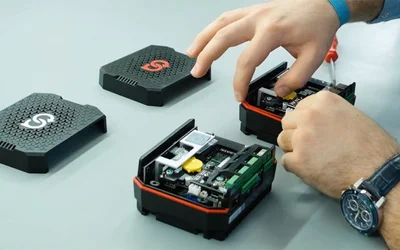
With the help of Ultimaker 3D printers, Ones Technology offers 25-30 products designed to be mass produced.
3 minutes read
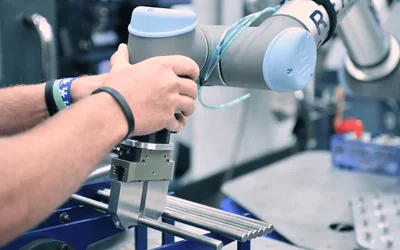
Robots will continue to get smarter, but sometimes they will need to learn from the expert…us

6 minutes read
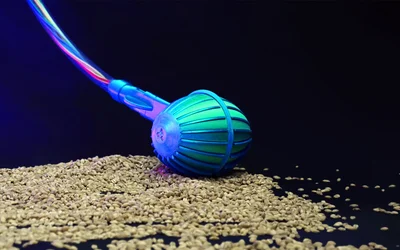
Based on the 'Crover Effect' for locomotion in granular media, the CROVER robot is able to move through bulk solids and powders. The team wins $25,000 of manufacturing support from Mitsubishi Chemical Advanced Materials to take their design to the next level.
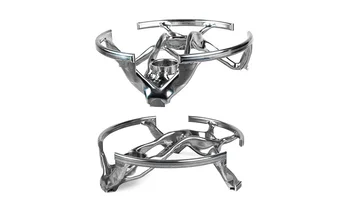
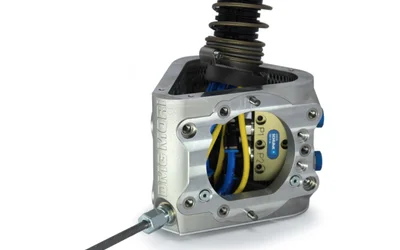
The engineers of DMG MORI’s ADDITIVE INTELLIGENCE team redesigned the Robo2Go head for additive manufacturing using nTopology. The new design is 62% lighter, has 60% fewer components, and improves the handling precision of the robot by a factor of 16x.
6 minutes read
New 3D printing technology Multi Jet Fusion (MJF) may appear to be a replacement for selective laser sintering (SLS) after all both build parts from thermoplastic nylon but MJF is faster, more precise and produces more consistent mechanical properties throughout the part.
3 minutes read
Studio Artefact specializes in “themed immersive experiences” uses 3D printing to create awe-inspiring structures and decorations. At present, Studio Artefact operates a fleet of six BigRep large-format 3D printers. The team works mainly with PETG, and has seen its horizons widen exponentially with each additional 3D printer installed. Prior to 3D printing, it would make most of its large structures with styrofoam sculpting, welding, and woodworking technique, which was painstaking and took much longer than 3D printing, placing a limit on productivity and profitability.

5 minutes read
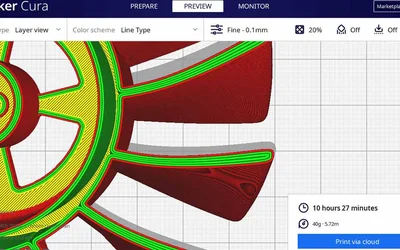
Earlier this year, we announced that we are working on a major enhancement to the Ultimaker Cura slicing algorithm: the Arachne engine. Arachne is a revolutionary improvement to the way prints are sliced, enabling you to quickly create parts with high quality and strong walls.
2 minutes read
3D printing offers many benefits to the oil and gas industry including guaranteed quality standards, greater flexibility of design parts, less product development time, reduced carbon emissions, less waste, reduced costs and rapid turnaround from order receipt to product delivery.