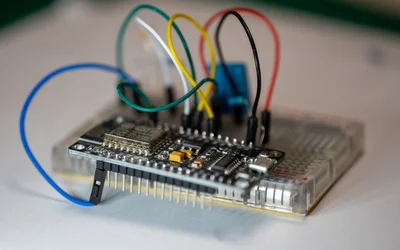

Protect sensitive electronics by understanding the current limiting resistor, learning how to calculate appropriate values, and applying them in LEDs, transistors, microcontroller inputs and other circuits.
This guide explains how potentiometer pins interact with mechanical rotation, resistive tracks, and load conditions across various circuit configurations. It provides clarity for both low-power electronic designs and high-precision embedded systems.
This technical article explains the theory behind potentiometer schematics. It shows how to implement mechanical and digital potentiometers in practical circuits, tailored for engineers, and students.
Engineering teams can achieve AI-ready design data with five-level maturity model by Keysight. The unified, traceable data accelerates design cycles, boosts IP reuse, and reduces costly re-spins.
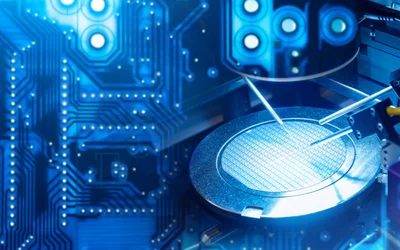
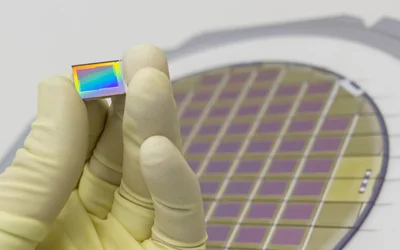
Focused laser-like light that covers a wide range of frequencies is highly desirable for many scientific studies and for many applications, for instance quality control of manufacturing semiconductor electronic chips.
Scientists at ITMO have come up with a new way to protect microelectronics devices from counterfeit. The new technology is based on gold and silicon nanoparticles with unique optical properties that make it possible to create unclonable functions with a record information density.
An international team of scientists was first to demonstrate that halide perovskites can serve as a base for nonlinear on-chip optical components. As an example, they can be used to build ultrafast optical chips and transistors, and, potentially, other integrated optical systems.
In this episode, we talk about why minimization of speakers and energy storage devices is crucial for the next generation of electronics and medical devices.
In order to operate wind turbines more efficiently in the future and also to be able to use them in locations that are less wind-intensive, even larger and at the same time lighter blades are needed.
Understanding your rights and responsibilities is essential to securing your innovation. Further, taking advantage of cloud manufacturing can mitigate substantial risk.
Robot arms could become safer in industrial settings by applying an artificial skin containing proximity heat sensors to detect humans in all directions.
In this episode, we talk about how performance limitations of current microchips are being addressed by utilizing novel materials like graphene and bioinspired designs to address the needs of next generation computing and electronics.
“We are still making not enough use of solar and wind energy,” says Horst Fietje, co-founder of the start-up Voltgoed, which he founded together with Stan Hoppenreijs and Jasper Verhoeve. They are working on a smart box for home heat pumps. This would enable them to make flexible use of green power.

Although the billions of battery-powered wireless IoT sensors connecting tomorrow's world will undoubtedly have an upstream energy impact, research suggests considerable net savings will be realized in the future.
Researchers have developed a new material for an electronic component that can be used in a wider range of applications than its predecessors. Such components will help create electronic circuits that emulate the human brain and that are more efficient at performing machine-learning tasks.
Article #1 Electronics Innovation Series. Enabling continued innovation while dealing with the constraints of supply chain uncertainty is a task for both designers and suppliers.
In this episode, we talk about how a novel approach for wind turbine design could alleviate the supply chain bottleneck while maintaining or increasing energy output followed by the initiatives to reduce construction related emissions while focusing on increasing structural longevity.
Mitigating electronics manufacturing delays starts with understanding where manufacturing processes can go wrong. We’ve highlighted the four key reasons here, giving you a starting point if you struggle with on-time deliveries.
Design for Manufacturing (DFM) builds upon five tenets that should apply to the decision chain starting from project initiation. This critical step within the manufacturing development cycle merges design requirements with production methods to create the best end results.
With today’s most advanced cloud manufacturing platforms, users can access the full capabilities needed to move seamlessly between prototyping, testing, and full-scale production
Rapid PCBA prototyping using electronics cloud manufacturing offers many advantages including problem identification, reduced error rate, lower costs, and shortened manufacturing timelines.