
Protect sensitive electronics by understanding the current limiting resistor, learning how to calculate appropriate values, and applying them in LEDs, transistors, microcontroller inputs and other circuits.
This guide explains how potentiometer pins interact with mechanical rotation, resistive tracks, and load conditions across various circuit configurations. It provides clarity for both low-power electronic designs and high-precision embedded systems.
This technical article explains the theory behind potentiometer schematics. It shows how to implement mechanical and digital potentiometers in practical circuits, tailored for engineers, and students.
Engineering teams can achieve AI-ready design data with five-level maturity model by Keysight. The unified, traceable data accelerates design cycles, boosts IP reuse, and reduces costly re-spins.
Focused laser-like light that covers a wide range of frequencies is highly desirable for many scientific studies and for many applications, for instance quality control of manufacturing semiconductor electronic chips.
Scientists at ITMO have come up with a new way to protect microelectronics devices from counterfeit. The new technology is based on gold and silicon nanoparticles with unique optical properties that make it possible to create unclonable functions with a record information density.
An international team of scientists was first to demonstrate that halide perovskites can serve as a base for nonlinear on-chip optical components. As an example, they can be used to build ultrafast optical chips and transistors, and, potentially, other integrated optical systems.
Transistors — the tiny on-off switches inside microchips — have gotten smaller and smaller over the years, increasing computing power and enabling smaller devices. During that time, the copper wires that connect these switches have likewise shrunk.
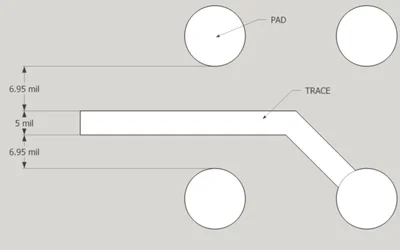
Two primary PCB assembly techniques have emerged as the electronics industry standards: Through-Hole Technology (THT) and Surface Mount Technology (SMT). This article delves into the intricacies of THT and SMT, providing a thorough comparison of their advantages, disadvantages, and applications.

MSE researchers are using a Catalyst Award from the National Academy of Medicine to develop a pressure-relieving sensor system that could also be used in hospital beds.
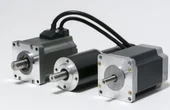
Digital platforms have profoundly transformed the design process for cobot motor drives, enabling engineers to streamline workflows, enhance precision, and rapidly adapt to the evolving demands of the industrial landscape.
ETH Zurich researchers taught an autonomous excavator to construct dry stone walls itself using boulders weighing several tonnes and demolition debris.
Sponsor interview with Theresa Hackl, Application Marketing Engineer, Komei Takura, Senior Business Development Manager for Mobility and
Yoichi Murakami, Senior Product Manager for Function Devices at Murata.
To advance cell-based therapies, researchers have identified a novel device that makes on-site oxygen for biological cells transplanted inside the body.
A new study led by chemists at the University of Illinois Urbana-Champaign brings fresh insight into the development of semiconductor materials that can do things their traditional silicon counterparts cannot – harness the power of chirality, a non-superimposable mirror image.
Princeton researchers have developed a flexible, lightweight and energy efficient soft robot that moves without the use of any legs or rotary parts. Instead, the device uses actuators that convert electrical energy into vibrations that allow it to wiggle from point to point using only a single watt.