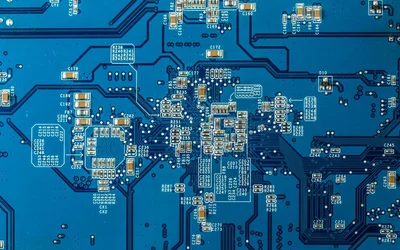


A guide that elaborates the types and applications of electrical testing, evolution of testing methods, technological advancements and the challenges associated with electrical testing with the growing industrial demands.
This article explores transistor circuit design for digital design engineers, hardware engineers, and electronics engineering students. Find out the theoretical foundations with practical guidance, enabling you to confidently build and analyze analog and digital transistor circuits.
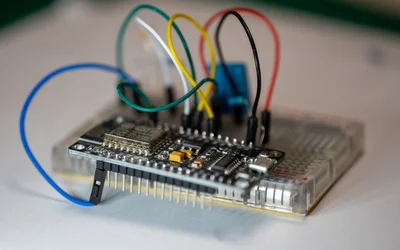
This article covers every aspect of the Arduino UNO pinout, presenting a technical, pin-by-pin explanation to help readers confidently design, analyze, and implement Arduino-based systems.
This article explores how to read resistor color code correctly, covering the fundamental theory, relevant standards, practical examples, and design-oriented insights, providing practical tips for efficient and accurate circuit prototyping.
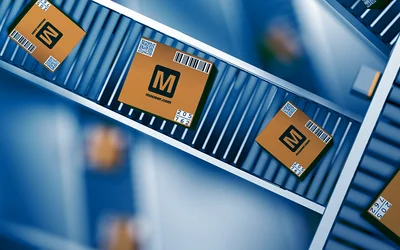
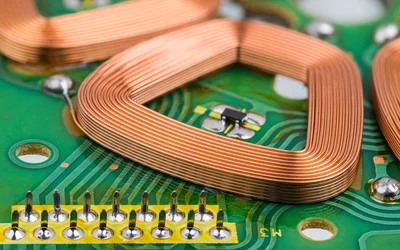
Miniature RFID tags by Murata enable seamless system integration with durable, reprogrammable identification — delivering reliable tracking, authentication & traceability beyond the limits of traditional barcodes.
In this episode, we talk about the engineers that built a wireless tag that detects and remembers overheating without a chip or a battery, enabling cold-chain monitoring without creating electronic waste.
By stacking multiple active components based on new materials on the back end of a computer chip, this new approach reduces the amount of energy wasted during computation.
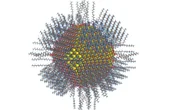
Focused laser-like light that covers a wide range of frequencies is highly desirable for many scientific studies and for many applications, for instance quality control of manufacturing semiconductor electronic chips.
A guide that elaborates the types and applications of electrical testing, evolution of testing methods, technological advancements and the challenges associated with electrical testing with the growing industrial demands.
Wearable sensor patches offer many opportunities for healthcare and wellness applications. For comfort and reliability, they should be flexible, soft, conformable, or even stretchable. Printed and hybrid electronics enable the use of almost any substrate and packaging materials, making it essential.
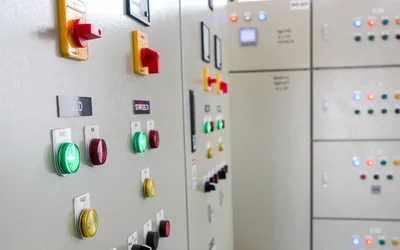
This guide offers an in-depth overview of different types of electric circuits, exploring their foundational concepts, common circuit layouts, specialized circuits, the latest technological advances, and their applications in real-life scenarios.
Lan Yang and Jie Liao’s optical barcodes for multimode sensing have potential applications in biomedical diagnostics, environmental monitoring, chemical sensing and more
NVIDIA TAO and Edge Impulse integrate to streamline the development and deployment of edge AI models, empowering developers to quickly build and optimize AI applications for diverse hardware environments.
Researchers at MIT used a Voltera NOVA to successfully print field electron emitters with a high-concentration carbon nanotube ink. The research has exciting implications for small satellites.
Explore the transformative power of precision agriculture, highlighting innovations like Particle's M-Series and the future of sustainable farming. Dive into the evolution, technologies, and trends shaping tomorrow's agriculture.
Unlock the secrets to enhancing electronic system performance through strategic PCB stackup configurations, crucial for ensuring signal integrity and mechanical stability.
PCBs printed onto flexible substrates demonstrate huge potential across a range of industries. But what are the materials used to make these printed devices?
Using an ultrasensitive photonic crystal, TU/e researchers were able to detect single particles down to 50 nanometers in diameter. The new research has just been published in the journal Optica.
Robot Operating System (ROS) drivers were developed on Analog Devices products so that they can be readily used within a ROS ecosystem. This article will give an overview on how to use and integrate these drivers in their applications, products, and systems.
The miniaturization of electronics is widely attributed to advances in semiconductor technology as observed by Moore’s Law, but many overlook the design and manufacturing challenges involved in utilizing small device packages such as ball grid arrays.