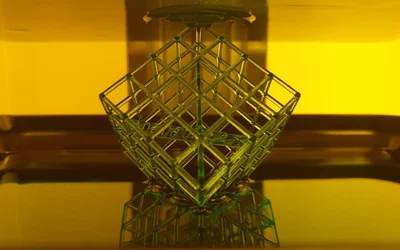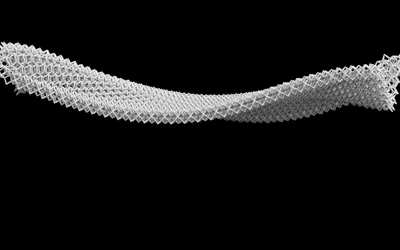
DTU researchers detail a technique, effectively operating like a CT scanner running in reverse, for printing 3D objects which can vary in hardness — and claim it could make printing complete instantly in the future.
In this episode, we talk about additive manufacturing being used to create fuel injection nozzles for marine applications and the subterranean 3D printed drone being used to combat food insecurity.
"MechStyle" allows users to personalize 3D models, while ensuring they're physically viable after fabrication, producing unique personal items and assistive technology.
A new method could enable users to design portable medical devices, like a splint, that can be rapidly converted from flat panels to a 3D object without any tools.
A deep dive into the physics, properties, and practical applications of 3D printing filaments, from everyday polylactic acid to performance composites.
Discover how to print with high-performance filaments like PEEK, PEKK, and ULTEM. Learn about their properties, hardware needs, challenges, and best practices for industrial-grade 3D printing.
Explore how 3D-Fuel's Pro PCTG filament advances additive manufacturing, offering higher impact strength, improved environmental resistance, and reliable printability for functional and industrial 3D printing applications.
3devo's next-generation desktop extruder combines industrial precision with lab-scale simplicity enabling more controlled, higher-performance and data-driven 3D printing material workflows.
DTU researchers detail a technique, effectively operating like a CT scanner running in reverse, for printing 3D objects which can vary in hardness — and claim it could make printing complete instantly in the future.
In this episode, we talk about additive manufacturing being used to create fuel injection nozzles for marine applications and the subterranean 3D printed drone being used to combat food insecurity.
3D printing offers a new and accessible way to put manufacturing back in the heart of young people in Belfast, who aspire to design and reimagine the future.
When it comes to desktop 3D printing, buyers have two main options: resin printers that use photopolymerization technology, or filament printers that extrude molten thermoplastic. Both have their strengths and weaknesses.
What technologies have had the biggest positive impact on education at every level and across every subject? Projectors, printers, laptops, and personal computers? We believe that in a decade's time, anyone asking that question will not hesitate to add 3D printers to the list.
Rosti provide injection molding and contract manufacturing services to industries as diverse as packaging, consumer and business appliances, automotive, and healthcare and medical.
In this episode, we talk about how a breakthrough with compact laser nano-printers can make them more accessible for researchers and how leveraging 3D printing technology and machine learning will provide essential insight for developing next-gen cochlear implants.
Boosting the quality and repeatability of parts by decreasing tool deflection to fulfill customers' precision demands is critical. Tool deflection leads to rapid tool wear and elevates the possibility of tool breakage.
Impact Footwear is a startup that developed the first customizable flip flop sandal with three different pressure zones that is manufactured-on-demand with SLS 3D printing.
3D printing can offer a wide range of advantages over more traditional manufacturing techniques. However, in general there are four major areas where it can come out in front of those processes.
PLA is an affordable and reliable workhorse filament for FDM 3D printing. But some material developers claim to have made PLA filament better by mixing it with additives, creating an enhanced variant of the material called PLA+.