UL 508A: The Standard for Industrial Control Panels
This guide covers what it applies to, how it differs from UL 508, how Supplement SB establishes the short-circuit current rating for a panel, and what it actually takes to label a panel under the UL 508A panel shop program.

23 Oct, 2026. 18 minutes read
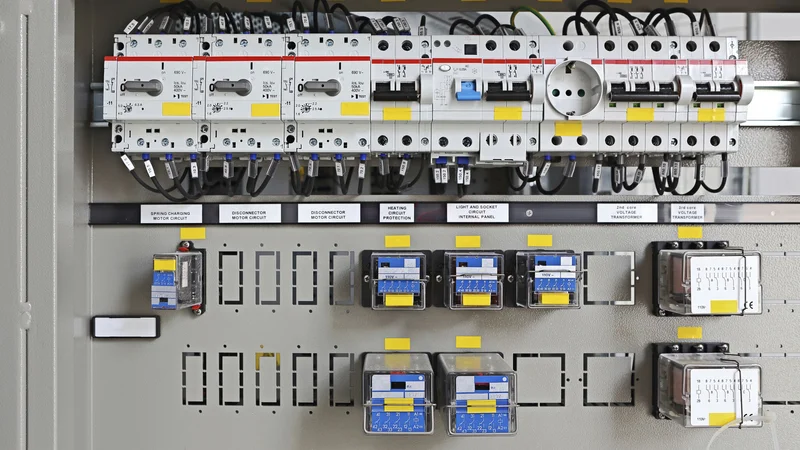
UL 508A Industrial Control Panel Architecture
Key Takeaways
Standard Scope and Limits – UL 508A is the Standard for Industrial Control Panels, covering complete enclosure assemblies used in general industrial applications operating at 1,000 V or less.
Component vs. Assembly Distinction – UL 508 covers discrete industrial control components, whereas UL 508A covers the fully integrated control panel assembly; UL 60947 is progressively superseding UL 508 for individual component evaluations.
Standard Edition and Revision Updates – The third edition was published in April 2018, featuring substantial revisions in mid-2025 that updated control circuit voltage limits, emergency stop safety functions, and motor controller requirements.
Short Circuit Current Rating Calculation – Supplement SB is the approved methodology referenced by NEC Article 409 to calculate the short-circuit current rating (SCCR) in a panel, which depends on combination ratings rather than simply selecting the lowest-rated component.
Enclosure Types and Field Environmental Protection – Enclosure selection dictates environmental compliance, requiring proper NEMA or UL Type ratings (such as Type 4X for wash-down) to maintain panel integrity against dust, liquids, and corrosion.
Certification and Shop Program Compliance – Applying an official UL 508A mark requires enrollment in the UL Panel Shop Program and designated Manufacturer Technical Representatives (MTRs) to verify ongoing compliance at each production site.
Introduction
If you design, build, or specify control panels for the North American market, UL 508A determines whether your panel can carry a listing mark. It is not a general electrical code, and it is not a machine safety standard. It is a construction and rating standard for one specific object: the industrial control panel.
That narrowness is the source of most confusion. Engineers routinely conflate UL 508A with UL 508, with NFPA 79, and with the NEC itself. Each has a different scope, and knowing where one stops and the next begins is what a panel builder most needs to get right.
This guide works through the scope, the adjacent standards, the SCCR procedure that causes the most field failures, and the certification mechanics.
What UL 508A Covers?
The scope statement is narrow and worth reading literally. Clause 1.1 states that "these requirements cover industrial control panels intended for general industrial use, operating from a voltage of 1000 volts or less". [3]
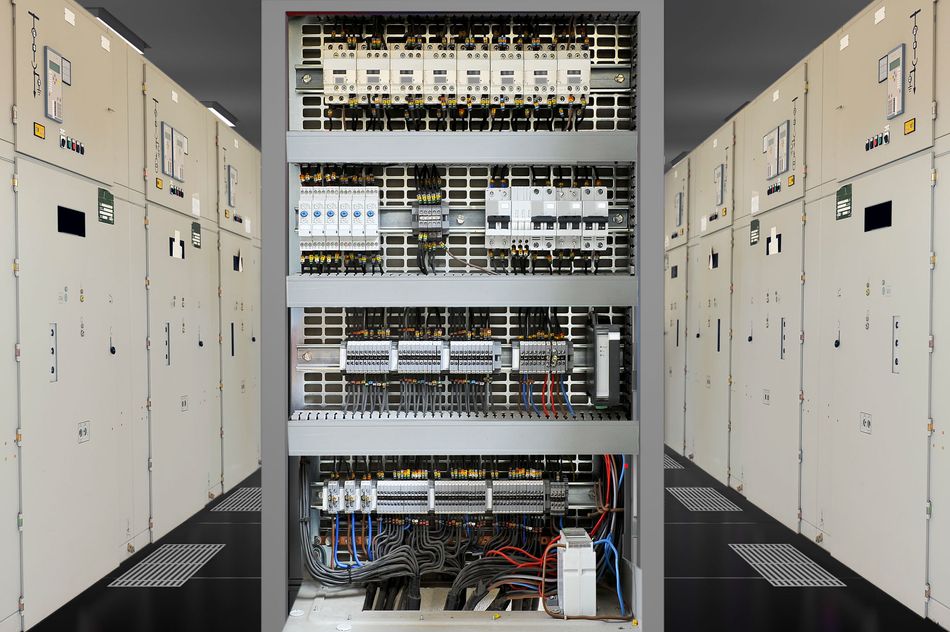
Clause 1.3 describes what a panel actually is for the purposes of the standard: assemblies of power and control circuit components mounted on enclosures or sub-panels, with the associated wiring. [3] That covers the familiar contents of an industrial control panel, including motor controllers, circuit breakers, terminal blocks, power supplies, a PLC, pushbuttons and other control devices.
Because it is a construction standard, much of its bulk is spent on wiring methods and physical detail rather than on function. The third edition alone added or revised requirements covering wiring ferrules, cable assemblies, and fittings for power and control circuits; the conditions under which 16 AWG or 18 AWG power circuit conductors may be used in industrial machinery panels; and how an internal bonding conductor to an enclosure door is sized. [2]
The 1000 V ceiling is itself recent. The third edition raised the maximum supply voltage in scope from the previous limit to 1000 V AC or DC. [2] NEC Article 409 made the same move, having previously applied only to installations up to 600 volts. [6]
Specific Applications inside the Scope
Clause 1.2 extends the scope well beyond generic factory panels. It covers panels for flame safety supervision, crane and hoist control, marine use, air conditioning and refrigeration, load management, fountain control, irrigation, and the control of industrial machinery. [3]
The third edition also added Part II requirements for three new specific-use panel types: permanently installed electrical equipment for aquatic playgrounds, equipment associated with commercial water park rides and wave pools, and equipment associated with commercial and large residential swimming pools and in-ground spas.
Where the Scope Stops?
Clauses 1.4 to 1.6 limit what the evaluation itself covers. Clause 1.4 states that "an industrial control panel does not include an evaluation of the controlled equipment such as motors, heaters, lighting, and other loads connected to power circuits". Clause 1.5 adds that evaluating whether those controls and protective devices are adequate for "supervision and proper functioning of the controlled loads or equipment is not covered by the requirements in this standard". UL 508A listing says the panel is safely built. It does not say the panel correctly controls your process. [3]
Clauses 1.7 through 1.27 are the other kind: equipment that belongs to a different standard entirely.
Clause | Equipment Excluded | Covered Instead By |
1.7 | Fire Pump Controllers | UL 218 |
1.8 | Hazardous Location Equipment | UL 1203 |
1.9 | Intrinsic Safety Barriers for Hazardous Locations | UL 698A |
1.10 | Motor Control Centers | UL 845 |
1.12 | Switchboards | UL 891 |
1.14 | Swimming Pools and Spas | UL 1563 |
1.16 | Fuel Cell and Photovoltaic Systems | UL 1741 |
1.25 | Elevators | ANSI/ASME A17.1 and A17.5 |
1.26 | Panelboards | UL 67 |
1.27 | Ground Fault Protection | UL 943 or UL 1053 |
The full list runs to 27 clauses and also excludes fire-protective signaling (UL 864), emergency lighting (UL 924), portable control panels (UL 1640), termination boxes (UL 1773), gas and vapor detection (UL 2075), access control (UL 294) and energy management equipment (UL 916), among others. [3]
This matters commercially. If you are quoting a motor control center, a fire pump controller, a panelboard or an elevator controller, UL 508A is the wrong standard and a UL 508A mark on it would be meaningless.
Recommended Reading: What Is a Motor Control Center (MCC)? Components, Types and How It Works
UL 508 vs UL 508A: Equipment Versus Assembly
The difference is structural rather than a matter of degree, and the numbering invites the wrong assumption that one is a revision of the other.
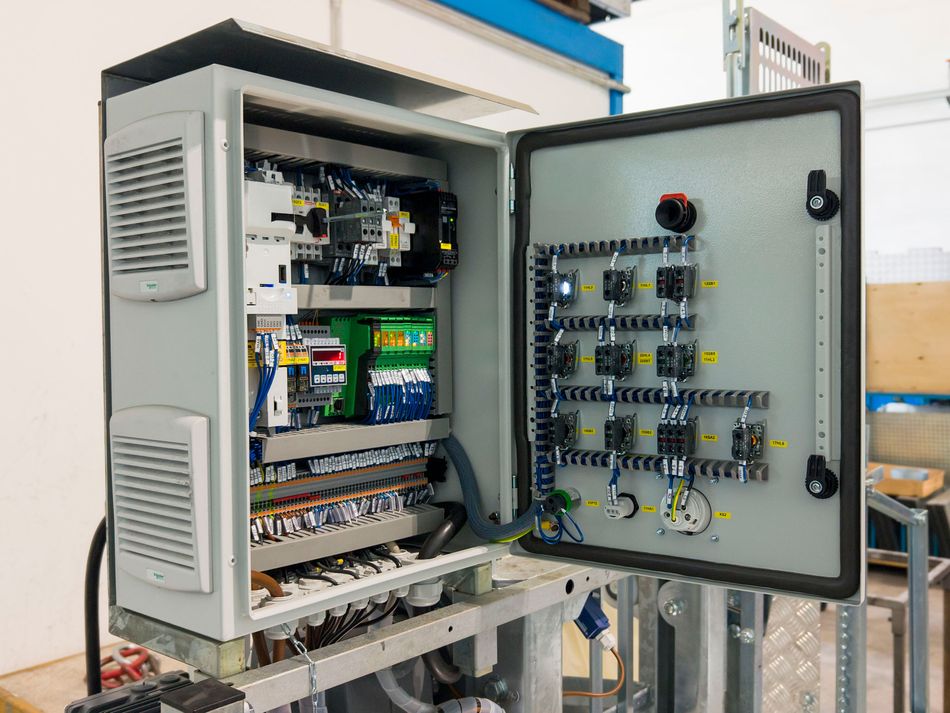
UL 508 is the standard for industrial control equipment: the individual devices. UL 508A is the standard for the assembly those devices are built into. The contactor is evaluated to a component standard. The panel containing it is evaluated to the UL 508A standard.
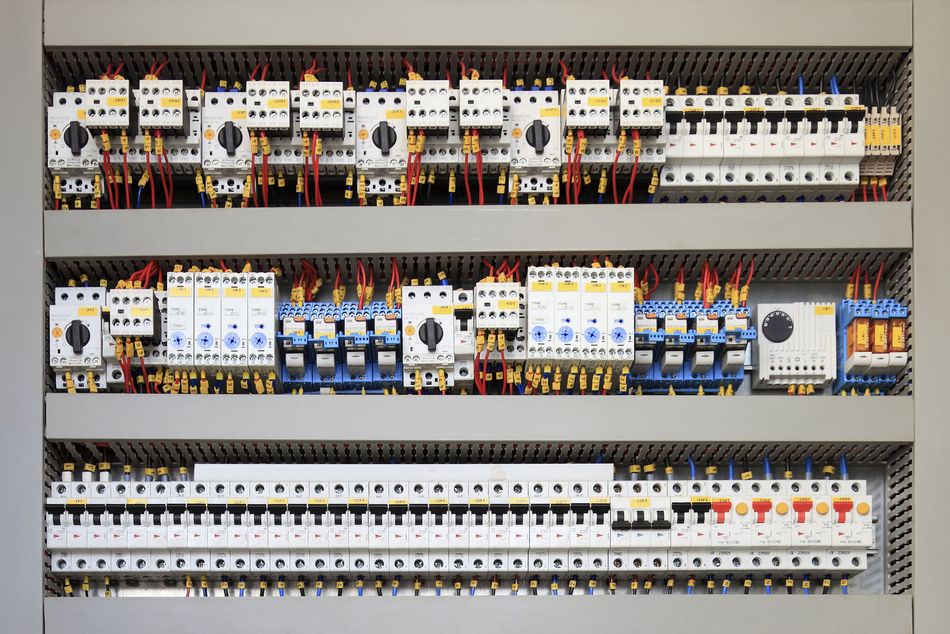
Both sit inside the Underwriters Laboratories system, which is part of why they get conflated. UL Standards & Engagement publishes UL 508A itself, [3] UL Solutions runs the certification and panel shop programs that reference it, [4] and UL Solutions also administers the transition moving UL 508 equipment categories to UL 60947. [7] The scope statements do not overlap.
Aspect | UL 508 | UL 508A |
Object Evaluated | Individual Industrial Control Equipment | Assembled Industrial Control Panel |
Typical Subject | Contactors, Motor Controllers, Overload Relays, Control Switches | Enclosure, Its Internal Wiring, Spacings, Markings and Ratings |
Who Holds It | The Component Manufacturer | The Panel Shop Building the Assembly |
Current Direction | Being Replaced by the UL 60947 Series for Several Equipment Categories | Active, Third Edition with a June 2025 revision |
The UL 60947 Transition
UL 60947 replaces current requirements in UL 508 for several types of industrial control equipment. The transition is category by category rather than a single cutover.
The affected certification categories include magnetic motor controllers (NLDX), manual motor controllers (NLRV), combination motor controllers (NKJH), overload relays (NKCR), industrial control switches (NRNT), programmable logic controllers (NRAQ) and power conversion equipment (NMMS). The transition table gives paired dates, the second of which marks when UL 508 or UL 508C "is no longer an option for new and alternate construction product investigations". For UL 60947-4-1, those dates are 26 January 2012 and 26 January 2017, and for UL 61800-5-1 they are 1 February 2016 and 1 February 2020. [7]
The practical consequence for panel builders arrived in 2025: UL 60947-4-1 now joins UL 508 as an acceptable standard for motor controllers used in a UL 508A panel. [5] If you are selecting a contactor today, a UL 60947-4-1 certification is not a problem to be worked around.
The Adjacent Standards
UL 508A sits in a small family, and picking the wrong member is a common and expensive error.
Standard | Covers | When You Need It? |
UL 508A | Industrial Control Panels, General Industrial use, 1000 V or Less | The Default for a Factory Control Panel |
UL 698A | Industrial Control Panels in Unclassified Locations with Intrinsically Safe Circuit Extensions into Hazardous Locations | When Intrinsically Safe Circuits Leave the Panel for a Classified Area |
UL 845 | Motor Control Centers | Excluded from UL 508A by Clause 1.4 Onward |
UL 218 | Fire Pump Controllers | Excluded from UL 508A |
UL 698A is the one most often needed and least often understood. Its scope covers panels "intended for general industrial installation and use in unclassified locations with intrinsically safe circuit extensions" into Class I Division 1, Class I Zone 0 and Zone 1 AEx, Class II Division 1, Class III Division 1, and Zone 20 and Zone 21 AEx locations. The panel itself sits in a safe area; the intrinsically safe circuits run out into the hazardous area. UL 698A is currently in its fourth edition, published 21 August 2018 with a revision dated 4 November 2022, and it references UL 508A as a related standard. [9]
Component Selection and Supplement SA
The UL 508A panel is built from certified components, and the standard does not leave the choice open. Supplement SA is the document "intended to be used to determine the requirements for components when used in industrial control panels". [8]
Supplement SA has moved twice, which is why references to it conflict. It was Supplement SA in the second edition, became Appendix C with Table C.1.1 in the third edition, and was then removed from the standard on 3 July 2018 and relocated to a UL web page. [2][8] If a design guide points you to Appendix C, it is describing the 2018 publication rather than the current arrangement.
The third edition added or revised component guidance across many categories, including surge protective devices in categories VZCA and VZCA2, reactors, resistors, connectors recognized under ECBT2, and circuit breakers that provide both branch circuit and motor overload protection. [2]
Short Circuit Current Rating: Supplement SB
SCCR is the part of UL 508A with the widest reach, because the National Electrical Code depends on it. If you get it wrong, the panel cannot legally be installed where it was intended to go, however well built it is.
Why the Rating Exists?
NEC Article 409 requires panels to be marked with a short circuit current rating, and in an informational note it references UL 508A Supplement SB4 as an approved method of calculating that rating. Article 409 also states that an industrial control panel containing only control circuit components does not need an SCCR. [6]
The reason the assembly rating exists at all is instructive. Once the requirement was introduced, control panels were frequently misapplied because they had inadequate short-circuit current ratings, and markings that showed only the main overcurrent protective device's interrupting rating were misleading, because they did not represent the capability of the whole assembly. The intent was that the marked rating reflect what "the entire assembly can withstand". [10]
The underlying code obligation is NEC 110.10: the short circuit current rating for equipment must be equal to or greater than the available short circuit current at the point of installation. [10] UL 508A defines SCCR itself as "the fault current at a nominal voltage to which an apparatus or system is able to be connected without sustaining damage exceeding the defined acceptance criteria". [6]
The Four Circuit Types
Supplement SB reasons about four distinct circuits, and misclassifying one is a common source of error. [6]
Feeder Circuit: Supplies power to the supply side of the branch circuit overcurrent device. Typically the incoming cables, disconnect switch and power distribution block.
Branch Circuit: Runs from the branch overcurrent protective device to the load.
Control Circuit: Performs the on/off and other control functions.
Power Circuit: Every circuit minus the control circuits.
Useful Exception: The secondary circuits operating at 24 V DC maximum, supplied from a source with a maximum output power of 100 VA, are treated as control circuits when applying Supplement SB. [2] That keeps a large amount of low-power instrumentation out of the SCCR calculation entirely.
The Four-Step Procedure
UL 508A Supplement SB sets out four basic steps to determine the SCCR rating of a panel:
Examine the individual power circuit components in each branch circuit, per SB4.2.
Identify any current-limiting components that may modify the SCCR, per SB4.3.
Determine the overall SCCR of the panel, per SB4.4.
Add the SCCR marking to the panel, per SB5.1.
For step 1, SB4.2.2 allows one of three values for each component: the manufacturer's tested rating from the label, packaging or instruction sheet; the default value from Table SB4.1; or product test data supplied by the manufacturer. Table SB4.1 gives standard default ratings for devices that are not marked, and this route is described as "very conservative in nature". Some components are exempt from needing an SCCR at all, including voltmeters, EMI filters and power resistors. [6]
Rating is Not Simply the Weakest Component
This is the part engineers most often get wrong. Because current-limiting devices reduce the let-through energy reaching downstream components, the panel rating can be far higher than its lowest-rated part.
Rockwell Automation illustrates this with an example involving 65 kA of available short-circuit current, a feeder breaker with a peak let-through current of 22 kA, and a motor controller rated at 25 kA SCCR. Three configurations produce different results: [6]
65 kA Feeder Breaker and 65 kA Branch Breaker: With the 25 kA motor controller, the resulting panel rating is 65 kA, determined under SB4.3.2(a).
100 kA Feeder Breaker and 65 kA Branch Breaker: With the same controller, the resulting panel rating remains 65 kA, determined under SB4.3.2(b).
100 kA Feeder Breaker and 35 kA Branch Breaker: With the same controller, the resulting panel rating falls to 35 kA, determined under SB4.3.2(b).
In none of the three cases does the 25 kA motor controller set the panel rating. The branch circuit breaker does. Even though the feeder circuit breaker in the second case is 100 kA, the panel is only 65 kA because of the rating of the branch circuit breaker. [6]
The assessment requires two comparisons: the downstream component SCCRs against the peak let-through current of the feeder breaker, and the interrupting ratings of protective devices against the applicable short-circuit current. The relationship between the feeder and branch breaker ratings determines which subparagraph applies. Follow the comparisons in Supplement SB rather than simply selecting the smallest rating on the bill of materials.
This makes branch-circuit protection selection an SCCR decision, not just an overcurrent-protection decision. UL 508A defines a combination motor controller as including a disconnecting means, branch-circuit protection, a motor-control device such as a contactor, and an overload device. Evaluating the combination accounts for how these devices work together.
Fuses work the same way. SB4.3.3 applies where branch circuits are protected by Class CC, G, J, L, RK1, RK5 or T fuses in the feeder circuit, with Table SB4.2 giving peak let-through current by fuse class and ampere rating. [6]
Transformers in the Feeder
For a power transformer with an isolated secondary winding, SB4.3.1 gives two routes. [6] Where impedance is marked or known, the secondary short circuit current follows from the full load current and the impedance. For a three-phase transformer the full load current is the kVA rating multiplied by 1000 and divided by the line-to-line secondary voltage times the square root of three, and the short circuit current is that full load current divided by the impedance.
Once the impedance is unknown, a default of 2.1% may be used. In instances, where impedance is unmarked or known to be 2.1% or higher, Tables SB4.3 and SB4.4 give the secondary values directly. Table SB4.4, the three-phase transformer secondary table, was corrected in the third edition to lower values than previous versions. [2][6]
Marking the Panel
Under SB5.1, the nameplate of every industrial control panel must show the SCCR and the maximum voltage. Where a panel requires a field-installed branch circuit protective device, SB5.1.2 requires the nameplate to state the size and type required. Where a panel is marked with a high-fault SCCR and has no feeder circuit protection, SB5.1.3 requires the marking to include the type and size of any required field-installed feeder circuit protection. [6]
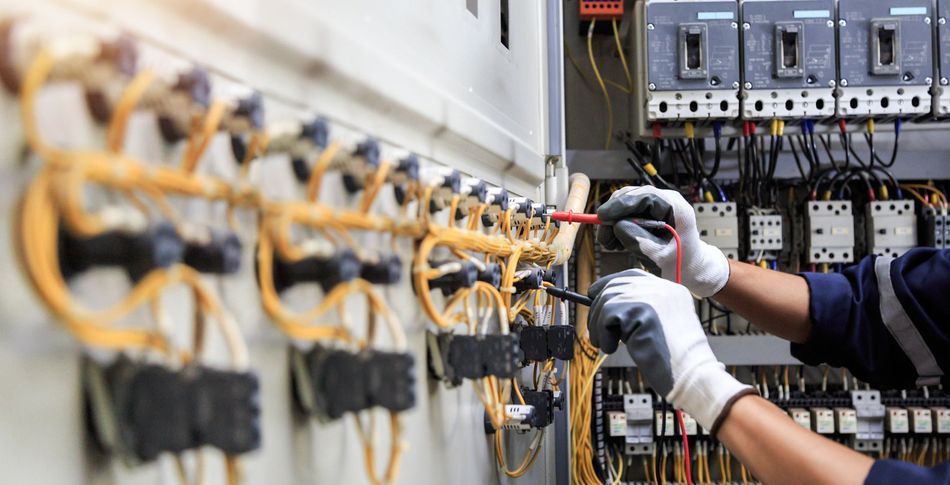
On the installation side, NEC 409.22 requires documenting the available fault current feeding the panel and the date of that calculation, and it references 409.110(4), which requires the SCCR to appear on the panel label. The panel must be able to handle the available fault current at the point of installation. [6]
The related third-edition change: where two or more disconnects are provided, each disconnecting means must be legibly marked to indicate the equipment it disconnects. [2]
Recommended Reading: Engineering for Transient Resilience
Getting Listed: The Panel Shop Program
UL 508A panel is not certified design by design. The panel shop is what gets certified, which is the single most important thing to understand about UL 508A certification if you are an OEM deciding whether to build panels in-house or buy them.
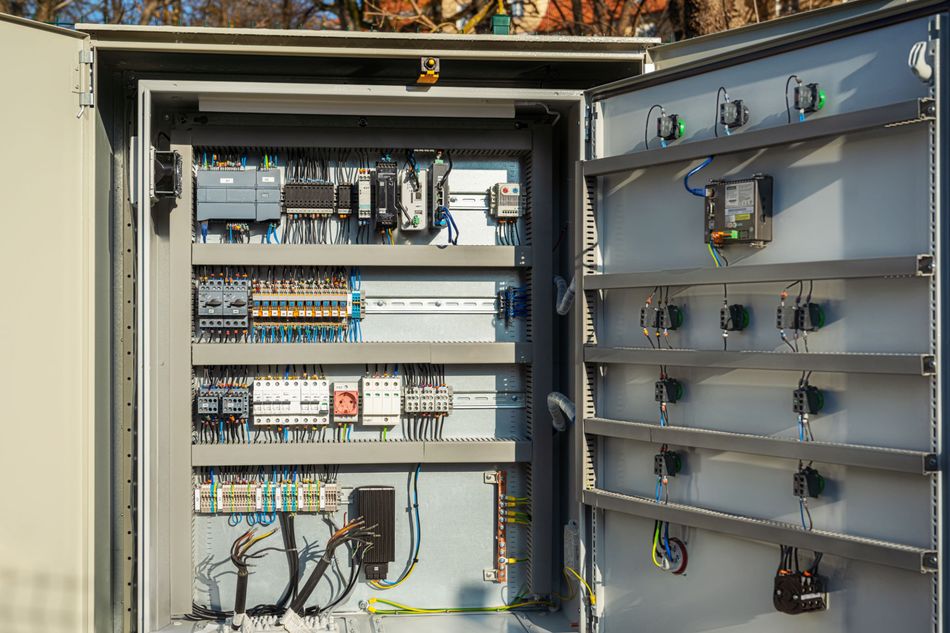
UL Solutions describes the arrangement directly: "The Panel Shop Program offers unique flexibility for panel manufacturers. They may label either mass-produced or custom-built ICPs without needing UL Solutions to examine each design." The 2020 subscriber bulletin puts the same point in program terms: the ICP shop program "allows manufacturers who custom build or mass-produce ICPs to apply the UL Marks for the U.S. and Canada at their factories".
Panels may be open-type, intended for installation inside an enclosure, or enclosed with an environmental rating such as 3R, 4 or 12. The program covers both the United States and Canada, with panels expected to conform to the National Electrical Code and the Canadian Electrical Code. [4]
The Manufacturer Technical Representative Requirement
Because no one from UL examines each design, the competence has to live inside the shop. Every UL Listed industrial control panel shop must maintain at least one qualified Manufacturer Technical Representative (MTR) on staff at each physical manufacturing location.
Manufacturers entering the program complete mandatory training, and authorization to apply the UL mark follows that training, but there were previously no further training requirements, so staff trained at entry often left and took the expertise with them.
The MTR certification belongs to the individual and follows them if they change employers, which is why UL encourages each location to qualify more than one. The manufacturers building only enclosures were exempted from the MTR requirement.
The MTR becomes the primary interface for UL field engineers and is actively involved in compliance assessment and in resolving non-compliances for panels intended to bear the mark.
Training
UL Solutions training covers construction of general use industrial control panels to UL 508A third edition, and includes NEC Article 409 and Supplement SB. Topics span power circuit, control circuit, rating and marking requirements, enclosure construction and component usage. Formats include self-paced eLearning in 30- to 60-minute modules, a 12-hour virtual instructor-led course delivered as three 4-hour sessions, a 12-hour in-person course over 1.5 days, and private sessions.
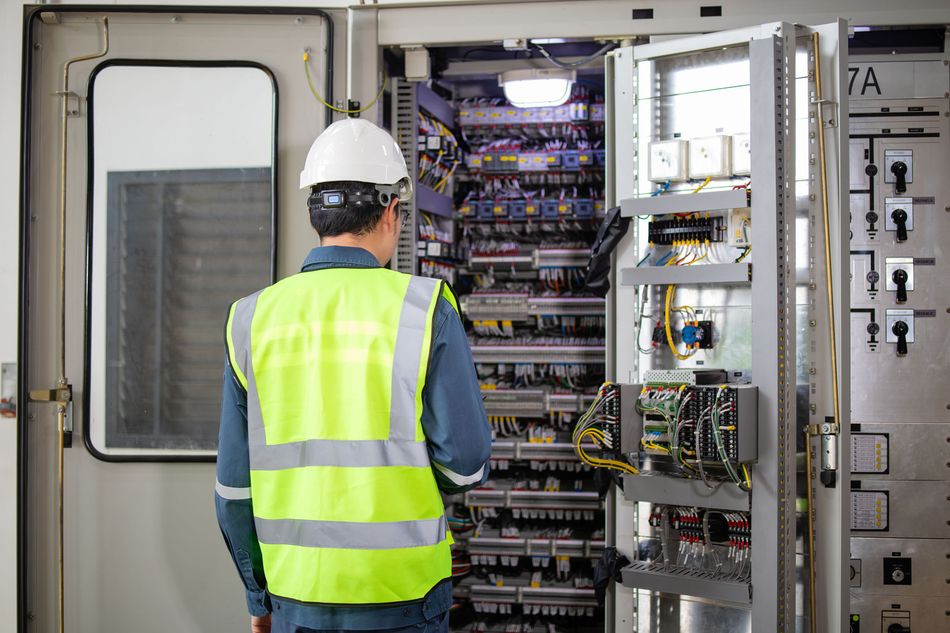
The caution that’s easy to miss: "Completion of these training programs does not grant authorization to use the UL Mark." This implies training is a prerequisite, not the certification itself.
Recommended Reading: Future Trends in Control Panels
What Changed in the June 2025 Revision
The third edition is still the current edition, but treating a 2018 copy as current is now a mistake. UL 508A carries a revision dated 26 June 2025, which is also its ANSI approval date. [3]
ULSE lists the revision as adding requirements covering control circuit voltage limits, emergency stop functions, disconnecting means for industrial machinery, terminal block and motor overload protection updates, voltage detection devices and indicators, optical fiber cables and wiring ferrules, and power supplies in power circuits.
The summary of the same revision gives the specifics: [5]
New voltage limits are defined for AC and DC control circuits, at 120 V AC and 250 V DC.
The emergency stop requirement has been relaxed and is now optional depending on the control scheme.
Class 2 circuits may now be powered by sources certified to UL 508, UL 61010-2-201 or UL 61800-5-1.
UL 60947-4-1 joins UL 508 as an acceptable standard for motor controllers.
One-port surge protective devices now require an SCCR.
The voltage detection devices have clear requirements under Clause 36, and test points may now be connected on the supply side of the disconnect.
UL 1995 is being phased out, with UL 60335-2-40 now accepted for HVAC equipment.
The surge protective device change is most likely to affect an existing bill of materials because a one-port SPD previously did not need an SCCR at all: it cannot apply current to the load, which was the basis for the exemption. [6]
Recommended Reading: Selecting Industrial Power Supplies for Automation
UL 508A and NFPA 79: Panel Versus Machine
If the panel goes on a machine, UL 508A alone may not be enough.
UL 508A does address machinery. Part II contains a section covering the electrical requirements for industrial control panels used for industrial machinery. The third edition revised several of those requirements, including allowing the disconnect interlocking means to prevent restoring power while the door containing the disconnect is open unless a defeat mechanism is operated, where the previous requirement applied to any open enclosure door. It also added exceptions permitting specific equipment and circuits to be connected on the supply side of each disconnecting means. [2]
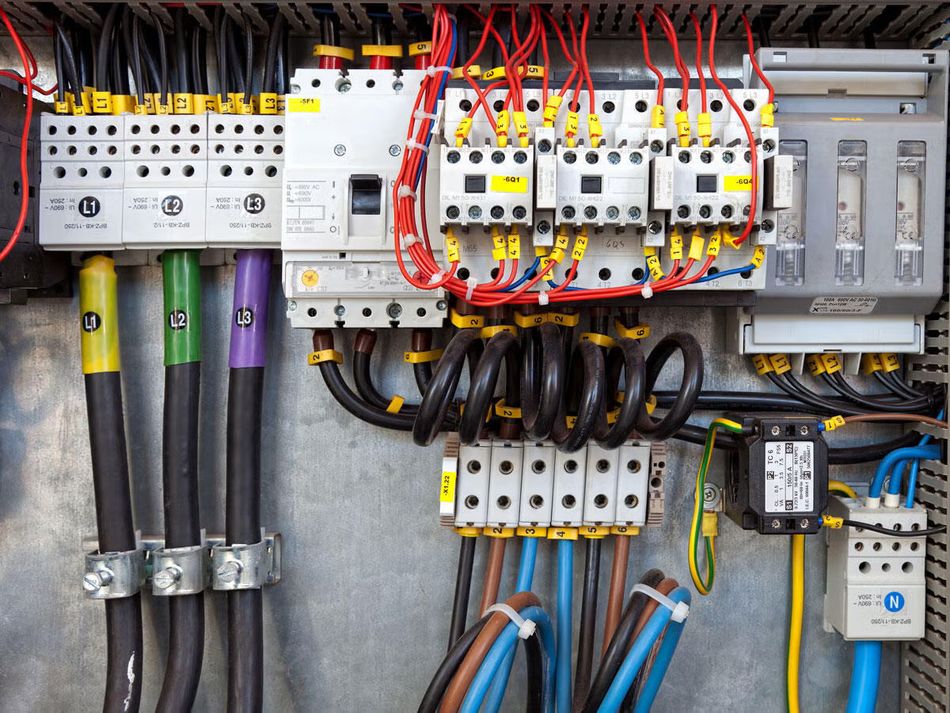
But UL is explicit about the limit: "The requirements in UL 508A may not cover all and the most current requirements for industrial machinery panels, and as such, reference to NFPA 79 may be needed for additional requirements."
UL 508A governs the panel as an assembly, and UL's own guidance sends you to NFPA 79 for the machinery requirements UL 508A does not fully cover. A machine builder generally needs to satisfy both documents rather than treating a listed panel as the end of the matter. Notably, Intertek describes the 2025 control circuit voltage limits as a clause alignment with NFPA 79, so the two are being brought closer together rather than further apart. [5]
For the wider fault-rating discussion, see our companion article on SCCR ratings, which covers SCCR versus interrupting rating and panel labeling in more depth. For machine-level obligations, see our NFPA 79 guide.
Where to Get UL 508A, and What Is Actually Free?
3 of the most common searches on this topic are for a free PDF of the standard. It is worth being direct: UL 508A is a paid standard. ULSE lists it in the $716.00 to $1,567.00 range, depending on format and subscription term.
But several genuinely useful documents are free, and they cover a large part of what most readers are actually looking for:
The UL 508A Third Edition Summary of Requirements: The free UL PDF lists every new and revised paragraph in the third edition, with the clause number, revision date, subject, and effect of the revision. [1][2] For understanding what changed and why, this is more useful than the standard itself.
Supplement SA: The component requirements document, hosted free on UL's site after being removed from the standard in July 2018. [8]
UL's Industrial Control Panel and Panel Shop Program pages: Program mechanics, open-type versus enclosed panels and the MTR requirement. [4]
Be careful with hosted copies of the full standard that turn up in search results. Beyond the licensing question, an uncontrolled copy gives you no way to tell whether it includes the June 2025 revision, and for this standard that difference matters.
Common Mistakes
Treating a 2018 copy as current. The edition date and the revision date are different things. The third edition dates from April 2018; the content was revised in June 2025. [3]
Assuming the panel SCCR equals the lowest component rating. Current-limiting devices change the answer, often substantially.
Using Table SB4.1 defaults everywhere. They are conservative by design, and they will understate a panel that could be rated much higher on manufacturer test data.
Marking only the interrupting rating of the main device. This is the specific failure Article 409 was written to stop. [10]
Expecting training to authorize the mark. It does not.
Letting the sole MTR leave. The qualification follows the individual, not the company.
Applying UL 508A to excluded equipment. The motor control centers, fire pump controllers and hazardous location equipment have their own standards.
Conclusion
UL 508A is best understood as a construction and rating standard for one object, with a well-defined boundary on each side. Below it sit the component standards, increasingly UL 60947 rather than UL 508. Above it sits NFPA 79 for machinery and the NEC for installation. Article 409 is the hinge, because it takes the SCCR that Supplement SB produces and makes it an installation requirement.
For a working panel shop, the practical priorities are narrow: keep a current copy of the standard including the June 2025 revision, keep more than one qualified MTR on staff, and treat the Supplement SB calculation as engineering work rather than paperwork, because it is the part that determines whether the panel can legally be installed where it is going.
Frequently Asked Questions
Q. What does UL 508A mean?
A. UL 508A is the UL Standard for Industrial Control Panels. It covers the construction, rating and marking of industrial control panels for general industrial use at 1000 volts or less.
Q. What is the difference between UL 508 and UL 508A?
A. UL 508 covers industrial control equipment, meaning the individual components such as motor controllers and control switches. UL 508A covers the assembled panel those components are built into. UL 60947 is progressively replacing UL 508 across several equipment categories.
Q. Is there a free PDF of UL 508A?
A. The full standard is a paid document, listed by ULSE at $716.00 to $1,567.00 depending on format and term. UL does publish a free Summary of Requirements PDF covering every new and revised paragraph in the third edition, and hosts Supplement SA for free on its website.
Q. What is the UL 508A MTR exam like?
A. It is an online, open-book examination of true/false and multiple-choice questions, completed in one sitting within four hours, with a passing score of 80% or higher. Two attempts are allowed, and qualification lasts three years.
Q. Does a UL 508A panel need an SCCR?
A. Yes, unless it contains only control circuit components, which Article 409 exempts. The rating is calculated by an approved method, and Article 409 references UL 508A Supplement SB4 as one.
Q. What is Supplement SB?
A. Supplement SB is the part of UL 508A that sets out how to determine and mark the short-circuit current rating in a panel, in four steps covering component ratings, current-limiting effects, the overall panel rating and the nameplate marking.
Q. What is the difference between UL 508A and UL 698A?
A. UL 698A covers industrial control panels installed in unclassified locations that have intrinsically safe circuit extensions running into hazardous classified locations, including Class I Division 1 and Class II Division 1. UL 508A does not cover hazardous location equipment, which it excludes in favor of standards such as UL 1203.
References
[1] UL Solutions. UL 508A Third Edition Summary of Requirements [Cited 2026 October 20] Available at: Link
[2] UL Solutions. "Summary of Requirements", UL 508A third edition, 17 August 2018 Rev1 (PDF) [Cited 2026 October 20] Available at: Link
[3] UL Standards & Engagement. "UL 508A, Standard for Industrial Control Panels", Edition 3, revised 26 June 2025 [Cited 2026 October 20] Available at: Link
[4] UL Solutions. Industrial Control Panels and the Panel Shop Program [Cited 2026 October 20] Available at: Link
[5] Intertek. What the 2025 UL 508A Revisions Mean for Industrial Control Panels [Cited 2026 October 20] Available at: Link
[6] Rockwell Automation. Short-Circuit Current Ratings and Your Industrial Control Panel [Cited 2026 October 20] Available at: Link
[7] UL Solutions. Industrial Control Equipment Transition to IEC Standards [Cited 2026 October 20] Available at: Link
[8] UL Solutions. UL 508A Supplement SA [Cited 2026 October 20] Available at: Link
[9] UL Standards & Engagement. UL 698A, Standard for Industrial Control Panels Relating to Hazardous (Classified) Locations [Cited 2026 October 20] Available at: Link
[10] IAEI Magazine. New Short-Circuit Current Rating Requirements Facilitate Compliance with 110.10 [Cited 2026 October 20] Available at: Link
in this article
1. Key Takeaways2. Introduction3. What UL 508A Covers?4. UL 508 vs UL 508A: Equipment Versus Assembly5. The Adjacent Standards6. Component Selection and Supplement SA7. Short Circuit Current Rating: Supplement SB8. Getting Listed: The Panel Shop Program9. What Changed in the June 2025 Revision10. UL 508A and NFPA 79: Panel Versus Machine11. Where to Get UL 508A, and What Is Actually Free?12. Common Mistakes13. Conclusion14. Frequently Asked Questions15. References