Featured

#6 of our 'Voice of Innovation' fireside chat series: Robotics and AI reporter Rachel Gordon speaks to IoT networking savant Wienke Giezeman.
#6 of our 'Voice of Innovation' fireside chat series: Robotics and AI reporter Rachel Gordon speaks to IoT networking savant Wienke Giezeman.
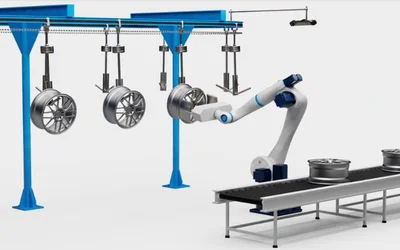
MotionCam-3D by Photoneo enables 3D scanning & handling of objects that are moving on an overhead conveyor without interruption. The camera provides high-quality 3D data even while the objects are moving, swinging, or slightly rotating.
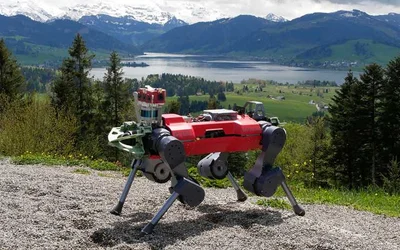
ETH researchers led by Marco Hutter developed a new control approach that enables a legged robot, called ANYmal, to move quickly and robustly over difficult terrain. Thanks to machine learning, the robot can combine its visual perception of the environment with its sense of touch for the first time.
This comprehensive article dives deep into the world of robotics, exploring the history, types, engineering components, applications, and future trends of robots, offering readers an in-depth understanding of how these remarkable machines work and shape our lives.
16 minutes read.
21 minutes read.
16 minutes read.
23 minutes read.
19 minutes read.
27 minutes read.


University
At the Harvard John A. Paulson School of Engineering and Applied Sciences (...
42 Posts

Robotics & Automation
READY Robotics is a robotics software company that vastly simplifies robot ...
24 Posts

Automation Machinery Manufacturing
We are a company in flying robotics, specializing in Non-destructive inspec...
23 Posts
Everyone, guess how fast is it?
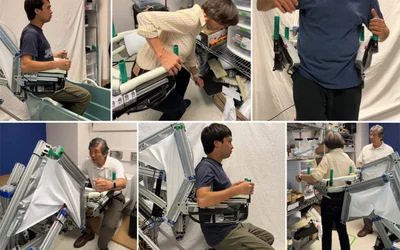
The new design could assist the elderly as they age in place at home.
The hospitality industry can leverage the gender characteristics of service robots to influence customers' decisions, according to new research from a team in the Penn State School of Hospitality Management.
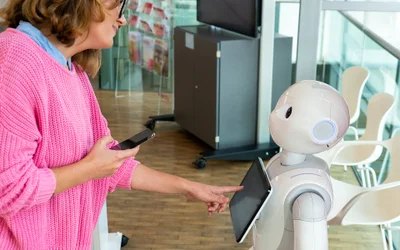
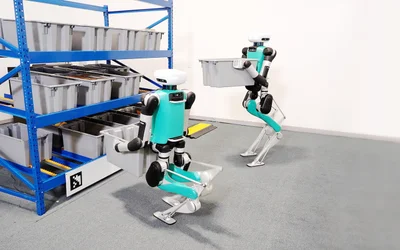
Service robots have evolved from simple automated machines to intelligent adaptive systems that can navigate unpredictable environments and interact with humans.
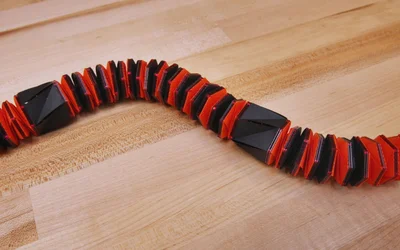
Engineers at Princeton and North Carolina State University have combined ancient paper folding and modern materials science to create a soft robot that bends and twists through mazes with ease.
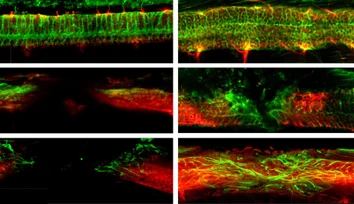
A research team from ETH Zurich and the University of Zurich (UZH) has developed a novel approach to treating spinal cord injuries: controllable microrobots deliver stem cells directly to the site of an injury, where they promote nerve cell regeneration.
Cornell engineers have developed a robotic collective that behaves less like a machine and more like a material that flows, reshapes and adapts to its environment without centralized control.
From hospital wards to crop fields, from microscopic swarms to biohybrid machines powered by fungi, robotics research at Cornell spans an astonishing range of scale, application and ambition.
#6 of our 'Voice of Innovation' fireside chat series: Robotics and AI reporter Rachel Gordon speaks to IoT networking savant Wienke Giezeman.
MotionCam-3D by Photoneo enables 3D scanning & handling of objects that are moving on an overhead conveyor without interruption. The camera provides high-quality 3D data even while the objects are moving, swinging, or slightly rotating.

ETH researchers led by Marco Hutter developed a new control approach that enables a legged robot, called ANYmal, to move quickly and robustly over difficult terrain. Thanks to machine learning, the robot can combine its visual perception of the environment with its sense of touch for the first time.

3 minutes read
In this episode, we talk about an initiative from EPFL to allow those with spinal cord injuries to control robots for help with day-to-day tasks and MIT’s bug robots that are taking big strides for small scaled bio-robotics.

This handbook introduces the concept of bin-picking, and explores its complexity through real-case studies.

2 minutes read
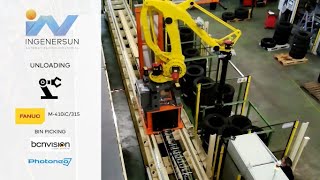
INGENERSUN, S.L. developed an advanced solution for automated unloading of tires, which was performed manually before. The solution consists of a FANUC robot, 3D vision and bin picking system from Photoneo, software from Bcnvision, and other components.
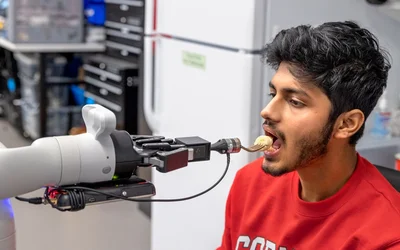
Tapomayukh Bhattacharjee has been working on assistive robotics for approximately a decade, and in speaking to the people who would benefit from new technologies, he’s come to a few realizations.

3 minutes read
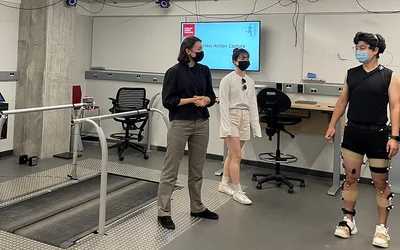
Wearable sensors plus computer vision could reduce the likelihood of degenerative joint disease.

3 minutes read
In this episode, we reflect on some of our favorite topics from 2021 and discuss the goals for the podcast in 2022.
Removing litter from oceans and seas is a costly and time-consuming process. As part of a European cooperative project, a team at the Technical University of Munich (TUM) is developing a robotic system that uses machine learning methods to locate and collect waste under water.
At READY we want to engage the landscape of developers outside the robotics industry to be programmers in the robotics industry.

4 minutes read
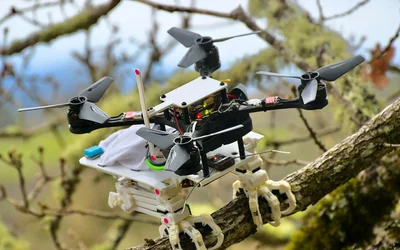
In this episode, we talk about how starfish larvae inspired robots can revolutionize drug delivery and drones with flacon-like legs for landing.
Robots will continue to get smarter, but sometimes they will need to learn from the expert…us
6 minutes read
In this episode, we talk about a breakthrough in biorobotics with self-reproducing xenobots and a leap in stable tissue engineering designs.
This unique project delivered by Photoneo to Dedoles required the development of a unique, specially designed automation solution for the sorting of parcels prepared for shipment and their placement into different containers based on the delivery company.
2 minutes read