Featured
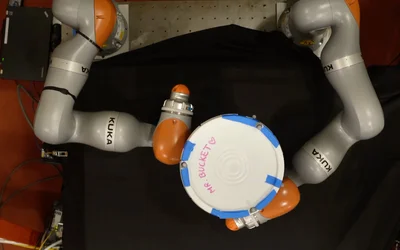
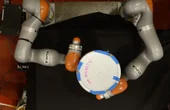
With a new technique, a robot can reason efficiently about moving objects using more than just its fingertips.
With a new technique, a robot can reason efficiently about moving objects using more than just its fingertips.
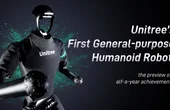
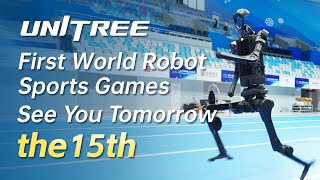
Unitree launched its first humanoid robot H1 on August 15. Showcasing six months of hard work, the H1 humanoid stands about 71 inches (1800mm) tall, but only weighs about 100 lbs (47kg) and boasts unmatched power.
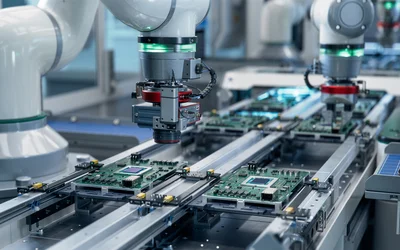
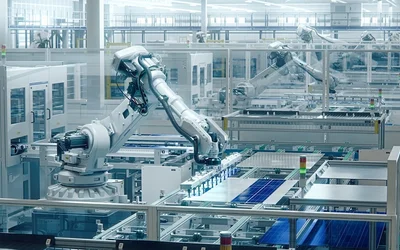
In the past two decades, the impetus of Industry 4.0 has pushed developments ahead at a much faster pace. This doesn’t mean that it’s all plain sailing from here on in – and many challenges in industrial robotics still remain.
This comprehensive article dives deep into the world of robotics, exploring the history, types, engineering components, applications, and future trends of robots, offering readers an in-depth understanding of how these remarkable machines work and shape our lives.
16 minutes read.
21 minutes read.
16 minutes read.
23 minutes read.
19 minutes read.
27 minutes read.


University
At the Harvard John A. Paulson School of Engineering and Applied Sciences (...
42 Posts

Robotics & Automation
READY Robotics is a robotics software company that vastly simplifies robot ...
24 Posts

Automation Machinery Manufacturing
We are a company in flying robotics, specializing in Non-destructive inspec...
23 Posts
Everyone, guess how fast is it?
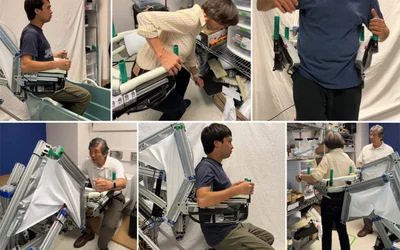
The new design could assist the elderly as they age in place at home.
The hospitality industry can leverage the gender characteristics of service robots to influence customers' decisions, according to new research from a team in the Penn State School of Hospitality Management.
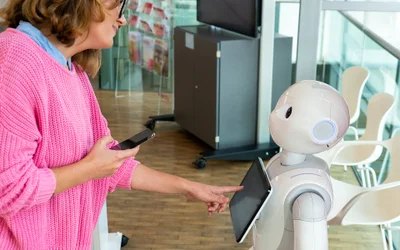
Service robots have evolved from simple automated machines to intelligent adaptive systems that can navigate unpredictable environments and interact with humans.
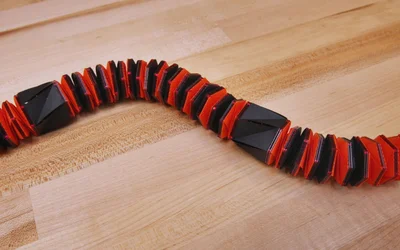
Engineers at Princeton and North Carolina State University have combined ancient paper folding and modern materials science to create a soft robot that bends and twists through mazes with ease.
A research team from ETH Zurich and the University of Zurich (UZH) has developed a novel approach to treating spinal cord injuries: controllable microrobots deliver stem cells directly to the site of an injury, where they promote nerve cell regeneration.
Cornell engineers have developed a robotic collective that behaves less like a machine and more like a material that flows, reshapes and adapts to its environment without centralized control.
From hospital wards to crop fields, from microscopic swarms to biohybrid machines powered by fungi, robotics research at Cornell spans an astonishing range of scale, application and ambition.
With a new technique, a robot can reason efficiently about moving objects using more than just its fingertips.
Unitree launched its first humanoid robot H1 on August 15. Showcasing six months of hard work, the H1 humanoid stands about 71 inches (1800mm) tall, but only weighs about 100 lbs (47kg) and boasts unmatched power.

2 minutes read
In the past two decades, the impetus of Industry 4.0 has pushed developments ahead at a much faster pace. This doesn’t mean that it’s all plain sailing from here on in – and many challenges in industrial robotics still remain.
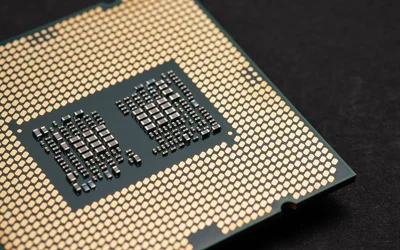
In the ever-evolving world of processor architectures, the showdown between RISC-V and ARM sparks fervent competition. With their distinct histories, these two giants are redefining computing power and igniting discussions on openness, customization, and innovation in microprocessors.
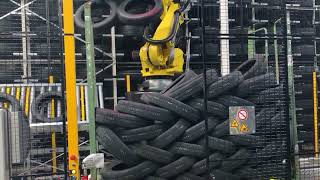
TireDepal by AROTEC allows robots to fully automatically depalletize all common tire carriers with unprecedented performance and flexibility. The solution harnesses the power of Photoneo 3D vision, which can cover a large scanning area and provide high-quality 3D data even for challenging materials such as black tires.

3 minutes read
The Rotary Arm has the ability to attach to different surfaces shapes, vertical, horizontal, angular, and even curved surfaces.

2 minutes read
Exploring the working principles, applications, and benefits of ToF sensors in robotics.
Mobile robots are becoming increasingly common in manufacturing facilities, as they replace human beings in repetitive transfer tasks. Most of them can be found in warehouses, but they’re also finding a place in assembly and manufacturing plants. This is mainly due to continuing developments in sensor technology, and computer intelligence. Their safety and flexibility have also improved.
In this article, we'll see how PLC and SCADA systems differ, how they work together, and which protocols, scan times and security controls matter in industrial automation.
Article 2 of Bringing Intelligence to the Edge Series: Advancements in AI and embedded vision technologies are revolutionizing various industries, enabling real-time decision-making, enhancing security, and facilitating automation in various applications.
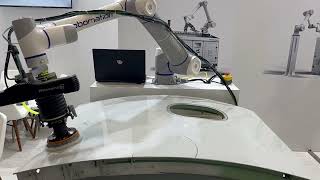
Robomation Robot Technologies Inc. developed a solution for automated polishing / sandblasting of objects, using Photoneo 3D camera MotionCam-3D attached to the robotic arm. MotionCam-3D has been chosen for this application because it provides a number of unique benefits, including the ability to scan the object's surface in motion with utmost precision and efficiency.
Single-board computers are an increasingly attractive option to shift electricity grid management towards more advanced and less resource consuming smart grids.
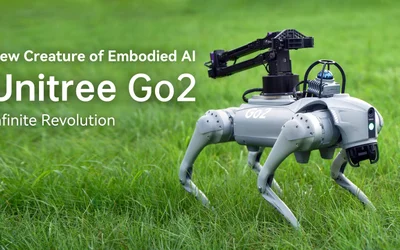
On 12 July, Unitree unveiled its latest quadruped robot - the Unitree Go2, which features embodied AI technology, standard 4D ultra-wide LiDAR and GPT empowerment. This product is expected to revolutionize the consumer-grade quadruped robots industry, leading to a transformation of the sector.
3 minutes read
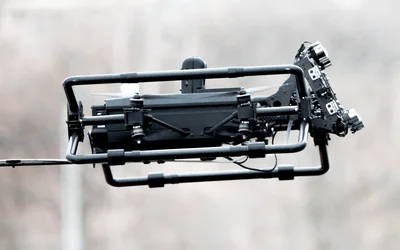
Discover How SKYRON Transforms NDT Practices for Safety and Efficiency Boost
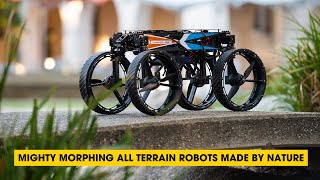
In this episode, we discuss the fascinating world of bioinspired robotics. Discover how researchers have created versatile robots inspired by nature's flight, rolling, and walking abilities.

17 minutes read