Featuredpodcast

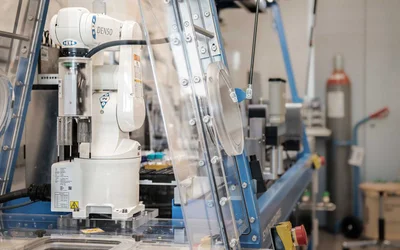
In this episode, we discuss how Dyson - the company best known for their vacuum cleaners - has created an automated and sustainable farm to harvest the best possible strawberries with the least amount of environmental impact.
In this episode, we discuss how Dyson - the company best known for their vacuum cleaners - has created an automated and sustainable farm to harvest the best possible strawberries with the least amount of environmental impact.
In the ever-evolving landscape of technology and innovation, businesses are constantly seeking ways to stay ahead of the curve, optimize processes, and drive innovation. One powerful approach gaining widespread recognition is the adoption of open-source technology platforms – and for good reason.
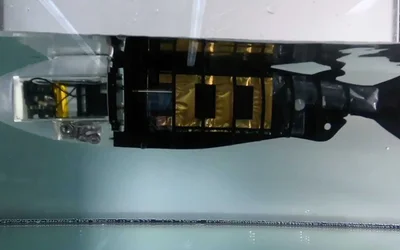
Discover how Deep Trekker ROVs are capable of conducting quality photogrammetry missions to create 3D models with unparalleled accuracy.
This comprehensive article dives deep into the world of robotics, exploring the history, types, engineering components, applications, and future trends of robots, offering readers an in-depth understanding of how these remarkable machines work and shape our lives.
16 minutes read.
21 minutes read.
16 minutes read.
23 minutes read.
19 minutes read.
27 minutes read.


University
At the Harvard John A. Paulson School of Engineering and Applied Sciences (...
42 Posts

Robotics & Automation
READY Robotics is a robotics software company that vastly simplifies robot ...
24 Posts

Automation Machinery Manufacturing
We are a company in flying robotics, specializing in Non-destructive inspec...
23 Posts
Everyone, guess how fast is it?
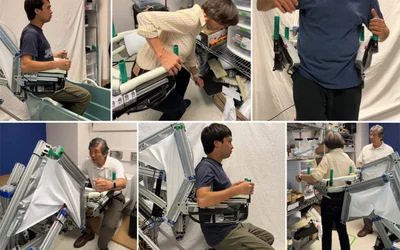
The new design could assist the elderly as they age in place at home.
The hospitality industry can leverage the gender characteristics of service robots to influence customers' decisions, according to new research from a team in the Penn State School of Hospitality Management.
Service robots have evolved from simple automated machines to intelligent adaptive systems that can navigate unpredictable environments and interact with humans.
Engineers at Princeton and North Carolina State University have combined ancient paper folding and modern materials science to create a soft robot that bends and twists through mazes with ease.
A research team from ETH Zurich and the University of Zurich (UZH) has developed a novel approach to treating spinal cord injuries: controllable microrobots deliver stem cells directly to the site of an injury, where they promote nerve cell regeneration.
Cornell engineers have developed a robotic collective that behaves less like a machine and more like a material that flows, reshapes and adapts to its environment without centralized control.
From hospital wards to crop fields, from microscopic swarms to biohybrid machines powered by fungi, robotics research at Cornell spans an astonishing range of scale, application and ambition.
In this episode, we discuss how Dyson - the company best known for their vacuum cleaners - has created an automated and sustainable farm to harvest the best possible strawberries with the least amount of environmental impact.

19 minutes read
In the ever-evolving landscape of technology and innovation, businesses are constantly seeking ways to stay ahead of the curve, optimize processes, and drive innovation. One powerful approach gaining widespread recognition is the adoption of open-source technology platforms – and for good reason.

2 minutes read
Discover how Deep Trekker ROVs are capable of conducting quality photogrammetry missions to create 3D models with unparalleled accuracy.

11 minutes read
Immersal's Visual Positioning System (VPS) revolutionizes robotics and autonomous mobility, enhancing precision and fostering innovations in smart urban development and transportation through its partnership with Unikie.
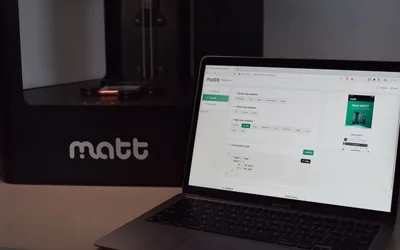
MATT Framework is the core software application that was designed to allow users to calibrate, prototype, develop testing scenarios, and manually operate the MATT robot, making it as easy to interact with as possible.

5 minutes read
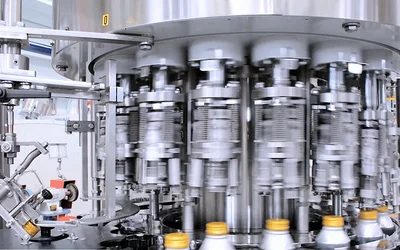
Seeking a way to make their high-speed production equipment even more reliable and productive, AROL recently decided to develop an innovative solution to enable data monitoring and predictive maintenance, upgrading their offering with an Industry 4.0 approach.
2 minutes read
Discover how to find the best footage for your photogrammetry projects to create 3D models with unparalleled accuracy.
8 minutes read
A robot mimics the folded look of rose petals to grasp complex shapes more easily than a traditional hand. A pneumatic clamp makes it easier for people with motor disabilities to safely wield kitchen knives. Prostheses utilize shape memory polymers to better replicate the range of motion of a limb.

3 minutes read
Artificial intelligence and automated laboratory infrastructure are massively accelerating the development of new chemical catalysts. With these tools, researchers at ETH Zurich are developing catalysts for efficiently and cost-effectively synthesising the energy source methanol from CO2.

5 minutes read
Researchers have developed a robotic sensor that incorporates artificial intelligence techniques to read braille at speeds roughly double that of most human readers.

3 minutes read
A glimpse into the latest research advances in robotics grasping, showcasing the ongoing evolution and intricate challenges in this field.
How a Tech Giant is Redefining Farming with Innovation and Sustainability
Researchers at ETH Zurich have recently developed artificial muscles for robot motion. Their solution offers several advantages over previous technologies: it can be used wherever robots need to be soft rather than rigid or where they need more sensitivity when interacting with their environment.
5 minutes read
Bridging Earth and Lunar Exploration with Advanced Research

8 minutes read
SEAS roboticists develop robots for Resilient ExtraTerrestrial Habitats
6 minutes read