Featured
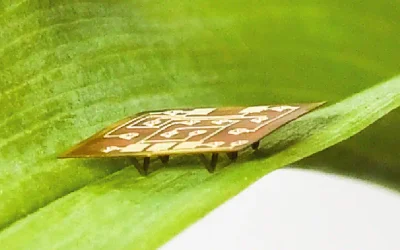
Researchers in the Department of Mechanical Engineering at Carnegie Mellon University have created the first legged robot of its size to run, turn, push loads and climb miniature stairs.
Researchers in the Department of Mechanical Engineering at Carnegie Mellon University have created the first legged robot of its size to run, turn, push loads and climb miniature stairs.
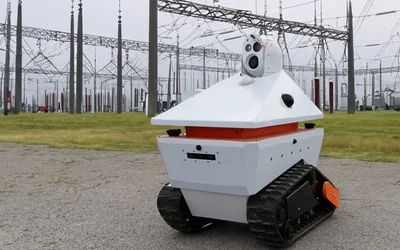
Robust robot built for demanding weather and ground conditions, while capturing virtually any kind of data across a broad range of use-cases.
These zinc-air batteries, smaller than a grain of sand, could help miniscule robots sense and respond to their environment.
This comprehensive article dives deep into the world of robotics, exploring the history, types, engineering components, applications, and future trends of robots, offering readers an in-depth understanding of how these remarkable machines work and shape our lives.
16 minutes read.
21 minutes read.
16 minutes read.
23 minutes read.
19 minutes read.
27 minutes read.


University
At the Harvard John A. Paulson School of Engineering and Applied Sciences (...
42 Posts

Robotics & Automation
READY Robotics is a robotics software company that vastly simplifies robot ...
24 Posts

Automation Machinery Manufacturing
We are a company in flying robotics, specializing in Non-destructive inspec...
23 Posts
Everyone, guess how fast is it?
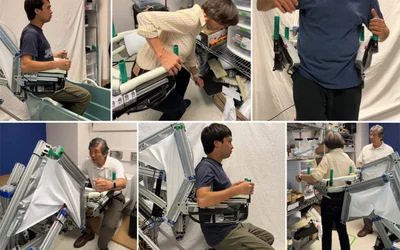
The new design could assist the elderly as they age in place at home.
The hospitality industry can leverage the gender characteristics of service robots to influence customers' decisions, according to new research from a team in the Penn State School of Hospitality Management.
Service robots have evolved from simple automated machines to intelligent adaptive systems that can navigate unpredictable environments and interact with humans.
Engineers at Princeton and North Carolina State University have combined ancient paper folding and modern materials science to create a soft robot that bends and twists through mazes with ease.
A research team from ETH Zurich and the University of Zurich (UZH) has developed a novel approach to treating spinal cord injuries: controllable microrobots deliver stem cells directly to the site of an injury, where they promote nerve cell regeneration.
Cornell engineers have developed a robotic collective that behaves less like a machine and more like a material that flows, reshapes and adapts to its environment without centralized control.
From hospital wards to crop fields, from microscopic swarms to biohybrid machines powered by fungi, robotics research at Cornell spans an astonishing range of scale, application and ambition.
Researchers in the Department of Mechanical Engineering at Carnegie Mellon University have created the first legged robot of its size to run, turn, push loads and climb miniature stairs.

2 minutes read
Robust robot built for demanding weather and ground conditions, while capturing virtually any kind of data across a broad range of use-cases.

8 minutes read
These zinc-air batteries, smaller than a grain of sand, could help miniscule robots sense and respond to their environment.
Commercial divers deliver human touch and problem-solving, while ROVs mitigate safety risks and reduce costs. They are most effective when used collaboratively.

14 minutes read
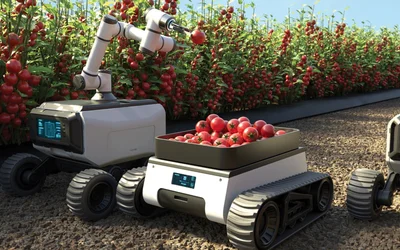
Learn about some of the trends driving the use of technology in agriculture.

9 minutes read
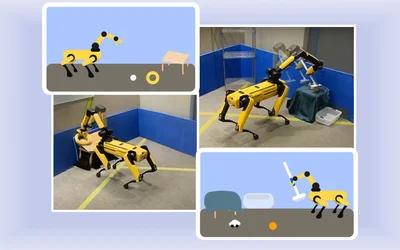
The phrase “practice makes perfect” is usually reserved for humans, but it’s also a great maxim for robots newly deployed in unfamiliar environments.
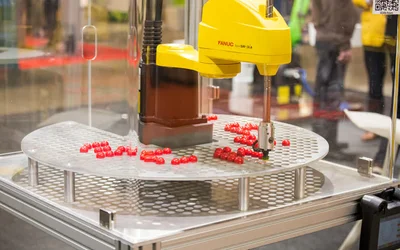
SCARA robots, known for their high speed and precision, are ideal for tasks requiring fast and accurate horizontal movements, such as assembly and packaging
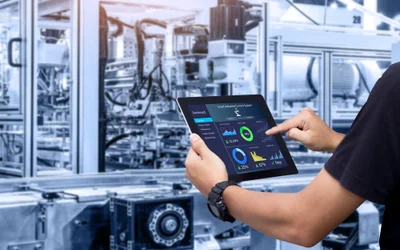
Adding Industry-4.0 capabilities to existing machines allows smart manufacturers to monitor equipment status, notify critical events, and connect to cloud-based dashboards – achieving process optimization with a cost-effective innovation strategy.

3 minutes read
Kelowna Precision Agriculture Project
8 minutes read
The Photoneo Technology and Applications Conference 2024 will bring together bright minds and innovative companies in the field to showcase new possibilities in the field of 3D vision and AI-driven automation.

The moonshot of many roboticists is cooking up the proper hardware and software combination so that a machine can learn “generalist” policies (the rules and strategies that guide robot behavior) that work everywhere, under all conditions.
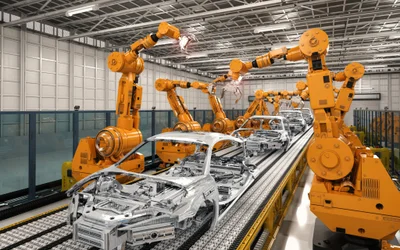
Automotive robots are reshaping production processes, enhancing quality, and redefining the future of the automotive industry. Let’s discover how these mechanical marvels are driving innovation on factory floors worldwide.
Industrial communication networks are crucial to optimize processes and production in interconnected factories – but the convergence of IT and OT brings interoperability and security challenges. In addressing these issues, do open standards and protocols drive or hinder innovation?
3 minutes read
MAIA is a multimodal agent that can iteratively design experiments to better understand various components of AI systems.
The Raspberry Pi is an excellent example of a versatile and cost-effective single-board computer. Originally designed for simple teaching purposes, it soon became apparent that these machines offered a much broader scope.