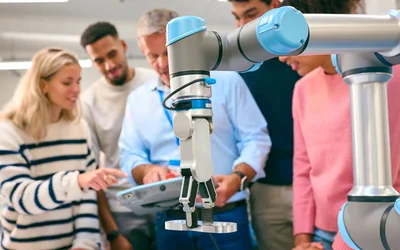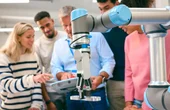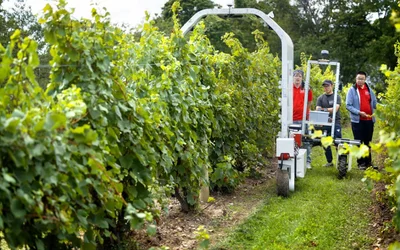
The Vision, Robotics & Motion trade event, held annually in Brabanthallen, 's-Hertogenbosch, Netherlands, successfully concluded its 2024 edition on June 5th and 6th.
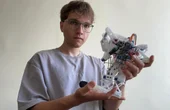
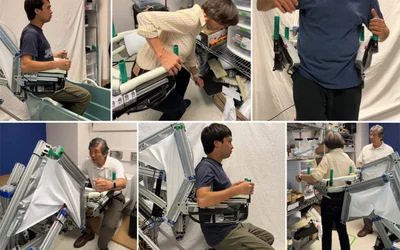
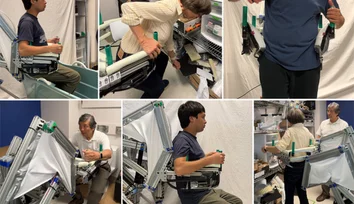
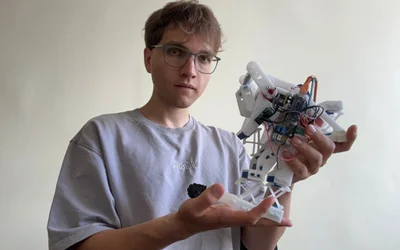
Scientists from ITMO have come up with a three-step algorithm for the development of manipulators and walking or wearable robots. Compared to the usual methods, the new approach results in lighter, more efficient, affordable, and compact mechanisms.


This comprehensive article dives deep into the world of robotics, exploring the history, types, engineering components, applications, and future trends of robots, offering readers an in-depth understanding of how these remarkable machines work and shape our lives.
The hospitality industry can leverage the gender characteristics of service robots to influence customers' decisions, according to new research from a team in the Penn State School of Hospitality Management.
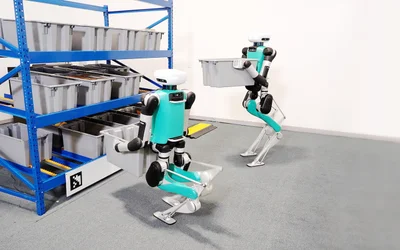
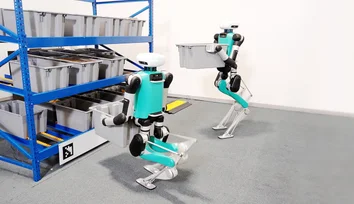
Service robots have evolved from simple automated machines to intelligent adaptive systems that can navigate unpredictable environments and interact with humans.
Engineers at Princeton and North Carolina State University have combined ancient paper folding and modern materials science to create a soft robot that bends and twists through mazes with ease.
A research team from ETH Zurich and the University of Zurich (UZH) has developed a novel approach to treating spinal cord injuries: controllable microrobots deliver stem cells directly to the site of an injury, where they promote nerve cell regeneration.
Cornell engineers have developed a robotic collective that behaves less like a machine and more like a material that flows, reshapes and adapts to its environment without centralized control.
From hospital wards to crop fields, from microscopic swarms to biohybrid machines powered by fungi, robotics research at Cornell spans an astonishing range of scale, application and ambition.
The Vision, Robotics & Motion trade event, held annually in Brabanthallen, 's-Hertogenbosch, Netherlands, successfully concluded its 2024 edition on June 5th and 6th.
Scientists from ITMO have come up with a three-step algorithm for the development of manipulators and walking or wearable robots. Compared to the usual methods, the new approach results in lighter, more efficient, affordable, and compact mechanisms.
Yiannis Kantaros will enable teams of robots to interact collaboratively, perceive and respond to their environment with a CAREER Award from the National Science Foundation
This article serves as a valuable resource for engineers, delving deep into the world of EMS manufacturing and exploring its significant role in bringing electronic products from ideation to realization.
Discover the critical role of in-circuit testing in modern engineering, exploring its foundational principles, technological advancements, and real-world applications.
Discover the ultimate standpipe water tank cleaning solution with ROVs. Redefine efficiency, adaptability, and speed for elevated underwater maintenance projects.
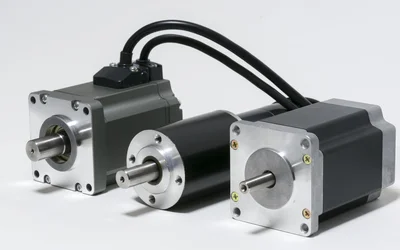
From a component supplier to a strategic partner, Nexperia's collaboration with Synapticon facilitated innovations such as integrated motion devices. These compact units merge control, actuation, and feedback in robot joints, enhancing efficiency and broadening application potential.
Inspired by nature, architecture and swarm intelligence, two Princeton Engineering professors created a wall of robotic “flowers” that visitors interacted with during a recent exhibition.
In this episode, we discuss how MIT researchers are making great strides in developing better robotic hands by focusing on an often overlooked component: the palm.
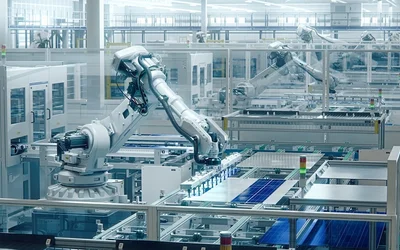
Industrial robots have brought programmable automation to factory floors and areas for storage, sorting, and packing, as businesses seek to increase their productivity and reduce operating overheads.
Explore the fundamentals of Gray Code, its practical uses in digital systems, and the latest advancements driving innovation in technology and data encoding.
The future of data, Edge Data Center, is equivalent to a mini data centre. Its proximity to enterprises eliminates latency and other limitations, giving access to real-time data. In this article, we will delve into its core concepts, advancements, operational challenges, and real-time applications.