What is 3D printer filament made of? This guide examines polymers, additives, and composites, offering practical tips for digital design and hardware engineers.
Discover how to print with high-performance filaments like PEEK, PEKK, and ULTEM. Learn about their properties, hardware needs, challenges, and best practices for industrial-grade 3D printing.

Explore how 3D-Fuel's Pro PCTG filament advances additive manufacturing, offering higher impact strength, improved environmental resistance, and reliable printability for functional and industrial 3D printing applications.
3devo's next-generation desktop extruder combines industrial precision with lab-scale simplicity enabling more controlled, higher-performance and data-driven 3D printing material workflows.
Lightweighting materials play a crucial role in offering the potential for improved fuel efficiency, enhanced performance, and reduced emissions in the automotive industry. It is anticipated that the lighter and more efficient automotive materials and components will revolutionize the industry in the coming years.
In this episode, we talk about how a new handheld 3D printer can revolutionize wound treatment in space and the duct tape inspired gel aiming to eliminate complications caused by gastrointestinal surgery.
3D printing offers unparalleled freedom when it comes to the appearance of the objects you print. It’s possible to change the color, texture, size, and shape of your print, just by changing what material you use.
When it comes to designing cars, saving weight is a top priority. But there is more to it than just swapping steel for aluminum, or tearing out the back seats.
Scientists from SCAMT Institute have devised a way to produce nanoparticles of iron oxides (magnetite, hematite, maghemite) using water-alcohol synthesis, as well as modify their color, size, and functional properties. The synthesized substances are used in production of memristor devices.
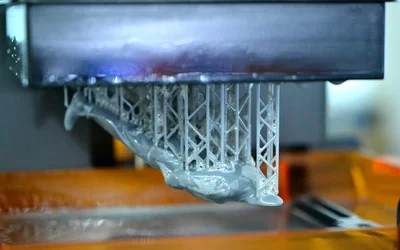
When it comes to desktop 3D printing, buyers have two main options: resin printers that use photopolymerization technology, or filament printers that extrude molten thermoplastic. Both have their strengths and weaknesses.
A Janus-faced biomaterial that firmly adheres to injured tendons and helps them glide, also slowly releases drugs to tendon cells, which could improve repair in patients across multiple injuries
PLA is an affordable and reliable workhorse filament for FDM 3D printing. But some material developers claim to have made PLA filament better by mixing it with additives, creating an enhanced variant of the material called PLA+.

Together with European research partners, the German Aerospace Center (DLR) has developed a process that can generate electricity in a climate-neutral way using sulphur and solar energy. Initial tests with a pilot-scale plant have now been successfully completed.
In this episode, we talk about how the AI used for deep fakes is being leveraged for new material discovery and how AI beat human managers in process management.
In this episode, we talk about a system developed by MIT researchers to optimize new material development and LifeNabled - a non-profit organization - that leverages 3D printing technology and generative design to develop cost-effective, bespoke prosthetics.