TPE vs TPU: A Technical Guide for Digital Design & Hardware Engineers
Thermoplastic elastomers can be found in flexible products from wearables to automotive seals. This guide compares TPE vs TPU in terms of properties and applications.

04 Nov, 2025. 10 minutes read
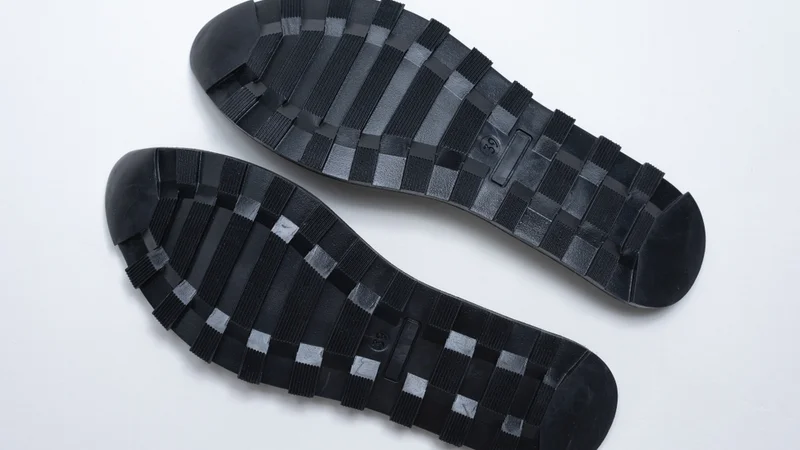
Designers of flexible products—whether wearable electronics, soft-touch interfaces, seals, or shock-absorbing components—must carefully choose the right elastomeric material for their project. Traditional rubber provides excellent elasticity but cannot be melted and re-processed, while thermoplastic polymers are recyclable yet usually rigid, leaving engineers searching for materials that combine the best of both worlds.
Thermoplastic elastomers (TPEs) bridge the gap by combining the elasticity of rubber with the processing advantages of plastics. And within the TPE family, thermoplastic polyurethane (TPU) has emerged as a high-performance subclass, offering exceptional mechanical strength and abrasion resistance.
This guide provides an in-depth comparison of TPE vs TPU for an engineering audience. It begins with the polymer science underpinning both materials, then examines mechanical and environmental properties, manufacturing considerations such as injection molding and additive manufacturing, and common applications in consumer electronics, automotive, robotics, and medical devices. By exploring the technical differences in TPE vs TPU, engineers can make more informed choices for product development.
The Basics of TPE and TPU

If you’ve ever held a phone case, stretched a fitness band, worn cushioned sneakers, or gripped a soft-touch tool handle, you’ve encountered TPE or TPU. These flexible plastics show up in consumer electronics, automotive interiors, medical tubing, footwear, and countless other products. They combine the stretch and comfort of rubber with the reusability and processing advantages of thermoplastics, which is why they’re so widely used in everyday life.
Chemically speaking, thermoplastic elastomers are multi-phase systems that combine a hard crystalline phase with a soft amorphous phase.[1] The hard segments act as physical cross-links that melt at elevated temperatures, enabling melt processing, while the soft segments provide elasticity.
TPEs encompass several families:
Styrenic block copolymers (SBC/TPS) – triblock copolymers with polystyrene end blocks and polybutadiene or polyisoprene mid-blocks. They are inexpensive and soft but have limited high-temperature resistance.
Thermoplastic polyolefin elastomers (TPO) – blends of polypropylene with ethylene-propylene rubber. They offer moderate hardness, low cost, and good chemical resistance, but limited service temperature.
Thermoplastic vulcanizates (TPV) – dynamically cross-linked EPDM rubber dispersed in polypropylene. They provide excellent heat and chemical resistance, making them popular in automotive sealing.
Thermoplastic polyurethanes (TPU) – block copolymers of urethane hard segments with polyether or polyester soft segments. Known for high mechanical strength, outstanding abrasion resistance, and a wide hardness range.
Thermoplastic copolyesters (TPC) and thermoplastic copolyamides (TPA) – less common, higher-cost options that offer superior heat resistance and tensile strength.
In summary, TPU is not separate from TPE but a specific member of the family. Its urethane chemistry creates stronger intermolecular bonding, resulting in higher modulus and tear resistance. Engineers often assume TPE and TPU are distinct materials, but the difference lies only in polymer backbone and performance profile.
Recommended reading: 3D Printed Rubber: What's Possible and What Isn't
Mechanical Properties and Performance
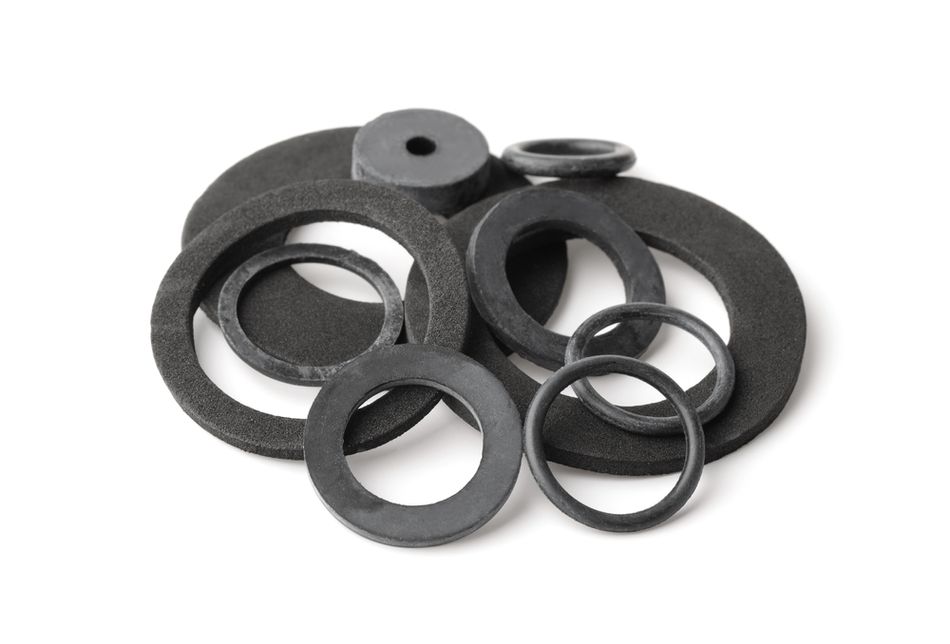
TPEs and TPUs come in different grades that vary in terms of their mechanical properties and performance. This is helpful for designers of flexible parts, as the degree of elasticity and other properties may need to be precisely tailored for a specific application.
Hardness and Elasticity
Hardness is measured on the Shore scale. TPEs cover a wide range, from very soft 20 A grades that feel gel-like to 100 A grades that approach semi-rigid plastics. TPUs generally fall between 60 A and 80 D. BASF’s Elastollan® TPU product, for example, is available in hardness grades from 60 A to 74 D.[2] A 60 A TPU is soft and stretchy, while an 80 D TPU is rigid enough for structural use.
Elasticity describes how far a material can be stretched before permanent deformation. Many TPEs can elongate more than 1,000 percent, while TPUs typically stretch 300 to 700 percent before breaking.[3] Both materials return to their original shape after the load is removed because their hard segments act as reversible cross-links.
Tensile Strength and Modulus
Tensile strength and modulus determine load-bearing capacity and stiffness. TPU consistently provides higher strength and stiffness than TPE. For example, a 95A TPU may reach ultimate strengths around 39 MPa, while a comparable soft TPE may achieve only 6 MPa. This difference stems from TPU’s urethane chemistry, which creates strong intermolecular bonding and higher chain entanglement.
However, as mentioned in the previous section, TPEs can achieve very high elongation values, making them ideal for gaskets, vibration isolators, or compliant parts. The range of properties within TPEs is broad, as hardness and strength rise with increased hard-segment content.
Tear, Abrasion, and Fatigue Resistance
TPU outperforms most TPEs in tear and abrasion resistance, often reaching two to three times the strength of typical elastomers.[4] This makes it the preferred choice for high-wear components such as gears, pulleys, conveyor wheels, and shoe soles. TPE’s abrasion resistance is moderate and closer to that of conventional rubber.
Under repeated deformation, TPE’s softness and high elongation help absorb strain, making it useful for hinges or dampers. TPU, with higher modulus and resilience, resists creep and maintains elasticity across thousands of cycles.
Temperature Resistance and Thermal Properties
Service temperature strongly affects material choice. For example, TPVs withstand –60 °C to 135 °C, while TPUs operate reliably from –70 °C to about 120 °C, with special grades extending higher.[5] Some TPEs have a more limited service range.
TPU usually has higher heat deflection resistance than TPE, but engineers should still design parts to run well below softening temperatures. For instance, a TPU may deflect under moderate loads at about 70 °C, while a TPE can begin softening even earlier.
Chemical and Environmental Resistance
Chemical resistance varies significantly. TPU resists oils and greases better than standard TPEs, but is more vulnerable to hydrolysis, alkaline solutions, and prolonged water exposure. TPE generally tolerates polar solvents and moisture more effectively. TPVs deliver the best overall chemical resistance, excelling in oils, fuels, and aggressive environments.[4]
Environmental exposure also matters. TPU tends to yellow and degrade under UV or ozone unless stabilized, while many TPEs can be formulated for improved weathering. In harsh conditions, coatings or additives may be necessary.
Processing and Manufacturing Considerations
Injection Molding
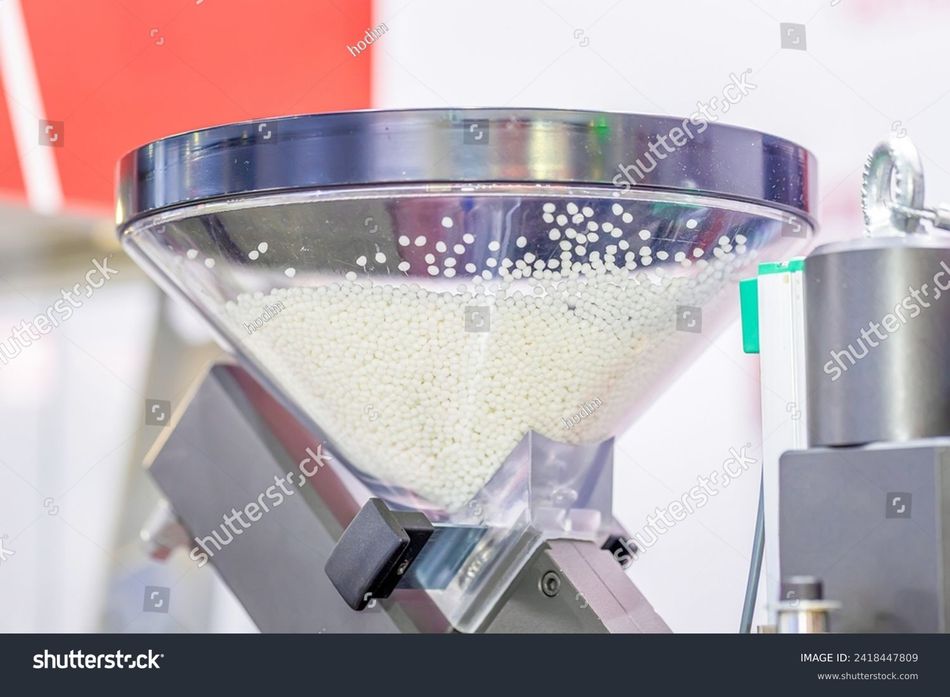
Both TPE and TPU can be processed using standard injection molding equipment, but their melt behavior and handling requirements differ. TPU requires higher melt temperatures—about 190–220 °C according to Covestro[6]—and careful drying to prevent hydrolysis, as it is highly moisture-sensitive. TPE runs at lower temperatures (down to 150 °C), often without drying, which makes it easier to process in high-volume settings.
Shrinkage is another factor: TPU typically has lower mold shrinkage than TPE, giving molded parts more dimensional accuracy. However, TPU retains heat longer, so cycle times may be extended compared with TPE. For overmolding, TPE bonds well to polypropylene, ABS, and polycarbonate, while TPU adheres to polyesters and PC/ABS blends. Surface primers or treatments may be needed when bonding either material to metals or glass.
Extrusion
Extrusion is widely used for tubing, profiles, seals, and cable coatings. TPE extrudes easily, offering short cooling times and good surface finishes. It can also be co-extruded with rigid thermoplastics to create composite profiles. TPU extrudes successfully but requires more precise control due to its higher viscosity and sensitivity to overheating. Extruded TPU products are valued for their wear resistance, toughness, and flexibility in applications like pneumatic hoses, belts, and protective sheathing.
Additive Manufacturing
Both TPE and TPU can be used in additive manufacturing, particularly fused filament fabrication (FFF/FDM) and selective laser sintering (SLS). TPU is generally easier to print because its higher rigidity prevents buckling in Bowden extruders. Very soft TPEs often need direct-drive systems and slower print speeds. TPU parts typically show smoother surface quality and better dimensional accuracy. In SLS, TPU powders deliver higher tensile strength and elongation than TPE powders, making them preferred for prototyping and low-volume flexible parts.
Recommended reading: What is TPU Filament in 3D Printing? Material Properties and Applications
Other Processes
TPEs and TPUs are also compatible with other thermoplastic forming methods:
Thermoforming – Certain grades can be vacuum-formed into thin, flexible parts, such as liners, trays, and protective covers. TPU’s toughness is especially useful here.
Rotational molding – Both materials can be used in powdered form to create seamless hollow parts, such as tanks, flexible housings, or protective shells.
Blow molding – TPU can be blow-molded into bottles, films, or flexible containers where impact strength is critical.
Welding and bonding – Heat welding, RF welding, and ultrasonic welding are feasible. TPU can also be solvent-welded, whereas TPE often requires mechanical joining or overmolding.
Applications and Use Cases

From consumer electronics and automotive sealing systems to medical devices, footwear, and aerospace, TPEs and TPUs provide a balance of flexibility, durability, and processability. Their adaptability to injection molding, extrusion, additive manufacturing, and other processes enables engineers to design products that meet demanding mechanical, chemical, and environmental requirements.
Industry | Example Products | Example Materials | Description |
Consumer Electronics | Phone cases, wearable straps, headphone cables, controller grips | TPU 95A, TPE-SBC, TPE-SEBS | Injection molding dominates for overmolded grips and housings; extrusion is used for cables. TPU provides abrasion resistance and sleek finishes, while TPE offers softness and comfort. |
Automotive | Seals, gaskets, hoses, trim, vibration mounts | TPV, TPO, TPU 80–95A | Injection molding for seals and trims; extrusion for tubing and profiles. TPV excels in high-temperature seals, TPU in hydraulic hoses, and TPE in interior parts. |
Industrial & Robotics | Conveyor belts, gears, protective covers, wheels, grippers | TPU 95A, TPU 80D, TPE blends | TPU is favored for high-wear molded and extruded parts; TPE used for soft-touch ergonomic grips. Additive manufacturing allows TPU protective covers and vibration-damping grippers. |
Medical Devices | Catheters, tubing, masks, grips, braces | Medical-grade TPU, TPE-SEBS, TPE-SBC | Extrusion is widely used for tubing; injection molding for masks and housings. TPU grades provide abrasion resistance and transparency, while TPEs excel in softness and sterilizability. |
Footwear & Sporting Goods | Shoe soles, midsoles, protective gear, flexible housings | TPU 90–95A, TPE blends | TPU provides wear resistance and energy return in soles; rotational molding and foam processes are used for midsoles. TPEs are used for comfort components and soft-touch handles. |
Packaging | Flexible containers, bottles, liners, seals | TPU films, TPE films, TPO blends | Blow molding for bottles and films; thermoforming for liners. TPU provides impact resistance and durability, while TPE blends add softness and flexibility. |
Construction & Infrastructure | Cable sheathing, seals, roofing membranes, vibration dampers | TPE-TPO, TPU 95A, TPV | Extrusion dominates for sheathing and membranes. TPU resists abrasion and weathering; TPV withstands oils and fuels in harsh environments. |
Aerospace & Defense | Ducting, seals, protective housings, lightweight panels | High-performance TPU, TPE-TPA, TPC | Injection molding and extrusion for seals and ducting; thermoforming and rotational molding for lightweight housings. TPU provides resilience and abrasion resistance; copolyesters/copolyamides handle higher temperatures. |
Sustainability and Environmental Considerations
TPE and TPU offer better sustainability than conventional vulcanized rubber because they are thermoplastic and recyclable. Still, their environmental performance differs in key areas.
Recyclability: Soft TPE scrap can be re-ground and re-melted with little property loss, making it well suited for closed-loop systems. TPU scrap can also be recycled, but repeated thermal cycles may reduce molecular weight and degrade mechanical strength.
Biodegradability: Neither material is inherently biodegradable. Blending with bioplastics such as polycaprolactone (PCL) or polyhydroxyalkanoates (PHA) can improve degradability, though often at the cost of mechanical performance.
Additive options: Manufacturers now produce bio-based TPEs from renewable feedstocks, and many grades can incorporate post-consumer recycled content without significant property changes. New TPU formulations use partially bio-based polyols, offering a lower carbon footprint.
Environmental exposure: TPE typically withstands moisture and polar chemicals more effectively, while TPU is vulnerable to hydrolysis in warm, humid conditions and requires UV stabilizers to prevent degradation. For outdoor devices, protective coatings or alternative elastomers such as TPV may be better choices.
Future Trends and Innovations
The elastomer industry is shifting toward sustainability and higher performance. Bio-based and recyclable TPEs derived from renewable feedstocks are becoming more common, with additives improving melt stability and recyclability. TPU is also evolving, with partially bio-based grades that reduce carbon footprint, as well as advanced formulations using aliphatic isocyanates for UV resistance and nanofillers for added strength and thermal conductivity.[7] High-temperature TPU grades above 140 °C and lightweight TPU foams for cushioning and sound dampening are expanding its role in demanding environments.
Additive manufacturing and smart materials are driving further innovation. Multi-material 3D printing enables parts that combine rigid and flexible regions or vary in hardness within a single build, opening new opportunities in robotics, electronics, and medical devices. At the same time, research into conductive and self-healing elastomers is paving the way for sensors, flexible circuits, and longer-lasting products.
Conclusion
Choosing between TPE vs TPU requires balancing chemistry, performance, processing, and end-use demands. TPE material offers wide hardness options, high elasticity, and lower cost, making it a strong choice for soft-touch components, vibration dampening, and consumer products that do not face extreme stress. TPUs, as a specialized member of the TPE family, provide high strength, tear resistance, and superior abrasion durability, making them better suited for demanding automotive parts and other industrial applications. These flexible materials are also used as flexible filament in additive manufacturing, where TPU’s rigidity eases printing compared to softer grades of TPE.
Engineers should familiarize themselves with the key differences to guide material selection, treating data sheets as a baseline and confirming performance through prototyping under real-world conditions. With the rise of bio-based polymers, advanced TPU formulations, and smart additives, the TPE vs TPU decision will remain central to designing reliable, sustainable products across electronics, consumer products, automotive, medical, and industrial applications.
Frequently Asked Questions (FAQ)
Is TPU a type of TPE?
Yes. TPU is a member of the TPE family, distinguished by urethane chemistry that gives it higher strength and abrasion resistance.
Which material is easier to 3D print: TPE or TPU?
TPU is easier to print, especially in Bowden systems, while very soft TPEs require direct-drive extruders and slower speeds.
How do I decide between TPE and TPU for a seal or gasket?
TPU is better for seals exposed to oils, greases, or abrasion, while softer TPEs suit highly elastic or compliant seals; TPV may be best for high heat and oil resistance.
Can TPE and TPU be overmolded onto rigid components?
Yes. TPE bonds well to polypropylene, ABS, and polycarbonate, while TPU bonds to polyesters and PC/ABS; metals or glass may need primers.
Are TPE and TPU safe for human contact?
Most grades are non-toxic and safe for skin or food use, though certifications should be checked; TPU can release fumes if burnt, so proper ventilation is required.
Do TPE and TPU degrade over time?
Both degrade under UV and oxidation; TPU tends to yellow, while coatings or UV-stabilized grades extend service life.
References
[1] Rokicka, J., Wilpiszewska, K., Janik, J., Schmidt, B., & Nikiforov, A. Multiblock Elastomers TPEAA and TPEEA: Physical Structure and Properties. Materials. 2021;14(24):7720. https://doi.org/10.3390/ma14247720
[2] BASF. Thermoplastic Polyurethane Elastomers Elastollan® – Material Properties [Internet]. Ludwigshafen (DE): BASF SE; [cited 2025 Oct 20]. Available from: https://www.basf.com/dam/jcr:b36f0d83-b60b-35d8-8dab-35f7f0795b37/basf/www/kr/documents/ko/product/Elastollan_Material%20Properties.pdf
[3] Nagase ChemteX Corporation. Characteristics of polyurethane (elongation, strength, shock absorption) and comparison with other materials [Internet]. Tokyo (JP): Nagase ChemteX Corp; [cited 2025 Oct 20]. Available from: https://group.nagase.com/nagasechemtex/e1/en/advanced-concept-materials/rubber-like-resin/polyurethane-properties-comparison/
[4] RJC Mold. TPE vs. TPV vs. TPU: A Comprehensive Comparison of Thermoplastic Elastomers [Internet]. Shenzhen (CN): RJC Industrial Co., Ltd.; 2025 Aug 12 [cited 2025 Oct 20]. Available from: https://rjcmold.com/tpe-vs-tpv-vs-tpu/
[5] SpecialChem. Thermoplastic Elastomer (TPE): How to select the right grade? [Internet]: SpecialChem; 2025 Jul 9 [last updated] [cited 2025 Oct 20]. Available from: https://www.specialchem.com/plastics/guide/thermoplastic-elastomer
[6] Covestro. Processing of TPU by Injection Moulding [Internet]. Leverkusen (DE): Covestro AG; [cited 2025 Oct 20]. Available from: https://solutions.covestro.com/-/media/covestro/solution-center/brands/downloads/imported/1557310236.pdf
[7] Huang G, Yao C, Huang M, Zhou J, Hao X, Ma X, He S, Liu H, Liu W, Zhu C. Colorless, transparent, and high-performance polyurethane with intrinsic ultraviolet resistance and its anti-UV mechanism. ACS Applied Materials & Interfaces. 2023 Mar 29;15(14):18300-10. https://doi.org/10.1021/acsami.2c23317
in this article
1. The Basics of TPE and TPU2. Mechanical Properties and Performance3. Processing and Manufacturing Considerations4. Applications and Use Cases5. Sustainability and Environmental Considerations6. Future Trends and Innovations7. Conclusion8. Frequently Asked Questions (FAQ)9. References