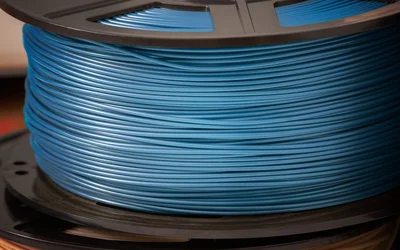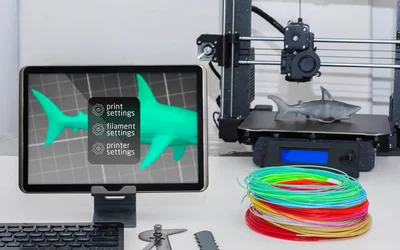
What is 3D printer filament made of? This guide examines polymers, additives, and composites, offering practical tips for digital design and hardware engineers.
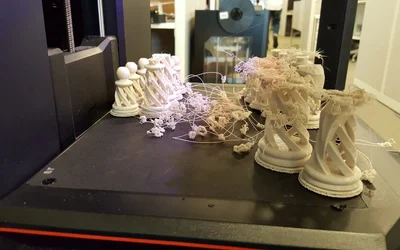
Discover how to print with high-performance filaments like PEEK, PEKK, and ULTEM. Learn about their properties, hardware needs, challenges, and best practices for industrial-grade 3D printing.
Explore how 3D-Fuel's Pro PCTG filament advances additive manufacturing, offering higher impact strength, improved environmental resistance, and reliable printability for functional and industrial 3D printing applications.
3devo's next-generation desktop extruder combines industrial precision with lab-scale simplicity enabling more controlled, higher-performance and data-driven 3D printing material workflows.
Lightweighting materials play a crucial role in offering the potential for improved fuel efficiency, enhanced performance, and reduced emissions in the automotive industry. It is anticipated that the lighter and more efficient automotive materials and components will revolutionize the industry in the coming years.
In this episode, we talk about a blind cane from Stanford University that borrows self-driving tech to increase the mobility of visually-impaired people by 20% as well as an effort from Texas A&M to develop enhanced touchscreens which will enable users to feel textures on their smart devices.
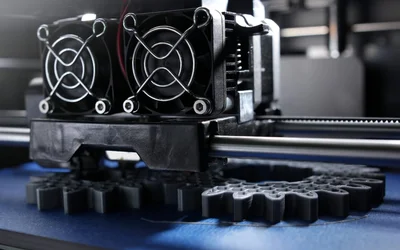
What is TPU filament? Thermoplastic polyurethane (TPU) is one of the most practical and affordable 3D printing materials for making flexible parts. This article looks at how and why to print it.
In this episode, we talk about Patagonia’s partnership to create sustainable clothing items from recycled fishnets and how a startup plans to revolutionize plastic recycling using enzymes that digest plastics.
In this episode, we talk about a solar powered car that could be the next step in the EV evolution cycle and how a 3D printed hypercar broke the world record lap time at Laguna Seca.
Since its debut in the 1980s, Atomic Force Microscopy (AFM) has transformed microscopic imaging and sample analysis. This article provides an essential guide to AFM, covering its core principles, functionalities, and wide-ranging applications in scientific research.
In this episode, we talk about the research effort aiming to understand how concrete cures in space and how the James Webb telescope will provide insight regarding the origins of our universe.
The U.S. Air Force Institute of Technology (AFIT) leveraged nTopology and architected materials to develop an additively manufactured CubeSat bus assembly from Inconel 718 that was 50% lighter and 20% stiffer than the original aluminum assembly.
In this episode, we talk about a collaboration between two professors at Cornell University to combat the multi-billion dollar annual loss of grapes by combating powdery mildew using AI and how a novel material developed by NASA JPL researchers can significantly reduce the cost of robotics worldwide
nTop engineers designed, analyzed and printed a fuel-cooled oil cooler using nTop Platform, ANSYS CFX and a new additive aluminum alloy developed by HRL Laboratories. This blog takes you from start to finish in the series that began in late 2019.
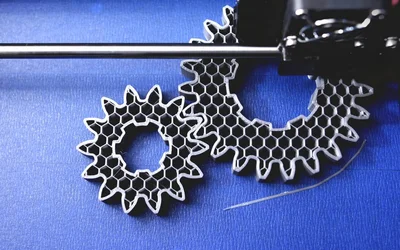
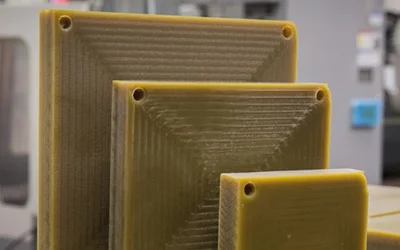
Kimya ABS-ESD filament is an engineering-grade material that proved to fulfil the necessary requirements, while being processable on desktop printers such as the Ultimaker S5.
Electrostatic discharge (ESD) is commonly known as “static electricity.” These discharges occur when an electric charge is built up then transferred to another object, often accompanied by a visible spark. This can cause product defects or lead to unsafe circumstances.
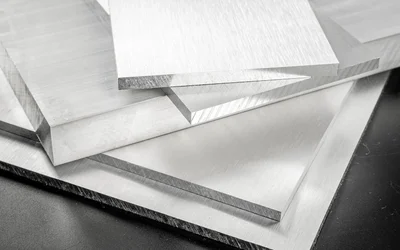
When it comes to designing cars, saving weight is a top priority. But there is more to it than just swapping steel for aluminum, or tearing out the back seats.