Featured
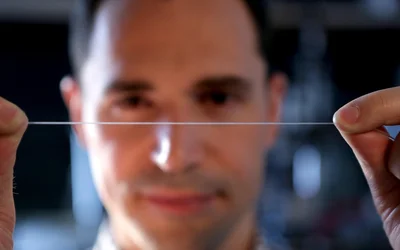
Twisted fibers coated with living cells could assist healing of injured muscles and tendons.
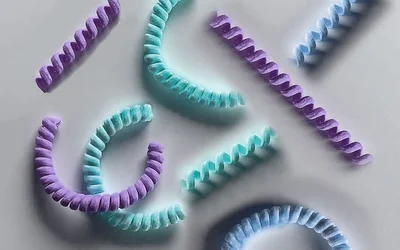
Twisted fibers coated with living cells could assist healing of injured muscles and tendons.
Twisted fibers coated with living cells could assist healing of injured muscles and tendons.
Plastic substrates for flexible displays are well known for their mechanical benefits such as thinness, lightness and flexibility, but their optical advantages are less cited.
Among other virtues, silicon “rusts” in a way that insulates a chip's circuitry. Two new ultrathin materials share that trait and others vital to the future of electronics.
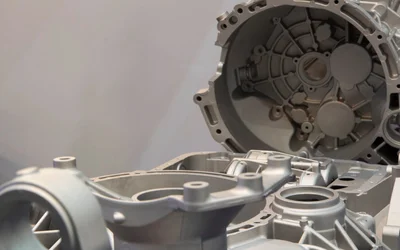
Unlock the potential of aluminum die casting in modern engineering applications through advanced techniques.
12 minutes read.
16 minutes read.
18 minutes read.
14 minutes read.
8 minutes read.


Entertainment
The Next Byte Podcast is hosted by two young engineers - Daniel and Farbod - who select the most interesting tech/engineering cont...
165 Posts

University for science and technology
Freedom and individual responsibility, entrepreneurial spirit and open-min...
43 Posts
Discover how iAM Marketplace simplifies industrial additive manufacturing by unifying materials, validation services, and multi-brand technologies into one open ecosystem for efficient AM sourcing.
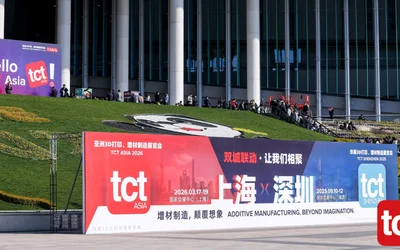
This article discusses what attendees can expect from TCT Asia 2026, including its conference format, focus areas, and the experts contributing to industry-specific discussions.
This article discusses the exhibitors, products, and industrial trends defining additive manufacturing across the Asia-Pacific region at TCT Asia 2026.
This article discusses how the Asia-Pacific region is advancing additive manufacturing and the role of TCT Asia as the leading 3D printing and additive manufacturing event in the Asia-Pacific.
Lightweighting materials play a crucial role in offering the potential for improved fuel efficiency, enhanced performance, and reduced emissions in the automotive industry. It is anticipated that the lighter and more efficient automotive materials and components will revolutionize the industry in the coming years.
Twisted fibers coated with living cells could assist healing of injured muscles and tendons.
Plastic substrates for flexible displays are well known for their mechanical benefits such as thinness, lightness and flexibility, but their optical advantages are less cited.

3 minutes read
Among other virtues, silicon “rusts” in a way that insulates a chip's circuitry. Two new ultrathin materials share that trait and others vital to the future of electronics.

3 minutes read
Professor Yoel Fink is helping MIT lead the way in transforming the fabric materials in our lives.
Research using quantum-mechanical computation will be used to identify combinations of elements that have the most promise for load-bearing applications
Stretchable wires move us closer to electronics that mold to your skin
4 minutes read
Holographic displays need twisted light. Twisted semiconductors assembled with the help of amino acids may enable them.

3 minutes read
Silicon chips are single story, but using new semiconductor materials, engineers can stack computer logic and memory like floors in a building to bust data traffic jams.
4 minutes read
Tooth enamel has changed very little over millions of years -- and it is remarkably resistant to shock and wear.
3 minutes read
In the field of photovoltaic technologies, silicon-based solar cells make up 90% of the market. In terms of cost, stability and efficiency (20-22% for a typical solar cell on the market), they are well ahead of the competition.

3 minutes read
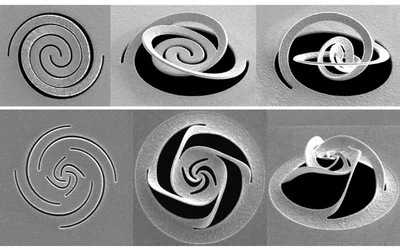
Folding and cutting thin metal films could enable microchip-based 3-D optical devices.
Study reveals the details of light-induced phase changes.
The art of paper cutting may slice through a roadblock on the way to flexible, stretchable electronics, a team of engineers and an artist at the University of Michigan has found.
3 minutes read
It’s a whole new way of thinking about sensors. The tiny fibers developed at EPFL are made of elastomer and can incorporate materials like electrodes and nanocomposite polymers.
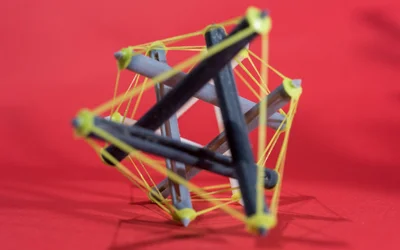
A team of researchers from the Georgia Institute of Technology has developed a way to use 3-D printers to create objects capable of expanding dramatically that could someday be used in applications ranging from space missions to biomedical devices.

3 minutes read