CNC Machining Aluminum: A Guide for Digital Design and Hardware Engineers
CNC machining aluminum combines precision digital control with the versatile properties of aluminum alloys. This article explores the science and practice of CNC machining aluminum.

19 Nov, 2025. 15 minutes read
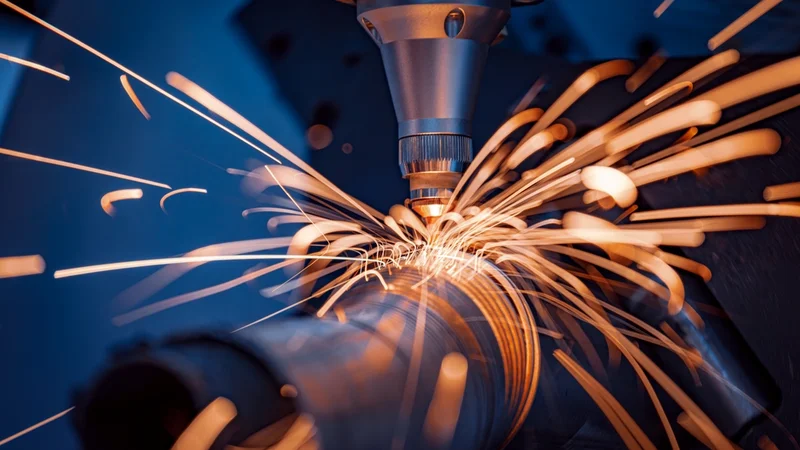
Computer numerical control is the backbone of modern precision manufacturing. Unlike additive or molding processes, CNC machining is a subtractive method in which material is removed from a solid workpiece using high-speed cutting tools directed by computer programs. Engineers create a CAD model, generate G-code and allow the machine to execute the operations with minimal oversight. The result is accurate, consistent parts produced directly from digital designs.
Aluminum is a leading choice for these workflows because its alloys combine low density with impressive strength, allowing designers to reduce weight while maintaining structural integrity. Its natural oxide layer provides strong corrosion resistance, and its thermal and electrical conductivity support demanding mechanical and electronic applications. These advantages make CNC machining aluminum a good option across aerospace, automotive and consumer electronics projects—and they explain why CNC machining aluminum continues to dominate prototyping and production where speed, performance, and cost matter.
This guide offers a concise technical reference for digital design and hardware engineers. It outlines the fundamentals of CNC machines and aluminum metallurgy, gives practical advice on tooling and cutting parameters and highlights key design for manufacturing (DfM) rules. It also covers finishing methods and other factors so readers can make informed decisions when CNC machining aluminum components.
CNC Machining Aluminum Fundamentals

CNC machining is a subtractive manufacturing process in which fast-moving cutting tools remove material from a solid block under precise computer control, rather than by human hand. Engineers create a digital model, convert it into toolpaths, and allow the machine to execute operations with excellent repeatability. And because parts are shaped directly from solid stock, CNC machining delivers tight tolerances, consistent dimensional accuracy, and high mechanical performance.[1]
Aluminum has become one of the most widely used materials in CNC machining thanks to its balance of strength, flexibility, and versatility. Its alloys cut cleanly, accept a broad range of finishes, and support many applications in areas like electronics, transportation, aerospace, and high-performance consumer products. The following sections outline the key material properties that make aluminum particularly suitable for CNC workflows.
High Machinability
Aluminum is soft compared with ferrous metals and produces clean, easily managed chips. It requires less cutting force than steel, allowing faster feed rates and shorter cycle times.[2] Its inherent dimensional stability also minimizes distortion during aggressive material removal, which helps maintain accuracy and reduces finishing work.
Strength-to-Weight Ratio
Although aluminum has only about one-third the density of steel, alloying, heat treatment, and work hardening can elevate its tensile strength above 300 MPa. High-performance grades such as 7075 approach steel-like strength while remaining significantly lighter. This combination makes aluminum a mainstay in aerospace and automotive components where mass reduction improves efficiency.
Corrosion and Environmental Resistance
Aluminum naturally forms a thin, self-sealing oxide film that protects the surface from further oxidation. Most commonly machined alloys offer strong resistance to general corrosion, and when higher durability is required, the surface finishing treatment of anodizing thickens the oxide layer and enhances wear performance. This innate stability makes aluminum suitable for outdoor, marine, and industrial environments.
Thermal and Electrical Conductivity
With thermal conductivity near 220 W m⁻¹ K⁻¹ and electrical conductivity around 38 MS m⁻¹, aluminum efficiently moves heat and current. As a result, it is widely used for heat sinks, electronic housings, power-distribution components, and enclosures that need reliable thermal management.
Low-Temperature Performance
Unlike many steels and polymers that lose toughness in cold environments, aluminum maintains its ductility and strength at sub-zero temperatures. This resilience makes it suitable for cryogenic tanks, cold-storage systems, and aerospace applications exposed to extreme conditions.
Recyclability and Sustainability
CNC machining generates substantial chip volumes, and aluminum’s recyclability makes that waste easy to reclaim. Re-processing aluminum requires a fraction of the energy needed for primary production, and a significant proportion of global aluminum stock remains in circulation. This supports sustainability goals and reduces material costs over the long term.
Anodization Potential
Aluminum readily accepts anodization, a surface-conversion process that transforms the outer layer into hard aluminum oxide. The result is improved wear resistance, enhanced corrosion protection, and a wide range of aesthetic finishes. Different coating thicknesses and colors can be selected to meet functional or visual requirements.
Aluminum Alloy Metallurgy for CNC Machining

Aluminum alloys vary widely in composition, strengthening mechanisms, and mechanical behavior. For CNC machining, these differences matter: alloy families respond differently to cutting forces, heat generation, chip formation, and tool geometry.
A basic grasp of microstructure and classification helps engineers choose grades that balance strength, machinability, and finish quality. The ASM Handbook notes that aluminum alloys, compared with pure aluminum, generally offer superior machining performance because their microstructural features help control chip formation and reduce cutting effort.[3]
Microstructure and Machinability
Microconstituents strongly influence how an alloy behaves under the tool. Non-abrasive, finely dispersed phases tend to break chips cleanly and keep tool wear low, while hard or insoluble particles can erode cutting edges and leave rough surfaces. Softer alloys, along with some high-strength grades, can form a built-up edge, where softened aluminum adheres to the tool during cutting. Using sharp inserts, adequate lubrication, and stable cutting parameters minimizes this effect. Silicon content is especially important: alloys with more than about 10% silicon are difficult to machine due to hard free-silicon particles, and even moderate silicon levels can create gray, torn surfaces if the chips are not well controlled.
Alloy Classification
Aluminum alloys are often grouped into four broad categories: cast, wrought, strain-hardenable, and heat-treatable.
Cast alloys typically contain higher alloying levels and machine differently depending on elements like copper, magnesium, or zinc.
Wrought alloys—rolled, extruded, or forged—can offer excellent machinability when paired with appropriate tooling.
Strain-hardenable grades (such as commercially pure aluminum and many 3xxx or 5xxx alloys) strengthen through cold work and produce long, continuous chips, so tools often require generous rake angles to avoid surface scratching.
Heat-treatable families (2xxx, 6xxx, 7xxx) respond well to machining after aging, and free-machining variants include chip-breaking additives that keep chip length manageable.
Key Machinability Considerations
Tool geometry, cutting speed, and alloy chemistry must be balanced. Most aluminum alloys machine well with modest rake angles, but silicon-rich grades benefit from larger rakes and reduced speeds to limit abrasive wear. Strain-hardenable alloys generate continuous chips, so sharp tools, positive rake angles, and good chip-evacuation strategies are essential. Heat-treatable alloys typically cut more cleanly after proper heat treatment; in softer tempers, they may produce long curls and exhibit built-up edges unless lubrication and tooling are optimized.
Common Aluminum Alloys for CNC Machining
Choosing the right aluminum alloy can be challenging because strength, corrosion resistance, machinability, and cost can differ dramatically from one series to another. Each alloy responds to CNC machining in its own way: some cut cleanly and hold tight tolerances, while others offer high strength but require more careful tool selection. The following summaries highlight widely used alloys and the kinds of applications they support.
Alloy | Strength | Corrosion Resistance | Other Properties | Machinability | Cost | Typical Applications |
6061 (Al-Mg-Si) | Medium strength; good performance in T6 | Good natural corrosion resistance | Weldable; stable across tempers | Very good machinability; predictable tolerance control | Moderate | Structural parts, aircraft fittings, electronics housings, brackets, automotive frames |
6082 (Al-Mg-Si) | Highest strength of 6xxx series | Good resistance in general and marine settings | Good stiffness; suitable for load-bearing uses | Machines well with correct tooling | Moderate–High | Trusses, cranes, marine components, transport structures |
7075 (Al-Zn-Mg) | Very high strength; among the strongest Al alloys | Moderate; stress-corrosion risks in some tempers | Excellent strength-to-weight ratio | Good machinability but less forgiving; sensitive to tool wear | High | Aerospace components, shafts, gears, molds, high-performance equipment |
2024 (Al-Cu-Mg) | High strength and superior fatigue resistance | Low; must be protected or coated | Excellent performance under cyclic loading | Good machinability; not weldable | Moderate–High | Aircraft skins/frames, fasteners, suspension parts |
5052 (Al-Mg) | Medium strength; increases with cold work | Excellent, especially in marine and chemical environments | Highly ductile; not heat treatable | Adequate machinability; softer and tougher than 6061 | Moderate | Pressure vessels, fuel tanks, kitchen equipment, small boats, enclosures |
5080 (Cast Plate) | Medium strength; stable under load | Good general resistance | Porosity-free, stress-relieved; excellent dimensional stability | Excellent machinability for flat, precision parts | High (plate grade) | Fixtures, gauges, molds, precision plates, PCB tooling |
MIC-6 (Cast 7xxx Plate) | Moderate strength (lower than wrought 7xxx alloys) | Good resistance to cracking and surface corrosion | Very flat, stable cast structure; uniform chips | Very good machinability; ideal for plate work | High | Tooling plates, jigs, metrology bases, optical mounts |
EN AW-2007 (Al-Cu-Mg-Pb) | High strength | Moderate; not suited for corrosive environments | Lead content improves chip breakage | Excellent free-machining performance; short chips | Low–Moderate | Screws, bolts, fasteners, valves, high-volume turned parts |
EN AW-5083 (Al-Mg) | High strength among non-heat-treatable alloys | Outstanding; excellent marine resistance | Suitable for welding; resists pressure and deformation | Moderate machinability; benefits from lubrication | Moderate–High | Marine structures, hulls, cryogenic tanks, welded pressure components |
EN AW-5754 (Al-Mg) | Medium strength | Very good resistance, especially marine | Highly formable; good anodizing response | Good, especially for sheet and plate work | Moderate | Fuel tanks, chemical-handling systems, vehicle panels, architectural uses |
EN AW-6060 (Al-Mg-Si) | Low–Medium strength | Good in general atmospheric conditions | Highly formable; excellent for extrusion | Very good machinability; fine surface finish | Low–Moderate | Extruded profiles, frames, heat sinks, decorative components |
CNC Machining Processes for Aluminum

Aluminum’s high machinability, low cutting forces, and excellent surface response make it well suited to a wide range of CNC operations. Its combination of softness, strength, and thermal conductivity allows tools to remove material quickly while maintaining tight tolerances. The following sections outline the main machining processes used to shape aluminum components, along with their capabilities and practical limitations.
Milling, Pocketing, and Facing
Milling is the most widely used CNC process for aluminum.[4] A rotating multi-point cutter removes material as the tool, the workpiece, or both move along programmed paths. Pocketing applies the same principle to internal cavities, while facing produces flat, uniform surfaces for mating features or subsequent finishing.
Three-axis milling machines can produce the majority of prismatic geometries but may require multiple setups if access is limited. Five-axis milling adds two rotational axes, allowing the tool to reach complex surfaces without repositioning the part. Indexed five-axis machines reposition between cuts, while continuous five-axis systems move all axes simultaneously to create intricate, freeform shapes. These higher-end machines offer greater flexibility and reduced setup time, though they are more costly and require advanced programming skill.
Turning
In CNC turning, the workpiece rotates while a stationary single-point tool shapes its exterior or interior profile. Turning is highly efficient for round parts and can achieve fast cycle times with excellent surface finish. Its main limitation is geometry: non-rotational features require secondary milling or the use of a mill-turn machine that can switch between turning and milling operations. Many aluminum shafts, bushings, housings, and threaded components are produced this way.
Drilling and Boring
Drilling creates holes using a rotating tool fed perpendicular to the surface. Standard drill bit sizes are preferred for accuracy and cost, while non-standard diameters are typically machined with end mills and treated as small cavities. Boring enlarges or trues an existing hole to tighter tolerances and is often used for precision alignment features or bearing seats in aluminum parts.
Advanced Processes
Advanced machining platforms integrate multiple operations into a single workflow. Mill-turn centers combine rotational and prismatic machining, reducing setups and improving dimensional accuracy. Indexed five-axis machines rotate the workpiece between operations, while continuous five-axis systems maintain uninterrupted tool motion across all axes. These capabilities are essential for producing turbine blades, orthopedic implants, topologically optimized structures, and other geometries that cannot be manufactured efficiently on conventional three-axis equipment.
Tooling and Cutting Parameters
Selecting appropriate tooling and cutting parameters is central to achieving high-quality CNC machined aluminum components. Aluminum’s softness, reactivity, and tendency to form long chips place unique demands on tool geometry, tool materials, and process settings.[5] By optimizing flute count, helix angle, cutting speed, lubrication, and system rigidity, engineers can significantly improve surface finish, tool life, and dimensional accuracy.
Tool Design
Effective tool geometry allows aluminum chips to clear easily while keeping heat generation low. End mills with two or three flutes are typically preferred because they provide wide chip valleys and reduce the likelihood of jamming. Two flutes maximize chip evacuation during heavy roughing, while three flutes offer a stronger core for semi-finishing and light finishing.
Helix angle has a strong influence on the cutting action. Moderate helix angles—around 35–40 degrees—provide balanced chip lifting and cutting forces during roughing. Higher helix angles near 45 degrees often deliver smoother finishes but can increase friction and heat. Clearance angles of roughly 6–10 degrees allow the tool to cut freely without excessive rubbing or chatter.
Tool Material and Coatings
Carbide tools are generally preferred for aluminum because they hold a sharp edge at high spindle speeds and resist deformation. Microstructure matters: fine-grain carbide with an appropriate binder ratio maintains toughness and reduces the risk of built-up edge formation. Coatings such as zirconium nitride, titanium diboride, and diamond-like carbon reduce adhesion between the tool and the aluminum workpiece, helping maintain consistent chip flow and prolonging tool life.
Cutting Speeds and Feed Rates
Aluminum’s thermal properties allow it to be machined at very high cutting speeds. Higher surface speeds help minimize built-up edge and often improve surface finish, provided the machine and tooling can safely handle the loads. Feed rates depend on desired finish, tool diameter, and machine rigidity. Roughing operations use higher feed rates to maximize material removal, while finishing passes use lower feeds to achieve smoother surfaces. Consult toolmaker recommendations and fine-tune based on observed chip formation and machine response.
Cutting Fluids
Cutting fluid plays an essential role in preventing built-up edge, reducing friction, and improving chip evacuation. Water-soluble emulsions and light mineral oils are commonly used. Fluids containing active sulfur or chlorine should be avoided because they may stain aluminum or react unfavorably with certain alloys. Coolant should reach the cutting zone consistently, especially during deep cavities or high-speed operations.
Workholding and Tool Stiffness
Rigid fixturing is critical when machining aluminum, especially for thin-walled parts that tend to vibrate or deflect. Tool overhang should be kept as short as practical to maintain stiffness and accuracy. Because end mills are cylindrical, internal corners will always have a radius equal to the cutter’s radius; achieving perfectly sharp corners requires secondary operations such as EDM or redesigning the feature. Minimizing deflection—both in the tool and the workpiece—ensures better dimensional control and surface finish.
Recommended reading: Sheet Metal Manufacturing: Innovating Industrial Techniques
Design Guidelines for CNC Machining Aluminum
Designing aluminum parts with manufacturability in mind reduces machining time, improves dimensional accuracy, and keeps costs predictable. The following table summarizes practical rules of thumb used across CNC machining shops, with values adjusted to reflect common industry practice rather than any single source.
Feature | Recommended Value | Feasible Limit | Explanation |
Minimum Wall Thickness | ~1.0 mm for aluminum | ~0.6–0.7 mm for short sections | Thicker walls improve rigidity, reduce vibration, and allow tighter tolerances. Extremely thin walls tend to chatter, deflect, or warp under cutting forces. |
Cavity / Pocket Depth | Depth ≈ 3× pocket width | Up to ~8–10× cutter diameter (≈200–220 mm for large tools) | Deep cavities require long tools that flex more, enlarging internal radii and reducing surface quality. Shallow pockets allow higher accuracy. |
Internal Fillets (Vertical Corners) | Fillet radius ≥ 25–35% of cavity depth | Larger radii always improve tool life | Larger corner radii accommodate tool geometry, prevent sharp transitions, and reduce the chance of tool breakage. |
Floor Edge Radius | Sharp or ≤0.5 mm | Up to ~1 mm | Small radii on floors help avoid visible tool marks while maintaining geometric accuracy. |
Tall Features (Posts, Ribs) | Height-to-width ≤ 3.5:1 | Up to about 5:1 with careful fixturing | Tall slender features vibrate, bend, and lose tolerance. Rotating the part or supporting the feature reduces deflection. |
Thread Sizes | Use ≥ M5 for aluminum | M3 possible with fine tooling | Larger threads are stronger and easier to machine. Thread engagement beyond ~2.5× diameter seldom increases strength. |
Thread Length | 2–2.5× nominal diameter | ~3× diameter | Longer threads add machining time without improving mechanical performance. |
Hole Depth | ≤3.5× diameter | ≤8–9× diameter | Standard drill bits produce clean holes at moderate depth. Very deep holes increase chip packing and require peck-drilling. |
Hole Diameters | Standard drill sizes | Non-standard sizes machined with end mills | Using standard diameters reduces tool changes and machining time; end-milled holes require slower operations. |
Small Features | ≥3 mm | Down to ~0.3–0.5 mm with micro-tools | Very small details require high-precision spindles, fragile tooling, and slower feeds—significantly increasing cost. |
Standard Tolerances | ±0.10 mm (±0.004 in.) | Down to ±0.02–0.03 mm | Apply tight tolerances only where necessary. Over-tolerancing drives cost, tool wear, and inspection time. |
Surface Roughness | Ra ~3.0 µm as-machined | Ra ~0.4–0.8 µm after finishing | Default CNC surfaces show light cutter marks. Bead blasting, polishing, or anodizing can reduce roughness. |
Undercuts | Width 4–35 mm; clearance ≥3× undercut depth | Depth ≈1–1.5× width | Special cutters (T-slot, lollipop) require side clearance and limited depth to avoid chatter and breakage. |
Maximum Part Size (Milling) | ~450 × 300 × 160 mm | Larger available with special equipment | Standard 3–5 axis mills fall within this envelope; larger parts require custom quoting or segmented machining. |
Maximum Part Size (Turning) | Ø ~450 mm × 900 mm length | Larger on heavy lathes | Turning envelopes vary widely; large-diameter parts need slower speeds and more rigid setups. |
Surface Finishing and Post-Processing

Surface finishing improves aesthetics, wear resistance, corrosion protection, and—in some cases—the functional performance of CNC machined aluminum parts. Because aluminum machines cleanly but shows tool marks and is prone to scratching, choosing an appropriate finish can significantly extend part life and enhance appearance.
As-Machined Finish
An as-machined surface displays fine tool paths and typically achieves a roughness near Ra 3 µm. It offers the best dimensional accuracy and the lowest cost because no additional processing is required. However, the lack of a protective coating leaves the material vulnerable to scratches and cosmetic blemishes. This finish is suitable when engineering function outweighs appearance or when parts will later be coated or anodized.
Anodizing
Anodizing converts the outer aluminum layer into a durable aluminum-oxide coating through an electrochemical process. Decorative anodizing (often referred to as Type II) commonly produces coatings in the 5–20 µm range, while hard anodizing (Type III) can reach 40–100 µm for enhanced wear and abrasion resistance. Anodized layers are electrically insulating, provide strong corrosion protection, and accept dyes for aesthetic customization. The process adds cost but delivers a robust, uniform finish ideal for consumer electronics, aerospace components, and exposed mechanical parts.
Powder Coating
Powder coating applies a dry polymer layer that is electrostatically deposited and then cured at elevated temperature. Coating thickness typically ranges from 50–80 µm, forming a tough, impact-resistant surface. The finish is available in many colors and textures and adheres well when the substrate is properly cleaned or lightly blasted. Because the coating adds noticeable thickness and can obscure fine details, it is not recommended for precision internal surfaces or tight-tolerance features.
Bead Blasting and Sanding
Bead blasting propels fine glass beads to remove machining marks and produce a uniform matte or satin texture. It is primarily cosmetic and removes a small amount of material. Sand blasting uses more aggressive media and can produce a rougher texture. Both methods depend heavily on operator technique and should be reserved for surfaces where dimensional accuracy is not critical. Blasted surfaces also provide excellent adhesion for paint or powder coats.
Polishing
Polishing mechanically smooths the surface using abrasives or buffing compounds. It can achieve mirror-level finishes suitable for optical components, reflectors, architectural features, or high-end consumer products. Polishing is labor-intensive and best applied to accessible external surfaces.
Metal Coating
Metal coatings, such as nickel, zinc, or chrome plating, provide enhanced corrosion protection and can improve wear resistance. Electroplated finishes also offer decorative appeal and can achieve highly reflective or uniform metallic appearances. These coatings introduce additional processing steps and thickness, so they should be specified where both appearance and environmental durability are priorities.
Practical Tips for CNC Machining Aluminum
Efficient machining of aluminum depends on controlling heat, ensuring stable chip flow, and maintaining rigid setups. These core practices improve tool life, surface quality, and overall reliability across both prototype and production work.
Use higher cutting speeds and steady feed rates to reduce heat buildup and discourage material from welding to the tool.
Apply cutting fluid consistently; avoid dry cutting to limit friction, built-up edge, and premature tool wear.
Choose polished carbide tools with suitable geometry—positive rake, moderate helix, and adequate clearance—to encourage smooth chip flow.
Select coatings such as ZrN or TiB₂ when machining tougher alloys or long runs to reduce sticking and friction.
Favor 2-flute cutters for roughing and 3-flute cutters for balanced finishing passes, especially in deep pockets.
Maintain strong chip evacuation using air blast or high-pressure coolant, particularly when machining enclosed cavities.
Keep tool overhang and unsupported part features to a minimum; use rigid fixturing or temporary support ribs when needed.
Engage machinists early in the design phase to identify manufacturability issues and reduce production time and cost.
Applications of CNC Machining Aluminum

Aluminum’s combination of low weight, good strength, and excellent machinability makes it a staple material for CNC machined components across many industries. Different sectors rely on specific alloys to balance strength, corrosion resistance, thermal performance, and cost. The table summarizes representative applications.
Industry | Typical CNC Machined Parts | Common Aluminum Alloys |
Aerospace | Wing ribs, interior seat structures, avionics housings, hinge brackets, pump bodies | 2024, 6061-T6, 7050, 7075-T73 |
Automotive | Transmission cases, engine brackets, suspension components, battery enclosures | 5083, 6061, 6082, 7075 |
Electronics & Computing | Heat sinks, laptop chassis, RF enclosures, connector bodies | 1050, 5052, 6063, 6061 |
Medical & Laboratory Equipment | Surgical instrument handles, imaging housings, fixture plates, operating-room hardware | 6061-T6, 6063, 7022 |
Food & Beverage Processing | Mixer blades, filling machine frames, valve blocks, packaging equipment plates | 3003, 5052, 6061 |
Pharmaceutical & Biotech | Pump manifolds, precision trays, sterile-equipment frames, optical-bench components | 6061, 5083, MIC-6 |
Sports & Recreation | Bicycle components, climbing gear, performance wheel hubs, equipment mounts | 6061-T6, 7005, 7075 |
Cryogenics & Scientific Research | Cryostat components, vacuum flanges, sensor housings, low-temperature support frames | 5083, 6061-T651, 2219 |
Recommended reading: Aerospace CNC Machining: How Precision Manufacturing Powers Modern Flight
Conclusion
CNC machining aluminum remains a foundational capability for modern product development, especially as teams balance speed, precision, and manufacturability. As CNC milling, turning, and hybrid workflows become more advanced—and as digital tools such as simulation, digital twins, and instant quote platforms expand—engineers gain greater control over quality, cost, and lead times. Aluminum materials such as aluminum 6061 and aluminum 7075 continue to dominate metal parts production thanks to their mechanical properties, strength-to-weight performance, and compatibility with both traditional CNC milling machines and tools like the CNC router.
Future innovations—from high-speed machining to IIoT-enabled predictive maintenance—will further tighten integration between CNC machining services, additive methods like 3D printing, and standards-driven environments such as ISO-aligned manufacturing cells. Whether producing prototypes or custom parts, aluminum cnc machining offers designers a flexible, reliable pathway toward high-performance assemblies that outperform equivalents in stainless steel or polymer-based alternatives. Understanding the relevant alloys, processes, and design rules ensures engineers can fully exploit aluminum’s capabilities while meeting structural, thermal, and operational requirements across typical uses in aerospace, automotive, consumer electronics, and industrial systems.
Frequently Asked Questions (FAQ)
Why choose aluminum over other metals for CNC machining?
Aluminum alloys combine high strength-to-weight ratio, excellent corrosion resistance, good thermal and electrical conductivity, and broad recyclability. They’re also easier to cut than stainless steel or titanium, which lowers machining cost and improves accuracy.
Which aluminum alloy is best for high-stress applications?
7075 is a strong candidate thanks to its very high specific strength; T73 or T76 tempers offer better resistance to stress-corrosion cracking. For designs needing both strength and durability, 6082 is also a solid choice.
What minimum wall thickness should I design for an aluminum part?
A practical minimum is about 0.8 mm for most jobs, though 0.5 mm is possible with added risk. Slightly thicker walls reduce vibration, improve stability, and help maintain tight tolerances.
How does anodizing improve aluminum parts?
Anodizing thickens the oxide layer to improve hardness, wear resistance, and appearance. Type II coatings are typically 4–25 µm thick, while hard-coat Type III layers can exceed 100 µm and provide increased durability and electrical insulation.
Why are carbide tools preferred for machining aluminum?
Carbide maintains a sharp edge at high cutting speeds and resists built-up edge when formulated with fine grains and balanced binder content. Coatings such as ZrN or TiB₂ reduce friction and help keep chips from welding to the tool.
What surface finishes are available for CNC-machined aluminum parts?
Common choices include as-machined surfaces, decorative or hard-coat anodizing, powder coating, bead blasting for matte textures, polishing for high gloss, and metal plating such as nickel or chrome.
How do I determine the correct feed rate and cutting speed?
Use high spindle speeds to prevent chip welding, then tune the feed to match rigidity and surface-finish requirements. Roughing often uses heavier feeds, while finishing typically relies on lighter, more controlled passes. Manufacturer guidance and quick test cuts help dial in ideal settings.
References
[1] Kalpakjian S, Schmid SR. Manufacturing Engineering and Technology. 7th ed. Prentice Hall; 2014. Available from: https://www.pearson.com/se/Nordics-Higher-Education/subject-catalogue/engineering/ManufacturingEngineering-and-Technology-7th-SI-Edition.html?tab=table-of-contents
[2] Zawada-Michałowska M, et al. Cutting Force during Surface Layer Milling of Selected Aluminium Alloys. Materials. 2020;13(24):5725. Available from: https://doi.org/10.3390/ma13245725
[3] ASM International. ASM Handbook, Vol. 16: Machining. Available from: https://www.asminternational.org/publications/handbooks/vol-16/
[4] Dassault Systèmes. Aluminum CNC Machining — A Beginner’s Guide [Internet]. [cited 2025 Nov 17]. Available from: https://www.3ds.com/make/solutions/blog/aluminum-cnc-machining
[5] Santos Jr MC, Machado AR, Sales WF, Barrozo MAS, Ezugwu EO. Machining of Aluminum Alloys: A Review. Int J Adv Manuf Technol. 2016;86(9-12):339-356. Available from: https://doi.org/10.1007/s00170-016-8431-9
in this article
1. CNC Machining Aluminum Fundamentals2. Aluminum Alloy Metallurgy for CNC Machining3. Common Aluminum Alloys for CNC Machining4. CNC Machining Processes for Aluminum5. Tooling and Cutting Parameters6. Design Guidelines for CNC Machining Aluminum7. Surface Finishing and Post-Processing8. Practical Tips for CNC Machining Aluminum9. Applications of CNC Machining Aluminum10. Conclusion11. Frequently Asked Questions (FAQ)12. References