Featured
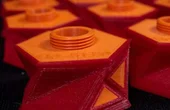
A future-proof plastics industry will include biobased products and a closed loop of production and product recycling.

A future-proof plastics industry will include biobased products and a closed loop of production and product recycling.
A future-proof plastics industry will include biobased products and a closed loop of production and product recycling.
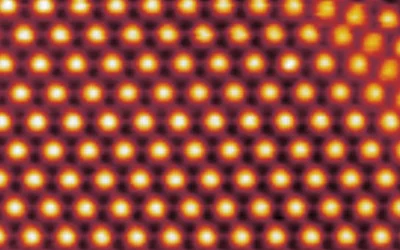
Magnetism is a force exerted by charged particles in motion that allows them to attract/repel other moving charged particles. The universal phenomenon is responsible for shaping the world as we know it.
Carnegie Mellon engineering researchers develop a groundbreaking process to 3D print tiny microscale ice structures for applications in biomedical engineering, advanced manufacturing, and possibly in art.
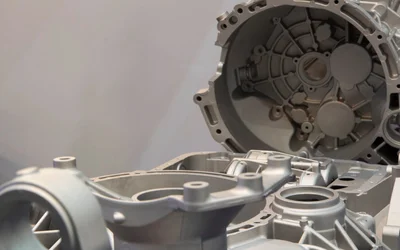
Unlock the potential of aluminum die casting in modern engineering applications through advanced techniques.
12 minutes read.
16 minutes read.
18 minutes read.
14 minutes read.
8 minutes read.


Entertainment
The Next Byte Podcast is hosted by two young engineers - Daniel and Farbod - who select the most interesting tech/engineering cont...
165 Posts

University for science and technology
Freedom and individual responsibility, entrepreneurial spirit and open-min...
43 Posts
Discover how iAM Marketplace simplifies industrial additive manufacturing by unifying materials, validation services, and multi-brand technologies into one open ecosystem for efficient AM sourcing.
This article discusses what attendees can expect from TCT Asia 2026, including its conference format, focus areas, and the experts contributing to industry-specific discussions.
This article discusses the exhibitors, products, and industrial trends defining additive manufacturing across the Asia-Pacific region at TCT Asia 2026.
This article discusses how the Asia-Pacific region is advancing additive manufacturing and the role of TCT Asia as the leading 3D printing and additive manufacturing event in the Asia-Pacific.
Lightweighting materials play a crucial role in offering the potential for improved fuel efficiency, enhanced performance, and reduced emissions in the automotive industry. It is anticipated that the lighter and more efficient automotive materials and components will revolutionize the industry in the coming years.
A future-proof plastics industry will include biobased products and a closed loop of production and product recycling.
Magnetism is a force exerted by charged particles in motion that allows them to attract/repel other moving charged particles. The universal phenomenon is responsible for shaping the world as we know it.
Carnegie Mellon engineering researchers develop a groundbreaking process to 3D print tiny microscale ice structures for applications in biomedical engineering, advanced manufacturing, and possibly in art.

4 minutes read
Stereolithography is an excellent choice for rapid prototyping and project designs that require the production of very accurate and finely detailed parts. It also offers a broad range of different materials with a range of tensile strengths, flexibility and elongation to break point.

4 minutes read
Polymateria are British innovators and inventors of the world’s first self-destructing plastic technology. The company approached Protolabs for digital manufacturing support in raising awareness of the issue and their ground-breaking technology that could ultimately help solve it.
7 minutes read
Advancements in 3D printing have helped to lower the cost of robotics innovation by more than 40,000x! This article explains how that happened and highlights 5 categories of end-use robotics components that can be made on-demand with additive manufacturing today.

5 minutes read
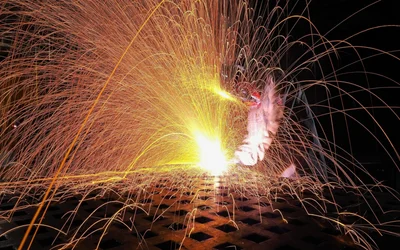
Metal inert gas (MIG) and tungsten inert gas (TIG) welding have their advantages and disadvantages, but how do you pick the process that's right for your next manufacturing or repair project?
Inflatable actuators use origami principles to deform in intricate ways

3 minutes read
An evaluation of a range of durable materials to consider for high UV-resistance in plastic parts
5 minutes read
A high-tech company in the field of infrared detection technology research, appointed us for the production of 200 sets of optical probe components. Due to their complex structures and undercut details, injection molding or CNC machining were not feasible.

PLA is one of the fastest filaments out there, your PLA print speed is also determined by print settings, hardware, and other factors.
The ability to turn superconductivity off and on with a literal flip of a switch in so-called "magic-angle twisted graphene" has allowed engineers at Caltech to observe an unusual phenomenon that may shed new light on superconductivity in general.

3 minutes read
Tough PLA is one of the easiest to use, most functional, and most popular materials Ultimaker sells. If you’re not convinced yet, here are some great reasons you should be using it.

3 minutes read
For anyone with a 3D printer, a flex filament can provide some unique advantages to your prints. We focus on the most flexible filament available in our portfolio: TPU. Let’s take a look at its properties, how to print it, and the different applications made possible by this material.

3 minutes read
In this episode, we talk about how advancements in wearables and food packaging technology will lead to a healthier and more sustainable future for us all.